
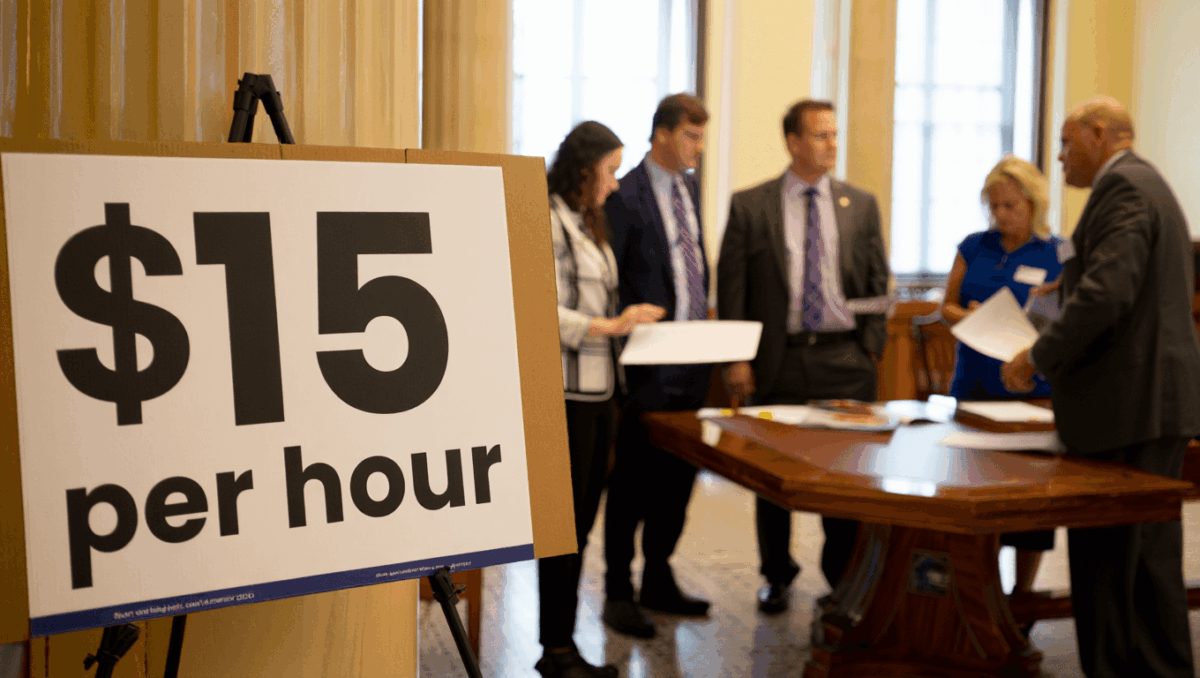
Missouri joins a growing number of states reaching the $15 minimum wage threshold on January 1, 2026. Workers across the state are preparing for their first major raise since 2018, with the minimum wage jumping from the current $13.75 to $15.00 per hour. This milestone represents a significant shift in Missouri’s labor landscape.
🔥 Quick Facts
- Missouri’s minimum wage increases to $15.00 per hour starting January 1, 2026
- The raise represents a $1.25 increase from the current $13.75 hourly rate
- Governor Mike Kehoe signed House Bill 567 on July 10, 2025, modifying wage increase provisions
- The state will put Missouri ahead of many others, joining only a handful of states at the $15 threshold
What the $15 Minimum Wage Means for Missouri Workers
Intuit emerges as best software stock for 2026 while stock crashes to bargain levels analysts didn’t expect
2026 tax brackets shock Americans with hidden paycheck truth nobody expected
Starting next month, hundreds of thousands of Missouri workers will see their paychecks increase when the state reaches its long-awaited $15 minimum wage milestone. The jump from $13.75 represents tangible progress for workers in retail, restaurants, hospitality, and service industries who have waited years for meaningful wage growth.
For full-time workers earning minimum wage, the annual increase totals roughly $2,600 in additional income. Student workers in particular stand to benefit significantly, with some potentially earning up to $1,400 more per year. The wage increase ripples beyond minimum wage workers, as employers typically adjust their wage ladders to maintain pay differentials between entry-level and more experienced employees.
How This Milestone Came Together in Missouri
Marcus Lemonis takes CEO role at Bed Bath & Beyond with $25M cost-cutting plan and watch what industry experts are saying about his next move
SPX surges 34 points at open with shocking tech recovery, here’s what caused the unexpected Venezuela rally
Voters approved Proposition A in November 2024, setting the path toward the $15 minimum wage. The initiative originally called for annual inflation adjustments starting in 2027. However, Governor Mike Kehoe signed HB 567 in July 2025, which modified that provision while preserving the $15 increase scheduled for January 1, 2026.
The legislation eliminated the automatic cost-of-living adjustments that would have followed the initial $15 level. This means the minimum wage will remain frozen at $15 unless future legislation changes it. Under HB 567, Missouri’s $15 minimum wage represents the final step in the phased increase that began with the $13.75 rate in January 2025.
Comparing Missouri to Other States in 2026
| State | Minimum Wage | Status |
| Missouri | $15.00 | Newly Elevated |
| California | $16.90 | Above $15 |
| Connecticut | $16.94 | Above $15 |
| Colorado | $15.00 | First Time at $15 |
| Arizona | $15.00 | First Time at $15 |
The Broader Impact on Businesses and Employment
The wage increase touches every corner of Missouri’s economy, particularly affecting retail, restaurant, and construction sectors. Businesses face the challenge of adjusting payroll budgets while maintaining competitiveness. Many employers will need to review their wage structures to ensure they maintain appropriate differentials for more experienced staff.
The ripple effect extends to pricing and consumer costs. Business operators have already begun evaluating operational adjustments, from pricing strategies to staffing levels. Some sectors, like hospitality and food service, historically operate on tighter margins and face particular scrutiny when minimum wages rise substantially.
What Workers Should Know as January 2026 Approaches
Missouri workers earning minimum wage should expect to see the $15 rate reflected in paychecks dated on or after January 1, 2026. Tipped employees and other special wage categories should verify their employer’s specific compensation plans. The Missouri Department of Labor and Industrial Relations provides resources for workers questioning whether their employers are complying with the new minimum wage requirement.
Public employers face particular attention under the revised law. Previously exempt public employers must now meet the $15 minimum wage starting January 1, 2026. This represents a significant expansion of minimum wage protections within Missouri’s public sector, ensuring government workers benefit equally from the increase that private sector workers have been anticipating.
“The increase boosts pay not only for minimum wage workers but also for employees slightly above the floor as businesses adjust their wage ladders.”
— Axios Kansas City, Labor Market Analysis
How Does Missouri’s $15 Wage Compare Nationally as Momentum Continues?
As of 2026, more workers will live in states with a $15 minimum wage than states still at the federal minimum of $7.25. Missouri joins 19 other states raising minimum wages on January 1, 2026. The shift reflects a broader national movement toward higher wage floors, though the pace and magnitude vary significantly by state.
With 6 states reaching the $15 threshold for the first time in 2026, the barrier that once seemed aspirational now represents a baseline for a majority of states. Arizona, Colorado, Hawaii, Maine, Nebraska, and Missouri are joining the ranks of states where federal minimum wage advocates have successfully pushed for higher standards. Question remains whether Missouri’s frozen rate will address future cost-of-living pressures, or if another ballot initiative will emerge to restore inflation indexing.
Sources
- Missouri Department of Labor and Industrial Relations – Official minimum wage announcement and HB 567 details
- Axios Kansas City – Labor market analysis and wage ladder impact reporting
- Economic Policy Institute – National minimum wage trend analysis for 2026

Patrick Graham is a business and finance journalist translating Wall Street’s complexities into stories that matter to everyday readers. With extensive experience in financial journalism and economic analysis, this expert journalist provides sharp insights on market trends, corporate developments, and the economic forces affecting daily life. His reporting helps readers make sense of the business world’s biggest moves.