
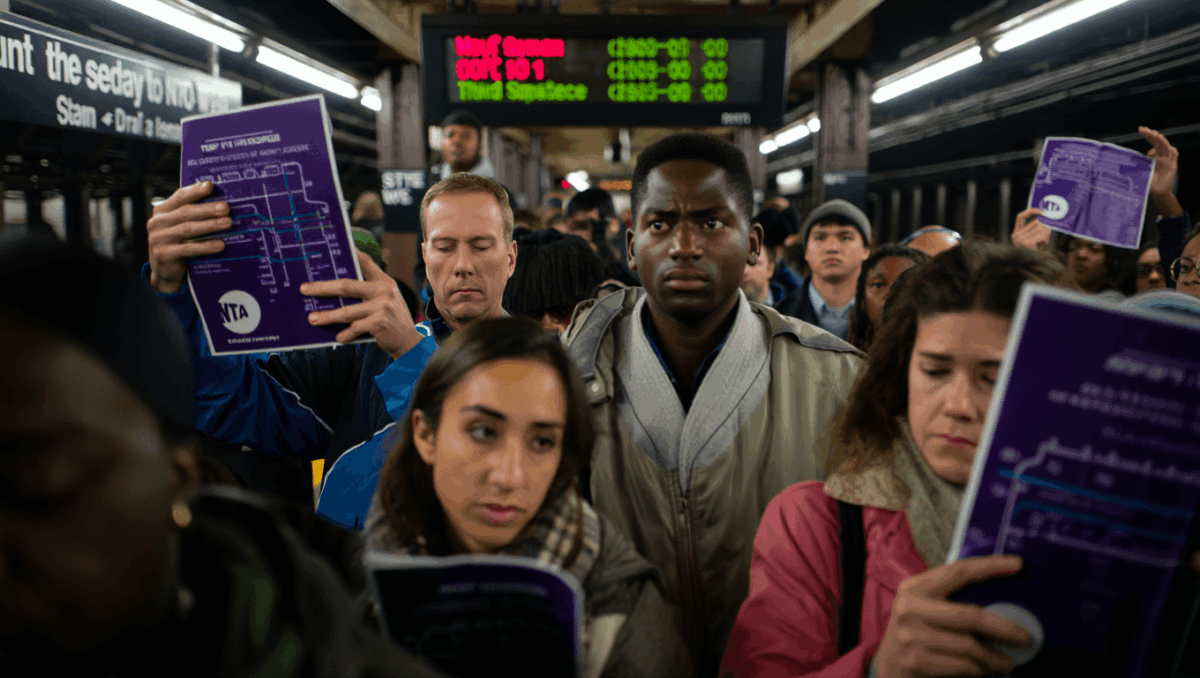
The MTA officially starts one of the most significant subway changes in years today. Beginning at 6:00 AM, the F and M trains will permanently swap their routes between Manhattan and Queens on weekdays, directly affecting how more than 1.2 million daily commuters navigate the city.
🔥 Quick Facts
- Swap effective weekdays only from 6:00 AM to 9:30 PM
- Impacts eight subway stations between Jackson Heights and Midtown Manhattan
- F trains now use the 53rd Street tunnel formerly served by M trains
- MTA expects to reduce delays by simplifying track merges and routing conflicts
Understanding the Route Swap
Intuit emerges as best software stock for 2026 while stock crashes to bargain levels analysts didn’t expect
2026 tax brackets shock Americans with hidden paycheck truth nobody expected
The Queens Boulevard corridor between Manhattan and Queens has been experiencing significant bottlenecks. Two separate train lines sharing the same tunnel creates what transit experts call “interlining complications.” By swapping routes, the F will operate on the 53rd Street tunnel while the M shifts to Sixth Avenue, eliminating unnecessary merges that cause slowdowns.
The change affects movement through four key stations in Manhattan: Queens Plaza, Court Square-23rd Street, Lexington Avenue/53rd Street, and Fifth Avenue/53rd Street. The swap ensures each line follows a more logical path without conflicting scheduling.
Who Gets Impacted and When
Marcus Lemonis takes CEO role at Bed Bath & Beyond with $25M cost-cutting plan and watch what industry experts are saying about his next move
SPX surges 34 points at open with shocking tech recovery, here’s what caused the unexpected Venezuela rally
Approximately 1.2 million commuters rely on these two lines daily, making this one of the transit system’s most critical service adjustments. The change takes effect immediately at 6:00 AM today for weekday morning rush hour. On weekdays after 9:30 PM, both lines return to their original routes.
Weekend service remains completely unchanged, giving riders time to adjust during lighter-traffic days. This hybrid approach allows the MTA to test the new configuration while minimizing overall disruption to the system’s weekend operations.
Station Changes and New Route Maps
| Station | Manhattan Line | Queens Line |
| Queens Plaza | F train (now serves) | M train (now serves) |
| Court Square | F train (now serves) | M train (now serves) |
| Lex Ave/53rd | F train (now serves) | M train (now serves) |
| 5th Ave/53rd | F train (now serves) | M train (now serves) |
What MTA Officials Say About Reliability
Transit officials describe this as “the Great Subway Swap of 2025.” The adjustment should reduce the number of track merges that cause slowdowns when multiple lines share tunnels. The MTA emphasized this permanent change will improve service consistency and on-time performance for millions of commuters.
According to the MTA press release, the new service pattern reduces “de-interlining” complications. When train lines operate on tunnels designed for other lines, scheduling conflicts create cascading delays. Simplifying which line uses which tunnel eliminates this problem at its source.
“This permanent service change is intended to reduce congestion and delays on the E/F/M/R lines.”
— Metropolitan Transportation Authority, Official Statement
How Should You Prepare Starting Today?
Commuters should download the updated MTA subway map immediately to understand new routing. If your station receives a different train, plan your journey accordingly. Most riders can still reach their destinations using the same stations. Only the train line serving each location changes.
The MTA recommends using the official MTA.info website or mobile app for real-time alerts. Test your new commute if possible before relying on it for important appointments. Although change creates temporary confusion, the ultimate result should be faster, more reliable service across the entire system.

Patrick Graham is a business and finance journalist translating Wall Street’s complexities into stories that matter to everyday readers. With extensive experience in financial journalism and economic analysis, this expert journalist provides sharp insights on market trends, corporate developments, and the economic forces affecting daily life. His reporting helps readers make sense of the business world’s biggest moves.