
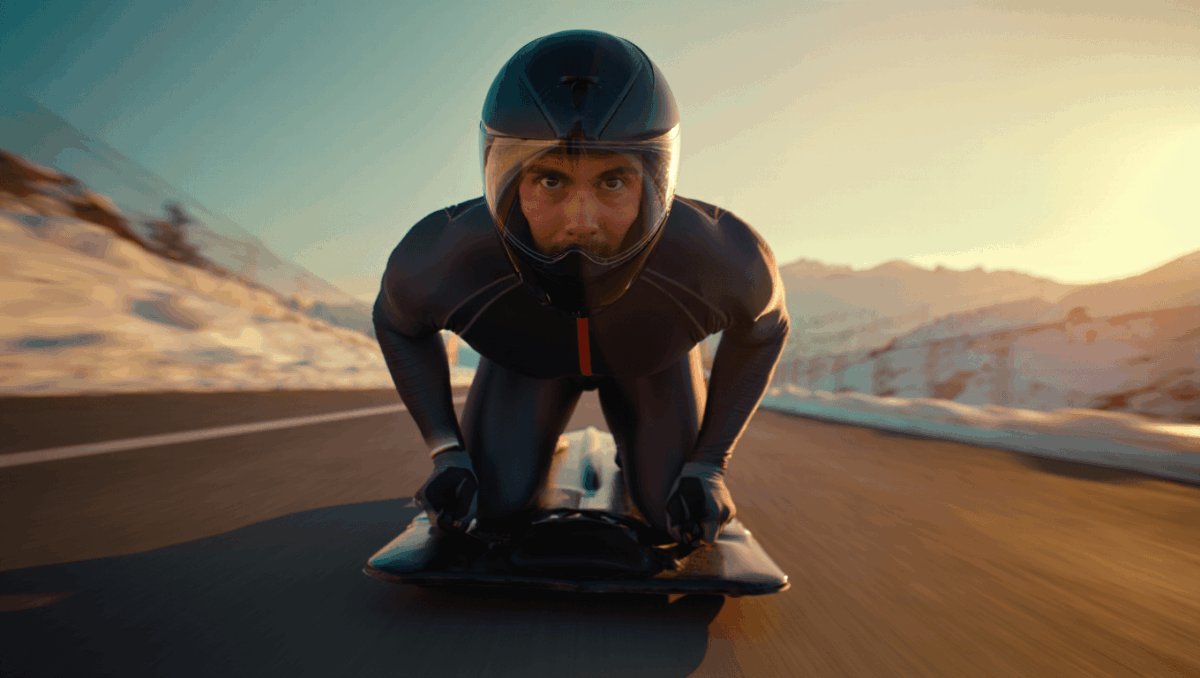
Skeleton Winter Olympics begins February 12 with the world’s fastest head-first sliders racing down the icy Cortina track. Athletes will hit speeds of 130 to 140 km/h while experiencing gravitational forces up to 5G. This thrilling sport returns to Milan as competitors battle for Olympic gold across three events.
🔥 Quick Facts
- Competition Dates: February 12-15, 2026 at Cortina Sliding Centre
- Men’s Singles: February 12-13 with medals awarded February 13
- Women’s Singles: February 13-14 with medals awarded February 14
- Mixed Team Event: February 15 (new to Milano Cortina 2026)
What Makes Skeleton So Extreme
World Baseball Classic 2026 bracket revealed: which teams advance and when to watch
World Cup 2026: three teams set to inherit Iran’s qualification spot
Skeleton is one of the oldest winter sports in existence, dating back to 1892 when the sport was born on the Cresta Run in St. Moritz, Switzerland. Athletes launch head-first down an icy track at speeds reaching 150 km/h with only body movements to steer. The sport demands pure courage and total control as competitors experience gravitational accelerations that rival fighter jets.
Unlike luge where athletes lie on their backs, skeleton racers tackle the track face down on a specialized sled. There is no mechanical steering, meaning competitors use only shoulder, knee, and toe shifts to navigate turns. Each run is timed to the hundredth of a second, making precision equipment and technique absolutely critical to victory.
Elite Athletes Ready to Dominate
Caitlin Clark powers Team USA to dominant win over Senegal in FIBA World Cup qualifier opener
USA moves into WBC quarterfinals after Italy stuns Mexico
The competition features world-class sliders including Matt Weston of Great Britain, who is seeking to end Germany’s reign as the dominant skeleton nation. Kim Meylemans of Belgium leads the women’s charge alongside other international contenders. American slider Kendall Wesenberg, competing in her second Olympics, represents the U.S. contingent of elite competitors.
According to the International Bobsleigh and Skeleton Federation, this year’s field includes some of the fastest sliders ever assembled. Canadian skeleton athlete Jospic Brusic has achieved speeds just under 140 km/h in recent competition. The competition will showcase three skeleton events for the first time at the Winter Olympics.
Competition Format and Schedule
The men’s individual event opens the skeleton competition on February 12 at 9:30 AM at the Cortina Sliding Centre in Cortina d’Ampezzo, Italy. Men complete four runs total, with runs 1-2 on February 12 and runs 3-4 on February 13, to determine medals. The women’s competition follows on February 13-14, also featuring four runs to crown a champion.
| Event | Schedule | Medals |
| Men’s Singles | Feb 12-13 | Feb 13 |
| Women’s Singles | Feb 13-14 | Feb 14 |
| Mixed Team Relay | Feb 15 | Feb 15 |
The debut of the mixed team relay on February 15 marks a historic moment for skeleton at the Olympics. In this new event, one male and one female athlete from the same nation compete as a team, with each completing a race run. This addition reflects the Olympic commitment to gender equality in winter sports.
“The world’s top skeleton athletes will gather at the Milano Cortina 2026 Winter Olympics. Skeleton athletes can reach speeds of up to 130-140 km/hr.”
— International Olympic Committee, Official Olympics.com
The Cortina Sliding Centre is World-Class
All skeleton events will take place at the Cortina Sliding Centre, which also hosts bobsleigh and luge. The track measures 1200 to 1650 metres in length with a maximum slope of 12 percent. This natural ice track provides competitors with challenging turns and demanding sections that test both speed and control throughout the course.
The venue is famed for its beauty and sporting legacy, having previously hosted Winter Olympics in 1956. Cortina d’Ampezzo in the Italian Alps offers timeless charm combined with world-class facilities. Tickets remain available for fans wanting to witness the fastest sliders in the world racing down this legendary course at speeds exceeding 80 miles per hour.
Will Germany’s Skeleton Dominance Finally End?
For decades, Germany has dominated Olympic skeleton, capturing multiple gold medals across men’s and women’s events. This year’s competition represents a rare opportunity for challengers like Great Britain’s Matt Weston and **Belgium’s Kim Meylemans** to break the German stronghold. The mixed team event debut adds unpredictability and fresh medal opportunities for nations previously unable to compete for gold.
Athletes have logged thousands of training hours on this exact track, studying every curve and elevation change. Speed runs during official training have seen competitors pushing the limits of what the human body can withstand. As the February 12 start date approaches, all eyes are on whether traditional powers maintain control or if this is finally the year a new skeleton nation claims Olympic glory.

Michael Brown is a seasoned sports journalist bringing years of experience covering professional athletics and sporting culture. With a keen eye for breaking stories and player dynamics, this veteran journalist delivers in-depth analysis and exclusive insights from the world’s biggest sporting events. His passion for the game shines through in every story, keeping fans connected to the action both on and off the field.