
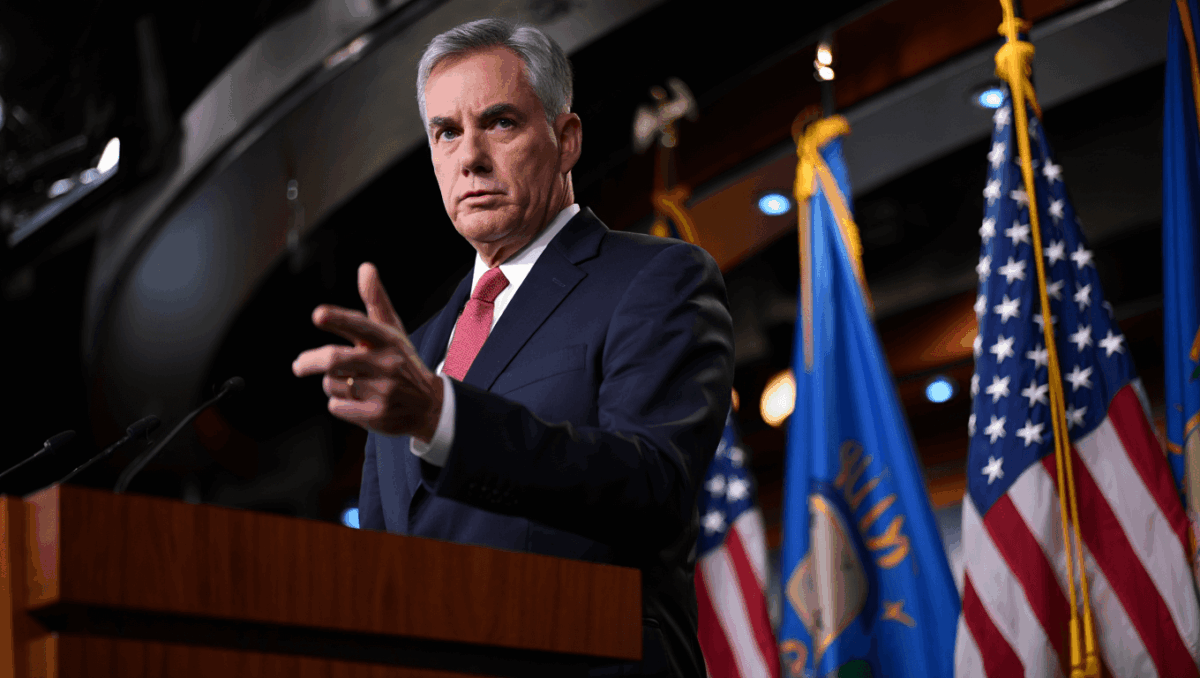
Doug Burgum, Interior Secretary under President Trump, has intensified criticism of California’s energy policies, labeling the state a “national security risk” in recent comments. His remarks highlight a broader administration effort to challenge blue state energy regulations. The Interior Secretary argues that restrictive policies are driving expensive imports and skewing national energy cost averages higher.
🔥 Quick Facts
- Blue states average $0.18 per kilowatt-hour, while red states average $0.11 per kWh
- California imports 63% of its energy from foreign countries due to state policy decisions
- Burgum warns that New England also faces similar security risks from restrictive energy policies
- Interior Secretary supports power plants capable of running around the clock
Burgum’s National Security Argument Sparks Energy Debate
Intuit emerges as best software stock for 2026 while stock crashes to bargain levels analysts didn’t expect
2026 tax brackets shock Americans with hidden paycheck truth nobody expected
Doug Burgum‘s comments represent an escalation in the Trump administration’s confrontation with state-level energy policies. The Interior Secretary claims California’s dependence on foreign energy imports creates vulnerability in national security infrastructure. His argument frames energy independence as a critical security concern, not merely an economic issue.
The administration’s position suggests that California’s environmental restrictions on fossil fuel production leave the state vulnerable. Burgum specifically highlighted that 63% of California’s energy comes from foreign sources, creating what the Interior Secretary characterizes as an unacceptable exposure to geopolitical risks.
Cost Disparity Between Red and Blue States Highlighted
Marcus Lemonis takes CEO role at Bed Bath & Beyond with $25M cost-cutting plan and watch what industry experts are saying about his next move
SPX surges 34 points at open with shocking tech recovery, here’s what caused the unexpected Venezuela rally
Energy pricing data has emerged as a central point in Burgum’s argument against blue state policies. According to analysis supporting the Interior Secretary’s position, blue states face significantly higher energy costs compared to red states. The average cost difference spreads across regions, affecting everything from residential bills to industrial operations.
Burgum’s analysis suggests that restrictive environmental policies increase costs without producing corresponding benefits. The Interior Secretary argues these higher prices disproportionately affect consumers and businesses. His comments imply that federal energy policy should prioritize affordability and national security over state-level environmental mandates.
Blue State Energy Policy Under Federal Scrutiny
| Category | Blue States Average | Red States Average |
| Electricity Cost (per kWh) | $0.18 | $0.11 |
| California Energy Imports | 63% from Foreign Sources | Lower dependency rates |
| Policy Focus | Environmental restrictions | Domestic production emphasis |
| Trump Administration Position | Needs policy overhaul | Model for federal policy |
The Trump administration has signaled a shift in federal energy priorities away from environmental restrictions. Doug Burgum‘s recent comments align with broader administration goals to promote domestic energy production. The Interior Secretary’s statements suggest federal oversight might increase for state energy policies deemed contrary to national interests.
California and New England face similar criticism from the Interior Secretary, suggesting a coordinated challenge to blue state environmental policies. The comparison implies that multiple regions operate under policies the administration views as counter to energy security. Federal pressure on state-level regulations appears likely to intensify throughout the administration’s tenure.
National Energy Strategy Tied to Cost and Security Concerns
The Interior Secretary’s advocacy for power plants capable of continuous operation reflects a preference for traditional baseload energy sources. This position contrasts with renewable energy approaches favored by blue states. Burgum’s comments suggest the Trump administration prioritizes reliability and affordability over emissions reduction.
The debate raises fundamental questions about which energy approaches better serve national interests. States like California argue their policies address climate concerns while supporting long-term economic sustainability. However, the Interior Secretary contends that current blue state approaches impose unacceptable costs on consumers and risks on national security.
What Does This Mean for State Energy Policy Going Forward?
Burgum’s latest statements suggest the Trump administration intends aggressive action on energy policy. Federal intervention in state-level regulations remains a possibility as the administration presses its agenda. The Interior Secretary’s emphasis on security and cost will likely drive debates about balancing state autonomy with federal energy interests.
Business and finance professionals should monitor how federal-state energy policy tensions evolve. Investment decisions in energy sectors may depend on whether Washington successfully pushes states toward different policies. The cost differential data highlighted by Burgum could influence debates about regulatory reform across multiple states.
Sources
- Fox News – Interior Secretary Doug Burgum’s recent exclusive comments on California energy policy
- POLITICO Pro – Energy and Environment coverage of Interior Secretary’s national security risk assessment
- Multiple regional networks – Secretary Burgum’s statements on Trump administration energy policy successes

Patrick Graham is a business and finance journalist translating Wall Street’s complexities into stories that matter to everyday readers. With extensive experience in financial journalism and economic analysis, this expert journalist provides sharp insights on market trends, corporate developments, and the economic forces affecting daily life. His reporting helps readers make sense of the business world’s biggest moves.