
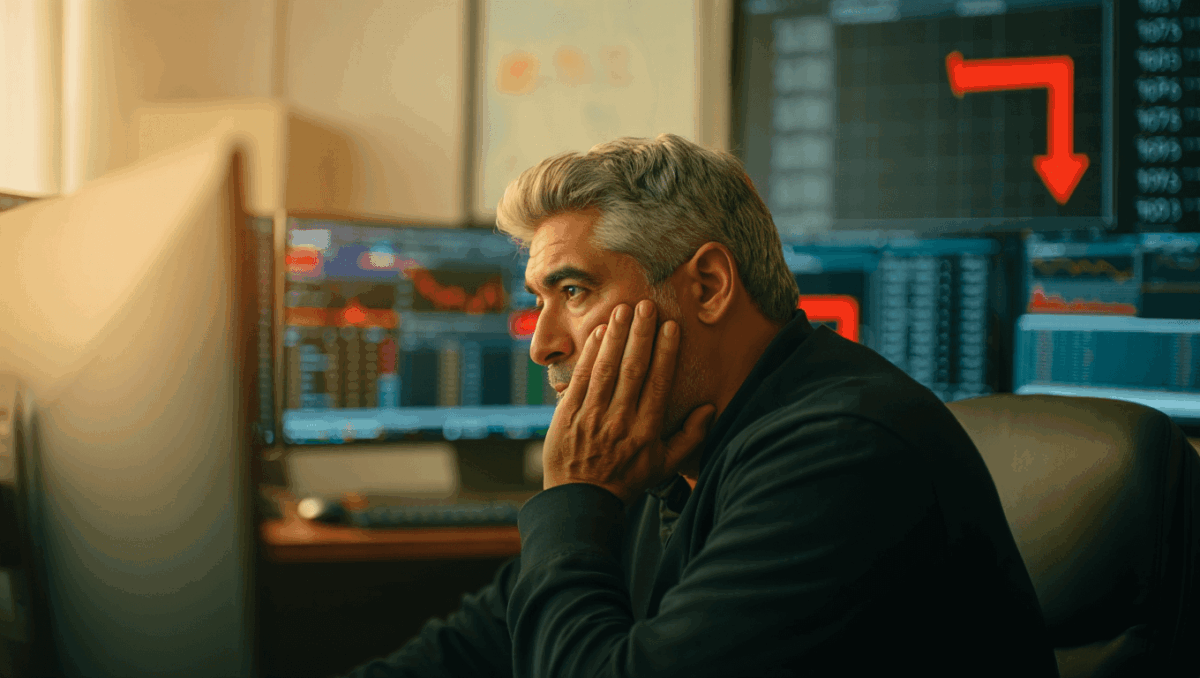
Global markets face a critical inflection point in early 2026 as **57% of investors warn that an AI bubble burst represents the top market risk** for the year ahead. While Wall Street strategists are predicting solid gains for US equities, lingering concerns about inflated technology valuations and unproven artificial intelligence returns threaten to derail the current economic optimism.
🔥 Quick Facts
- A Deutsche Bank survey of 440 investors, economists, and analysts found 57% cite AI/tech bubble risk as the biggest 2026 market threat
- Goldman Sachs raised AI capex estimates to $527 billion for 2026, up from $465 billion earlier in 2025
- Wall Street expects the S&P 500 to climb roughly 11% in 2026, with year-end targets ranging from 7,100 to 8,100 points
- UBS predicts $4.7 trillion in AI capital expenditure globally by 2030, roughly double the $2.4 trillion already planned
The Deutsche Bank Warning: AI Bubble Looms Over 2026
Intuit emerges as best software stock for 2026 while stock crashes to bargain levels analysts didn’t expect
2026 tax brackets shock Americans with hidden paycheck truth nobody expected
A comprehensive Deutsche Bank survey of 440 financial professionals published in December 2025 revealed unprecedented investor consensus around a single market risk: the potential collapse of artificial intelligence valuations. This level of agreement about the dominant market threat is historically exceptional.
Investors have grown increasingly vocal about AI valuation concerns as multiple hyperscaler companies have posted stunning stock gains throughout 2025 without demonstrating proportional earnings growth. The concentration of capital into a narrow band of mega-cap technology firms has created what some analysts openly describe as bubble-like dynamics.
Why the AI Bubble Risk Towers Above Other Threats
Marcus Lemonis takes CEO role at Bed Bath & Beyond with $25M cost-cutting plan and watch what industry experts are saying about his next move
SPX surges 34 points at open with shocking tech recovery, here’s what caused the unexpected Venezuela rally
The second-biggest investor concern is Federal Reserve independence, with 57% worry category reflecting broader unease about Donald Trump’s potential influence on central banking policy. This institutional anxiety ranks well below AI bubble fears in the minds of market professionals.
Private credit market crisis ranks as the third major threat, with regulators and policymakers warning that non-bank lending channels face untested resilience. However, even this systemic shadow banking danger receives less attention than the AI valuation question, underscoring how dominant technology sector risk perception has become.
Goldman Sachs Ramps AI Spending Projections for 2026
| Metric | 2025 Estimate | 2026 Estimate |
| AI Hyperscaler Capex | $465 billion | $527 billion |
| Year-over-Year Change | N/A | +13% increase |
| Projected 2030 Total | $2.4 trillion planned | $4.7 trillion (UBS) |
Goldman Sachs Research upgraded its capital expenditure estimates for AI companies in late December, citing accelerating infrastructure buildout and intensifying competitive dynamics among hyperscalers. The consensus estimate climb from $465 billion to $527 billion reflects extraordinary confidence that technology firms will continue deploying capital at aggressive rates.
However, this massive spending increase creates the very valuation pressure that 57% of investors now identify as a primary market risk. Company stock prices must justify extraordinary capex burn rates, raising the stakes for demonstrable productivity gains.
Wall Street’s Bullish But Cautious 2026 Outlook
Analyst consensus predicts the S&P 500 will advance approximately 11% in 2026, a respectable but notably slower pace than the previous three years’ performance. The median analyst target sits near 7,700 points by year-end, though estimates range from as low as 7,100 (Bank of America) to as high as 8,100 (Oppenheimer Asset Management).
UBS forecasts 15% gains for global equities under normal conditions, driven by supportive economic growth and monetary policy normalization. However, the investment bank simultaneously warns that markets could “face new challenges” if AI progress slows, inflation resurges, or technology sector valuations compress. This hedged messaging reflects the underlying tension between bullish fundamentals and bubble concerns.
Can Markets Navigate the Narrowing Path in 2026?
The central question confronting investors in January 2026 is whether financial markets can sustainably drive economic growth through AI infrastructure investment. If artificial intelligence capabilities deliver tangible productivity improvements and measurable business value, current valuations might prove justified. If productivity gains fail to materialize or disappoint relative to expectations, the 57% investor consensus around bubble risk could prove prescient.
Columbia Threadneedle Investments warns that “risks of a misstep are accumulating.” The investment manager notes that growth has proven surprisingly durable, inflation has moderated, and stock markets have continued climbing. Yet beneath the surface, imbalances are building that might test policymakers’ and investors’ ability to navigate careful middle ground.
“AI/tech bubble risk towers over everything else. Investors have never before been in such agreement about the biggest market risk for a year ahead than they are now.”
— Deutsche Bank Research Analysis, 2026 Market Risk Survey
Sources
- The Guardian – “From the AI bubble to Fed fears: the global economic outlook for 2026” (January 4, 2026)
- Goldman Sachs Research – “Why AI Companies May Invest More than $500 Billion in 2026” (December 18, 2025)
- CNBC – Market Strategist Survey 2026 (January 2, 2026)

Patrick Graham is a business and finance journalist translating Wall Street’s complexities into stories that matter to everyday readers. With extensive experience in financial journalism and economic analysis, this expert journalist provides sharp insights on market trends, corporate developments, and the economic forces affecting daily life. His reporting helps readers make sense of the business world’s biggest moves.