
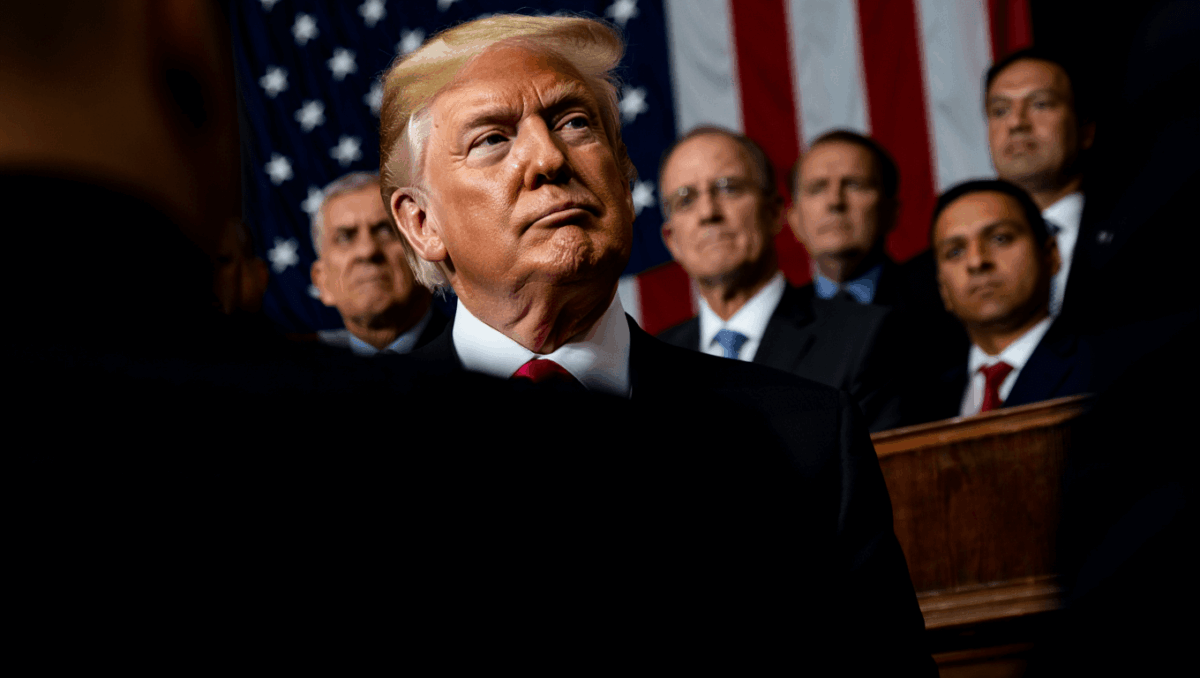
Chevron stock price surges as Trump administration moves to unlock Venezuela’s vast oil reserves. The energy giant climbed 8% on January 5, 2026, following the U.S. military capture of Venezuelan President Nicolas Maduro. Oil markets shift dramatically as investors position for major policy changes.
🔥 Quick Facts
- Chevron stock jumped 8% in trading on January 5, 2026
- Trump administration captured President Nicolas Maduro over the weekend
- Only major U.S. oil company currently operating in Venezuela under government waiver
- Chevron awarded $10.5 billion arbitration judgment against Venezuela for 2007 nationalization
Trump’s Venezuela Move Creates Windfall for Chevron Stock
Intuit emerges as best software stock for 2026 while stock crashes to bargain levels analysts didn’t expect
2026 tax brackets shock Americans with hidden paycheck truth nobody expected
President Donald Trump’s military action against Venezuela triggered immediate market reactions on Wall Street. Chevron’s share price surged 8% as investors recognized the significant strategic advantage the oil company holds in the region. Trump stated the U.S. would need “total access” to Venezuela’s immense oil reserves and promised American oil companies would invest billions to restore infrastructure.
The geopolitical shift sent shockwaves through energy markets as traders assessed the implications. ConocoPhillips rose 7%, while ExxonMobil gained 4% and refiners also gained substantially, showing broad sector optimism.
Why Chevron Stands Out in Venezuela’s Oil Future
Marcus Lemonis takes CEO role at Bed Bath & Beyond with $25M cost-cutting plan and watch what industry experts are saying about his next move
SPX surges 34 points at open with shocking tech recovery, here’s what caused the unexpected Venezuela rally
Chevron remains the only major U.S. oil company actively producing in Venezuela, operating under a special exemption from the Office of Foreign Assets Control since the fourth quarter of 2022. The company produces approximately 200,000 barrels per day from its joint venture operations. This existing footprint positions Chevron as the primary beneficiary of any policy shift allowing expanded American investment.
Analysts at TD Cowen issued research notes highlighting Chevron’s advantage. The company’s maintained license and operational infrastructure mean it can move faster than competitors facing entry barriers. Other major firms like ExxonMobil were previously shut out of Venezuelan operations entirely, creating a first-mover advantage for Chevron.
| Company | Stock Price Change | Current Status |
| Chevron | +8% | Operating under U.S. waiver |
| ConocoPhillips | +7% | Owed $10.5 billion arbitration |
| ExxonMobil | +4% | Seeking market re-entry |
| U.S. Refiners | +5% to +16% | Processing heavy crude benefit |
The Multi-Billion Dollar Arbitration Award Fueling Investor Optimism
ConocoPhillips holds an international arbitration award of $10.5 billion plus interest against Venezuela for the 2007 nationalization of its oil fields. The company has recovered only $800 million to date, with legal actions potentially adding another $1 billion in 2026. Analysts at Citi noted that the remaining $9 billion plus accrued interest had been valued near zero given the lack of payment ability under previous Venezuelan governments.
Trump’s intervention changes this calculus entirely. If a new Venezuelan administration proves cooperative, debt collection becomes viable for the first time in nearly two decades. This possibility drove investors to reassess the arbitration award’s true value, benefiting ConocoPhillips shares alongside broader oil sector gains.
Oil Market Dynamics Shift as Venezuela’s Production Capacity Comes Into Focus
Venezuela once produced 3.5 million barrels per day in the 1970s, accounting for more than 7% of global output. Production has collapsed to approximately 1.1 million barrels daily, representing just 1% of worldwide supply. The dramatic decline reflects years of underinvestment, mismanagement, and international sanctions.
Venezuelan crude is heavy sour oil with high sulfur content, making it ideal for U.S. Gulf Coast refineries designed historically for such grades. American refiners benefit from nearby supply versus importing from the Middle East. However, analysts cautioned that meaningful production recovery will require time due to infrastructure decay, political uncertainty, and the scale of reinvestment required.
“We’re going to have our very large U.S. oil companies, the biggest anywhere in the world, go in, spend billions of dollars, fix the badly broken infrastructure, oil infrastructure, and start making money for the country.”
— President Donald Trump, Statement on Venezuela Policy
What Does This Mean for Energy Markets and Investor Portfolios?
The immediate market reaction demonstrates strong investor confidence in Trump’s ability to facilitate American oil company access to Venezuelan reserves. Oil services companies like Slumberger and Halliburton also rose 8% and 7% respectively, as investors anticipated infrastructure reconstruction contracts.
Broader sector enthusiasm extended to refiners, with Marathon Petroleum, Valero Energy, and Phillips 66 all recording significant gains. The combined market value of U.S. oil companies surged by approximately $100 billion in response, reflecting systematic reassessment of Venezuelan opportunity across the industry. Still, experts warned that political uncertainty and the contentious history of U.S.-Venezuela relations could complicate execution of this ambitious plan.
Sources
- MarketWatch – Analysis of Chevron stock performance and analyst commentary
- Reuters – Reporting on oil company shares surge and market implications
- Morningstar – Comprehensive analyst perspectives on oil sector gains

Patrick Graham is a business and finance journalist translating Wall Street’s complexities into stories that matter to everyday readers. With extensive experience in financial journalism and economic analysis, this expert journalist provides sharp insights on market trends, corporate developments, and the economic forces affecting daily life. His reporting helps readers make sense of the business world’s biggest moves.