
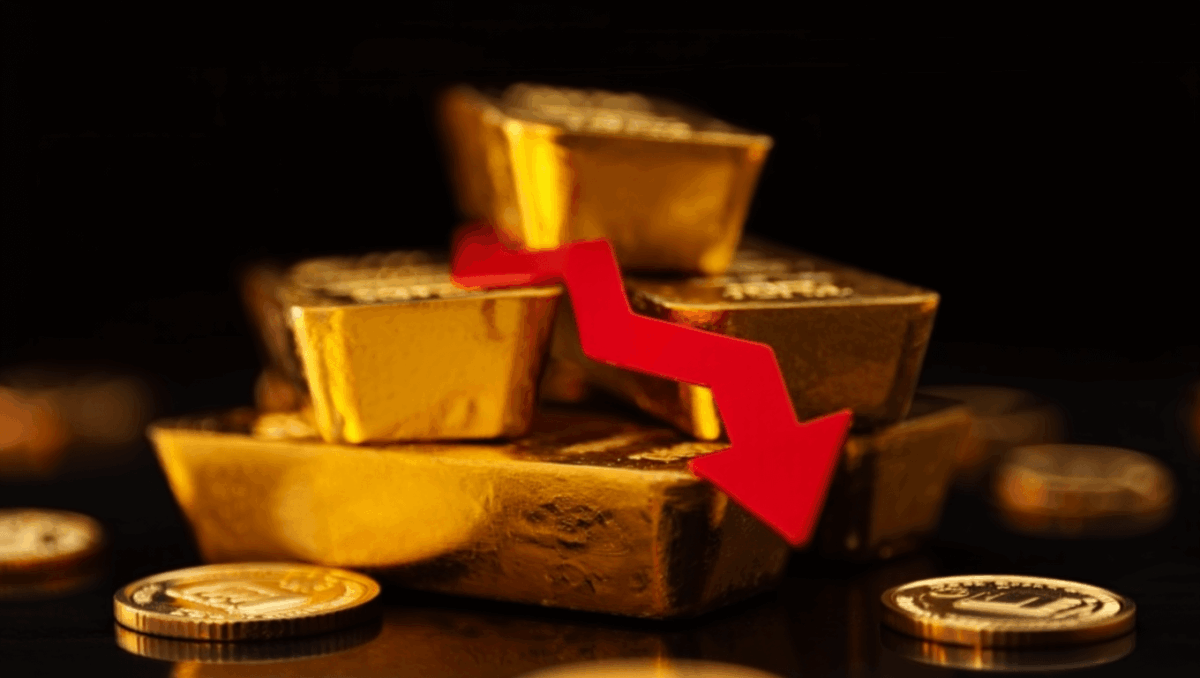
Gold prices dropped sharply on Monday, December 29, as traders locked in profits after the precious metal hit historic highs. The price of gold fell to $4,400 per troy ounce in early U.S. trading, triggering a broad pullback across precious metals markets. Profit-taking pressure mounted as investors reassess positions ahead of year-end.
🔥 Quick Facts
- Gold trading at $4,400 per ounce on December 29, 2025, down from recent record highs
- Heavy profit-taking and weak long liquidation pressuring prices in early U.S. trading
- Gold surged approximately 70% in 2025, best annual performance since 1979
- Silver also retreated after touching a record peak above $80 per ounce
Price Pullback After Record-Breaking Climb
Intuit emerges as best software stock for 2026 while stock crashes to bargain levels analysts didn’t expect
2026 tax brackets shock Americans with hidden paycheck truth nobody expected
Gold’s recent selloff represents a natural correction following an extraordinary bull run. Spot gold fell 1.56% on December 29, according to Trading Economics data showing prices at $4,460.77 per troy ounce. Futures contracts reflected the broader weakness, though earlier in the session gold futures opened at $4,568 per ounce, showing the intraday volatility plaguing the market. The retreat highlights investor caution as market participants look ahead to 2026.
The decline follows gold hitting near-record levels in recent trading sessions. Traders who accumulated positions during the metal’s historic rally now liquidate holdings, securing gains accumulated over a remarkable 2025 campaign. This profit-taking cycle is typical after sustained price advances and suggests healthy market functioning rather than a fundamental shift in sentiment.
Profit-Taking Pressure Intensifies as Year Winds Down
Marcus Lemonis takes CEO role at Bed Bath & Beyond with $25M cost-cutting plan and watch what industry experts are saying about his next move
SPX surges 34 points at open with shocking tech recovery, here’s what caused the unexpected Venezuela rally
Market participants describe the current environment as heavy profit-taking combined with weak long liquidation from speculators. According to reporting from Kitco News and other market analysts, the pressure is acute in early U.S. trading as year-end approaches. Traders are aligning positions before the calendar turns to 2026, when fresh market dynamics may take hold.
The timing coincides with historically volatile December trading patterns, where institutional investors adjust portfolios before year-end reporting. This seasonal phenomenon combines with specific profits from 2025’s extraordinary gains to create downward price pressure. Silver’s similar retreat from record peaks suggests broad-based profit-taking across precious metals, not gold-specific weakness.
Gold’s 2025 Performance: A Historic Bull Year
| Performance Metric | 2025 Result |
| Annual Price Gain | ~70% increase year-to-date |
| Best Year Since | 1979 (Jimmy Carter era) |
| Supporting Factors | Fed rate cuts, weak dollar, central bank demand |
| Record High Reached | December 26, 2025 in early Asian trading |
Gold’s 2025 performance stands as one of the most remarkable commodity rallies in decades. The 70% annual gain far exceeded most expectations at year start and reflects multiple tailwinds: expectations for Federal Reserve rate cuts, a weakening U.S. dollar, and extraordinary central bank buying demand. The metal serves as a hedge against economic uncertainty and currency weakness, both prevalent in 2025’s geopolitical environment.
Central banks worldwide have increased purchases at record pace, providing structural demand support underneath the market. Goldman Sachs and J.P. Morgan research teams highlight this official sector buying as a fundamental bull market driver that extends beyond typical speculative cycles. The strength in official demand suggests gold’s rally reflects genuine portfolio reallocation rather than pure speculation.
What Wall Street Expects for Gold in 2026?
Major financial institutions project continued strength for gold into 2026, despite the current pullback. J.P. Morgan analysts target $5,000 per ounce by the fourth quarter of 2026, with some researchers suggesting $6,000 per ounce remains possible longer-term. Goldman Sachs expects central bank buying to remain robust, averaging approximately 70 tonnes per month as central banks continue their diversification away from traditional reserve holdings.
The consensus view favors higher prices in 2026 if global economic uncertainty persists and Fed rate cuts materialize as expected. However, rising interest rates could pressure gold, since higher rates increase the opportunity cost of holding non-yielding precious metals. Market observers note that gold likely consolidates in the $4,000 to $4,500 range during early 2026 before potentially pushing toward $5,000 later in the year.
“This morning’s price decline, which follows record highs, is attributable mainly to traders taking profits ahead of the year-end.”
Reuters Market Commentary, December 29, 2025
Sources
- Fortune – Current price of gold tracking and market updates
- Reuters – Precious metals market analysis and profit-taking assessment
- Trading Economics – Real-time spot price data and historical performance metrics

Patrick Graham is a business and finance journalist translating Wall Street’s complexities into stories that matter to everyday readers. With extensive experience in financial journalism and economic analysis, this expert journalist provides sharp insights on market trends, corporate developments, and the economic forces affecting daily life. His reporting helps readers make sense of the business world’s biggest moves.