
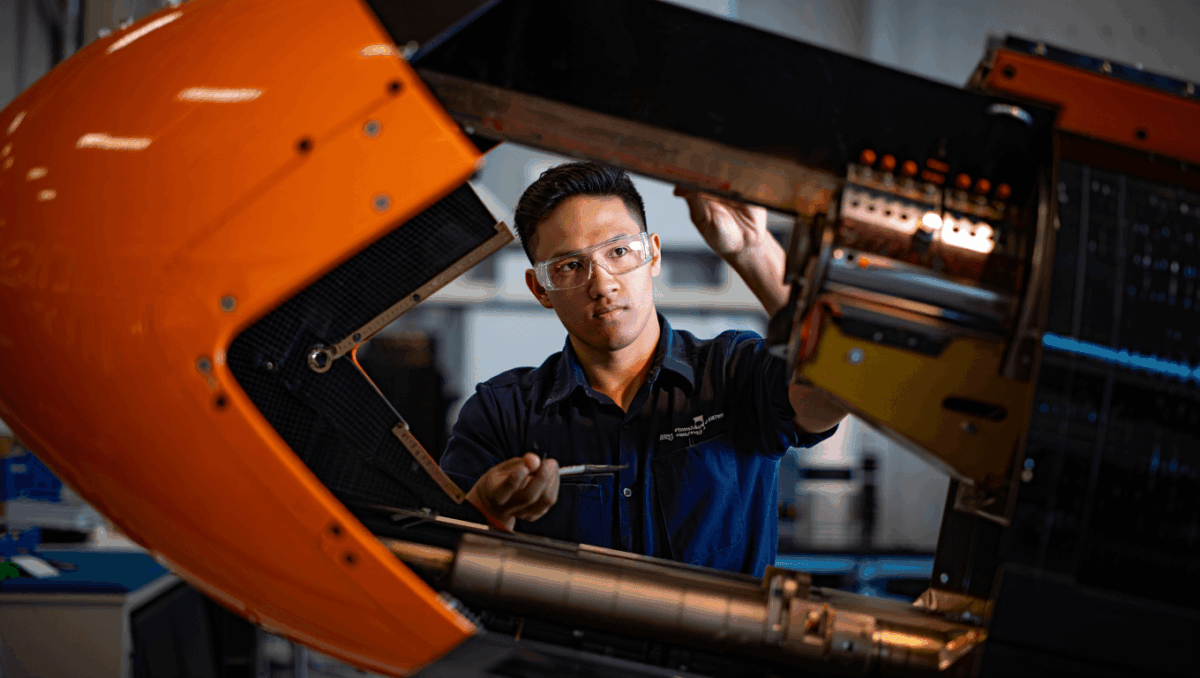
RKLB stock surged 10% as Rocket Lab achieved a world-first milestone with its “Hungry Hippo” reusable fairing system. The innovative clamshell-style fairing completed intensive qualification and acceptance testing. This breakthrough demonstrates Neutron readiness for first-stage development milestones.
🔥 Quick Facts
- Hungry Hippo fairing successfully qualified as of December 8, 2025
- World-first reusable captive fairing stays attached to first stage during reentry
- Neutron payload capacity: 13,000 kg (28,700 lbs) to low Earth orbit
- RKLB stock gained 10.4% to $63.53 following announcement
Hungry Hippo Fairing Achieves Historic Qualification Milestone
Intuit emerges as best software stock for 2026 while stock crashes to bargain levels analysts didn’t expect
2026 tax brackets shock Americans with hidden paycheck truth nobody expected
Rocket Lab announced on December 8, 2025 that Neutron’s innovative “Hungry Hippo” fairing completed all qualification and acceptance testing requirements. The achievement marks a critical milestone on the path to Neutron’s maiden launch.
The clamshell-style fairing design opens and closes like the colorful game pieces in Hungry Hungry Hippos, protecting payloads during launch ascent. Unlike conventional rocket fairings that drop away during flight, this system closes again after second-stage separation and returns to Earth with the first stage booster.
Marcus Lemonis takes CEO role at Bed Bath & Beyond with $25M cost-cutting plan and watch what industry experts are saying about his next move
SPX surges 34 points at open with shocking tech recovery, here’s what caused the unexpected Venezuela rally
Rocket Lab conducted an intensive testing campaign to validate structural integrity and systems performance across all flight scenarios and environmental conditions.
What Makes Hungry Hippo Revolutionary for Space Launch
The Hungry Hippo design represents a paradigm shift in launch economics. Traditional rocket fairings are expendable—jettisoned during flight and lost. SpaceX recovers some fairing halves but faces significant challenges with ocean damage.
Rocket Lab’s approach keeps the entire fairing intact for recovery, dramatically reducing replacement costs. The fairing remains captive to the first stage, opening for payload release then closing before reentry. This solves the most expensive problem with reusable rocket components.
The world’s largest carbon composite launch vehicle design fully leverages Neutron’s reusability advantage for competitive cost-effective launches.
Neutron Rocket Specifications and Capabilities Overview
| Specification | Details |
| Vehicle Height | 141 feet (43 meters) |
| Payload Capacity (LEO) | 13,000 kg (28,700 lbs) |
| Launch Vehicle Mass | 480,000 kg |
| Fairing Type | Reusable Hungry Hippo (Captive) |
The 8-ton payload class rocket targets mega-constellation deployment and national security missions. Neutron’s partially reusable architecture combines first-stage booster recovery with the industry-first fairing recovery system.
RKLB Stock Reaction and Market Sentiment
RKLB stock price closed at $63.53 on December 11, 2025, up 10.4% following the qualification announcement. Investors recognize the engineering significance and pathway to Neutron commercialization.
The fairing qualification removes a major development risk. With Stage 1 booster qualification also complete and the fairing now shipped to Virginia for integration, Rocket Lab advances closer to first launch infrastructure deployment.
Space industry analysts view Neutron as a competitive alternative to larger launch vehicles, particularly for customers seeking dedicated mission capability without overbuying payload capacity.
What Comes Next As Neutron Approaches First Launch Window?
Rocket Lab shipped the qualified fairing hardware to Virginia’s launch facility for integration with Stage 1. Final assembly and checkout phases remain before the maiden flight.
The company targets first Neutron launch readiness in 2026 pending regulatory and final integration milestones. Upper stage qualification and booster reentry systems continue parallel development.
This qualification completes a critical engineering validation. The fairing must survive extreme temperatures, acoustic loads, and structural stresses during ascent—then maintain integrity during booster reentry at extreme velocities.

Patrick Graham is a business and finance journalist translating Wall Street’s complexities into stories that matter to everyday readers. With extensive experience in financial journalism and economic analysis, this expert journalist provides sharp insights on market trends, corporate developments, and the economic forces affecting daily life. His reporting helps readers make sense of the business world’s biggest moves.