
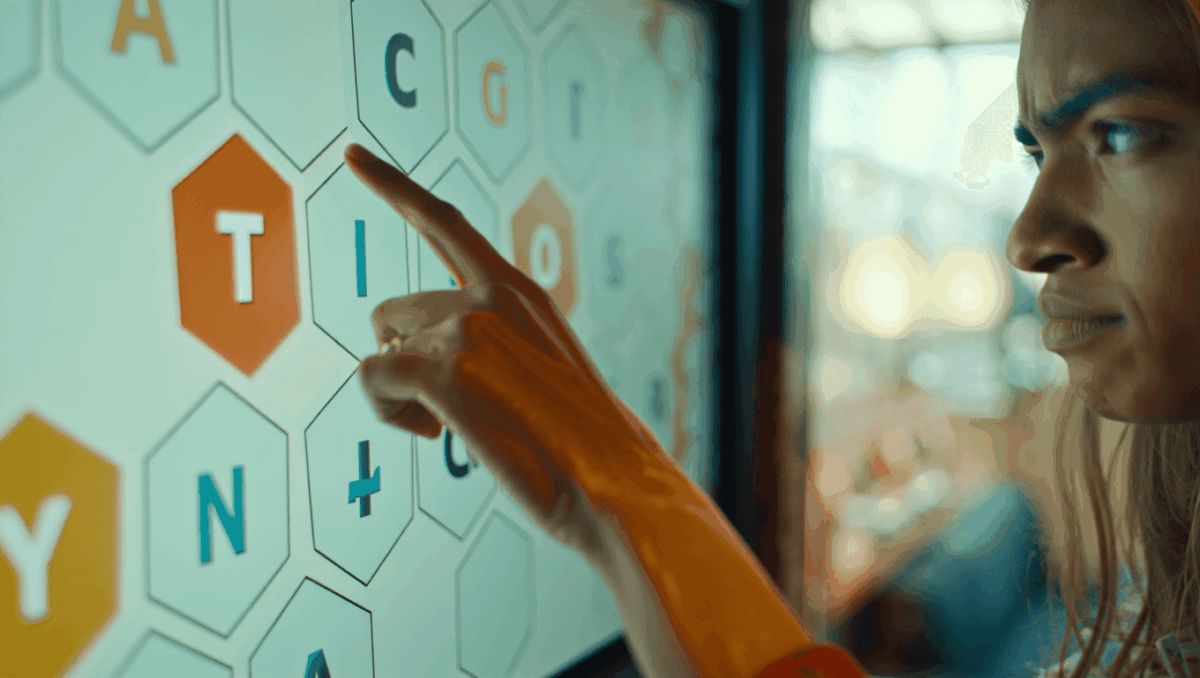
The NYT Spelling Bee kicks off 2026 with a challenging double-letter puzzle featuring the letters A, C, I, L, N, T, and Y. Players hunting for the elusive “analytic” pangram will need to master tricky letter combinations to unlock top scores. Today’s puzzle brings four pangrams and 363 maximum points to tackle.
🔥 Quick Facts
- Today’s letters: A, C, I, L, N, T, Y with T as the required center letter
- Total words available: 61 answers across all difficulty levels
- Four pangrams use all seven letters, including the challenge word “analytic”
- Genius level requires 254 points out of a maximum 363 possible points
Understanding Today’s Puzzle Setup
Prime Day gaming deals drop early: save as much as 50% on Switch, PS5 and gaming PCs
Gears of War: E-Day delivers explosive over-the-top action for Xbox owners
The NYT Spelling Bee presents seven letters arranged in a honeycomb pattern with one center letter highlighted. Every word players create must include that center letter. For today’s puzzle, letter T holds the central position, forcing all valid words to contain at least one T.
This constraint transforms the puzzle experience dramatically. Words like “antly,” “lacy,” and “anti” all depend on the center letter’s inclusion. The honeycomb arrangement forces players to explore letter combinations they might otherwise overlook.
Cracking the Analytic Pangram Challenge
Gears of War: E-Day on PC gets Nvidia RTX Mega Geometry and stunning visual upgrade
Wordle Oct. 3 answer could wipe out streaks: how one tough word is tripping players
The word “analytic” represents today’s standout pangram—a word containing every single letter from the seven-letter set. Pangrams award seven bonus points beyond the word’s base letter count. For an eight-letter word like “analytic,” the total score reaches 15 points.
Discovering pangrams requires thinking beyond common word patterns. The letter combination A-N-A-L-Y-T-I-C forces players to recognize how seemingly unrelated letters unite in mathematical and scientific terminology. Today’s four pangrams test whether solvers can find hidden words using these exact letter combinations.
Mastering Tricky Letter Combinations
The pairing of consonants and vowels in today’s letter set creates unusual word possibilities. With only three potential vowels (A, I, Y), players must maximize vowel-consonant blending. Words stretched across multiple consonants (L, N, C) demand creative thinking.
| Challenge Category | Example Words | Difficulty |
| Four-Letter Starters | TAIL, LACY, ANTI, CITY | Beginner |
| Complex Blends | TACIT, ATTIC, LANAI | Intermediate |
| Pangram Words | ANALYTIC (all 7 letters) | Expert |
| Genius Threshold | 254 points minimum | Challenge |
Genius and Queen Bee Achievement Levels
The NYT Spelling Bee awards titles based on accumulated points. Reaching “Genius” status requires finding approximately 70 percent of a puzzle’s available words. Today, players need 254 points to achieve this recognition.
“Queen Bee” status represents perfection—discovering all 61 words in today’s puzzle. This elite achievement demands systematic exploration of every possible letter arrangement. Finding all four pangrams directly contributes to unlocking Queen Bee status, making “analytic” and its companion pangrams critical to victory.
How Can You Find More Words in Today’s Puzzle?
Successful solvers employ strategic techniques refined through daily practice. Shuffling the letter arrangement helps spot new word patterns the fixed honeycomb might have hidden. Focusing on four-letter words builds momentum before tackling longer, five-letter combinations.
Looking for words that share common endings amplifies success rates. Words ending in “-ity,” “-ally,” or “-tic” often yield multiple valid entries. Thinking of words that contain double letters tests whether the game accepts repeated letter use. Most importantly, keeping the center letter T at the forefront ensures every entry meets the fundamental game requirement.
Sources
- New York Times Games – Official puzzle platform and daily Spelling Bee publisher
- NYT Spelling Bee Solver – Analysis and pangram statistics for daily puzzles
- Spelling Bee Forum Community – Player tips and collaborative solving strategies

Annabelle Ink is a gaming journalist and lifelong gamer who lives and breathes video game culture. From console releases to esports tournaments, this dedicated journalist brings insider knowledge and genuine enthusiasm to every review and feature. Her expertise spans multiple gaming platforms, helping readers discover their next favorite game while staying connected to the pulse of the gaming industry.