
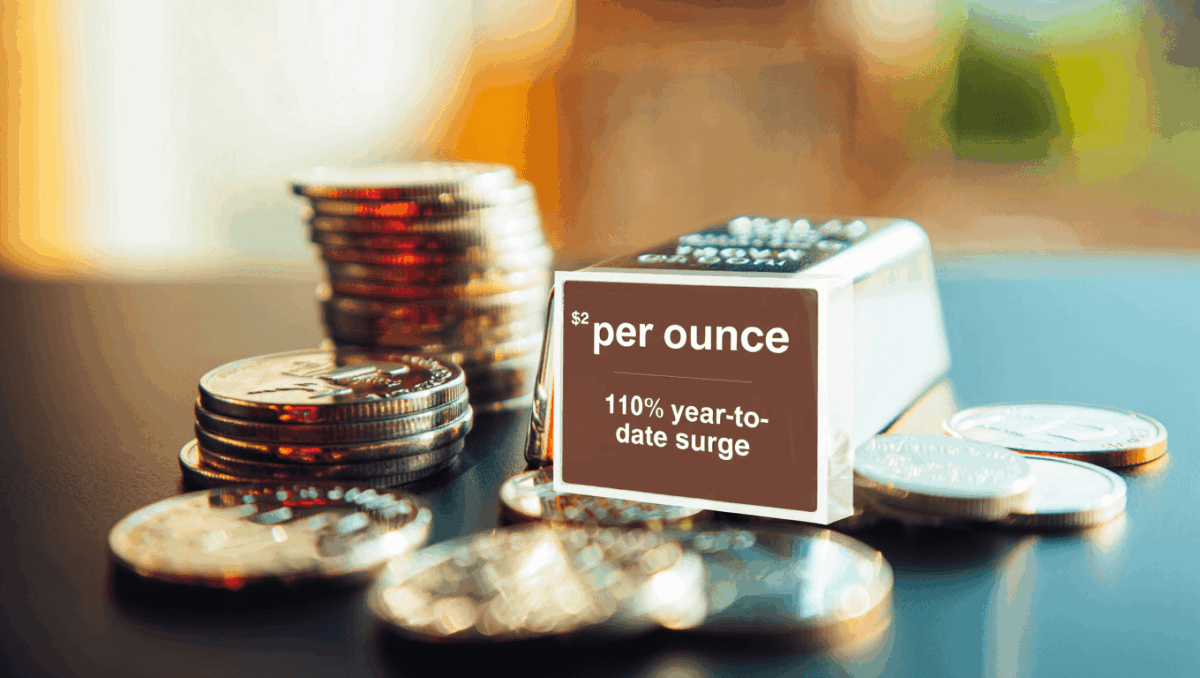
Price of silver today has surged past $62 per ounce, crushing the previous record from 1980. This historic milestone marks silver’s breakthrough year as the precious metal outpaces gold by a stunning margin. The industrial and investment worlds are watching closely as this 110% year-to-date gain reshapes commodity markets forever.
🔥 Quick Facts
- Silver touched $62.01 per troy ounce on December 11, 2025, setting new all-time highs
- Year-to-date gain reaches 110% to 116%, far outpacing gold’s 60% appreciation
- Previous record was $49.50 in 1980, shattered by over $12 per ounce in just months
- Supply shortage and industrial demand for EVs and solar power drive the historic rally
Silver Price Surges Amid Historic Supply Shortage
Intuit emerges as best software stock for 2026 while stock crashes to bargain levels analysts didn’t expect
2026 tax brackets shock Americans with hidden paycheck truth nobody expected
Silver crossed the $60 per ounce threshold for the first time ever on December 9, 2025, marking a watershed moment for precious metals. Within days, the metal rocketed even higher, climbing above $62 on December 11. This extraordinary acceleration reflects a rare convergence of monetary pressures, industrial demand, and physical scarcity that experts describe as unprecedented.
The previous all-time high of $49.50 set in 1980 now seems quaint by comparison. Not only has silver shattered that benchmark, but it accomplished the feat while the global economy remains relatively stable. This suggests structural forces, not just panic buying, are driving the market higher.
What’s Driving Record Silver Valuations Higher
Marcus Lemonis takes CEO role at Bed Bath & Beyond with $25M cost-cutting plan and watch what industry experts are saying about his next move
SPX surges 34 points at open with shocking tech recovery, here’s what caused the unexpected Venezuela rally
Multiple factors converge to explain silver’s explosive performance this year. Supply constraints rank first among them. Shanghai stockpiles have plummeted to concerning levels, while borrowing rates for physical silver remain elevated. Traders anticipate tariff increases in 2026, spurring immediate purchases of physical silver fearing price spikes ahead.
Industrial demand tells an equally compelling story. Electric vehicle production and renewable energy infrastructure consume massive quantities of silver for contacts, conductors, and photovoltaic cells. The technology sector’s relentless expansion amplifies this demand just when supplies tighten. India’s sustained appetite for silver, particularly during Diwali celebrations, added another demand pillar that surprised many analysts.
Lower interest rates from the Federal Reserve reduce the opportunity cost of holding non-yielding precious metals. When cash returns nothing, investors increasingly favor hard assets like silver that offer potential appreciation and inflation protection.
Silver Outperforms Gold in 2025’s Record-Breaking Rally
| Metric | Silver | Gold |
| Current Price (Dec 11) | $62.01/oz | Near record high |
| 2025 Year-to-Date Gain | 110-116% | 60% |
| Previous All-Time High | $49.50 (1980) | Multiple 2024 records |
| Monthly Rise (Nov to Dec) | +16.40% | Modest gains |
The gold-to-silver ratio has compressed to around 69 to 78 from historical norms above 80. This dramatic tightening indicates that sophisticated investors increasingly view silver as undervalued relative to gold. When this ratio compresses, it signals structural demand shifts that often persist for extended periods.
Market Experts Warn of Volatility But Bullish Long-Term Outlook
Goldman Sachs analysts note that precious metals benefited significantly from periods of elevated economic uncertainty during 2025. Standard Chartered warned of near-term volatility even as technical patterns suggest higher targets. Some market watchers project silver could eventually reach $65 to $68 per ounce if current momentum persists.
The “shortage story” has created a self-reinforcing price feedback loop. As prices climb, more investors demand physical delivery, further straining limited supplies. This dynamic can amplify price movements in both directions. Experts caution that any supply relief would quickly deflate prices, making timing crucial for speculators and investors alike.
What Does Record Silver Mean for Investors and the Economy?
Higher silver prices ripple throughout the economy. Consumer electronics become more expensive to manufacture. Solar panel costs rise, potentially slowing renewable energy expansion. Industrial users of silver face margin pressures that may eventually force production adjustments or price increases for end consumers. The jewelry and luxury goods industries also absorb higher raw material costs.
For investors, silver’s dual identity as both industrial commodity and monetary hedge creates unique appeal. Unlike pure industrial metals tied to economic cycles, silver retains value as a traditional inflation hedge similar to gold. This explains why even during moderate economic growth, silver remains attractive to hedge funds and retail investors.
Pension funds and institutional investors increasingly allocate small percentages of portfolios to precious metals for portfolio diversification. Silver’s explosive returns grab attention during market reviews, likely driving more institutional buying in coming quarters.
Will Silver’s Historic Rally Continue into 2026, or Is a Correction Imminent?
Despite predictions that price might moderate in 2026, several structural factors suggest sustained strength. Mine production continues declining globally, while industrial demand from EVs and solar accelerates. Supply cannot quickly expand to meet demand without substantial capital investment and years of development time.
On the other hand, if interest rates rise and economic growth accelerates, investors might reduce precious metals allocations. A strong US dollar typically pressures silver prices globally. Geopolitical tensions stabilizing would remove the safe-haven bid supporting current valuations. These risks justify the near-term volatility warnings from major financial institutions.
The silver story remains incomplete. Supply constraints and industrial demand provide compelling reasons for sustained higher prices. Yet bubbles form when momentum alone drives markets disconnected from fundamentals. Current valuations, while historically extreme, rest on verifiable pillars of restricted supply and legitimate industrial demand growth that few analysts dispute.
Sources
- Trading Economics – Real-time silver pricing and historical data
- BullionVault – Silver shortage analysis and physical market conditions
- Reuters – Market news and Fed rate decision impact on precious metals

Patrick Graham is a business and finance journalist translating Wall Street’s complexities into stories that matter to everyday readers. With extensive experience in financial journalism and economic analysis, this expert journalist provides sharp insights on market trends, corporate developments, and the economic forces affecting daily life. His reporting helps readers make sense of the business world’s biggest moves.