
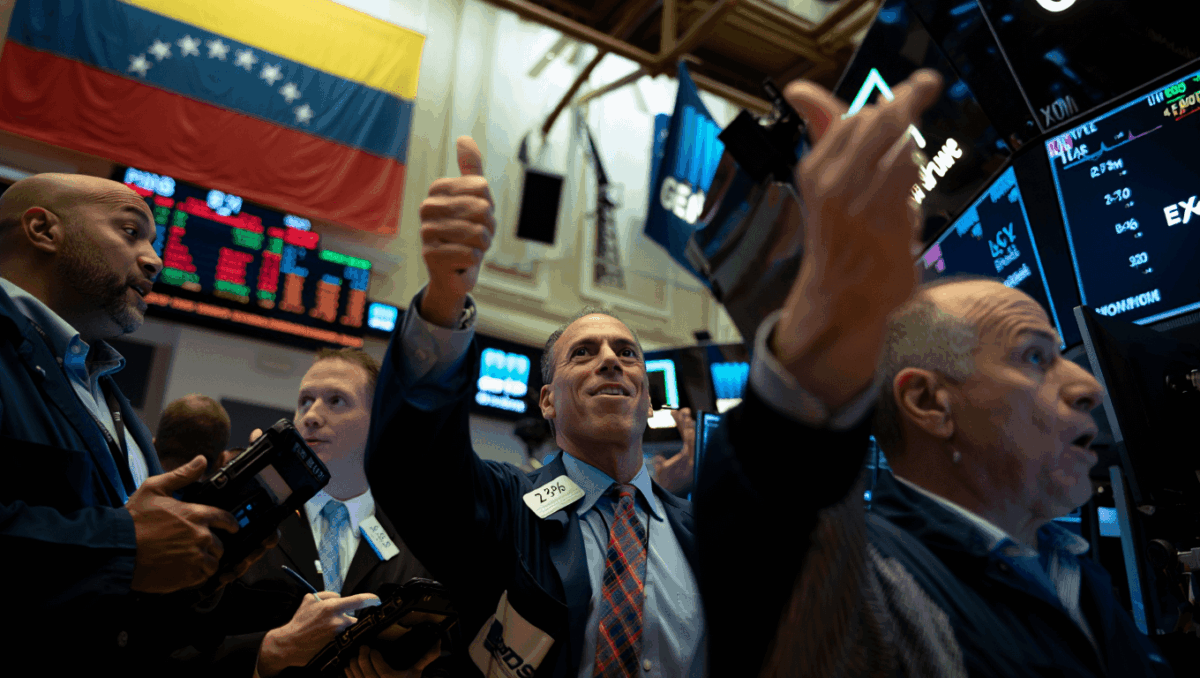
ExxonMobil stock surged more than 2% on January 5, 2026 after President Trump signaled potential access to Venezuela’s vast crude reserves. The oil giant’s rally reflects investor optimism about tapping the world’s largest proven petroleum deposits, worth an estimated 303 billion barrels. Here’s what this stunning development means for energy markets and the global oil industry.
🔥 Quick Facts
- ExxonMobil jumped 3% in early trading on January 5, 2026, marking the strongest rally in months
- Venezuela holds 303 billion barrels of proven crude reserves, more than Saudi Arabia’s 297.7 billion
- Current Venezuelan production stands at roughly 900,000 barrels per day, down 70% from late 1990s levels
- Trump administration signals potential reversal of strict oil sanctions that have barred US companies from Venezuela operations
Why Oil Giants Are Celebrating Trump’s Venezuela Move
Intuit emerges as best software stock for 2026 while stock crashes to bargain levels analysts didn’t expect
2026 tax brackets shock Americans with hidden paycheck truth nobody expected
The dramatic shift in US policy toward Venezuela triggered an immediate market response. ExxonMobil, Chevron, and ConocoPhillips all posted significant gains as traders bet on renewed American access to the country’s petroleum wealth.
Trump has pledged billions in investment from US oil companies to restore Venezuela’s decimated oil infrastructure. The president declared his intention to help American firms regain access to drilling operations they lost during years of sanctions and nationalization.
Marcus Lemonis takes CEO role at Bed Bath & Beyond with $25M cost-cutting plan and watch what industry experts are saying about his next move
SPX surges 34 points at open with shocking tech recovery, here’s what caused the unexpected Venezuela rally
Chevron, which operates under a special sanctions waiver and is the only major US oil producer in Venezuela, surged approximately 8% in early trading. The company currently produces about 20% of Venezuela’s oil output and ships crude to US refineries.
The Staggering Scale of Venezuela’s Crude Reserves
Venezuela sits atop the world’s most abundant proven petroleum reserves at 303 billion barrels, positioning it above Saudi Arabia. This extraordinary resource base has attracted international investments for decades despite political turmoil.
However, the country’s actual production capacity has collapsed dramatically. Venezuela produced about 900,000 barrels daily in 2025, less than 1% of global crude supply. This sharp decline reflects years of equipment deterioration, infrastructure decay, and international sanctions.
Goldman Sachs analysis estimates that combined oil reserves from Venezuela, Guyana, and the United States could give America approximately 30% of worldwide proven reserves if consolidated under US influence.
What ExxonMobil Investment Could Mean for Global Energy Markets
| Metric | Current Status | Potential by 2030 |
| Venezuelan Production | 900,000 barrels/day | 2 million barrels/day |
| Global Supply Impact | Less than 1% | 2-3% potential increase |
| Oil Price Pressure | Brent crude ~$60/barrel | Could drop $4/barrel lower |
| US Refinery Input | Cherubim Limited | Increased heavy crude supply |
Analysts project ambitious production targets if US companies invest billions in Venezuelan infrastructure recovery. Goldman Sachs estimates potential crude output could reach 2 million barrels daily by 2030, though significant challenges remain.
The influx of heavy Venezuelan crude into global markets could pressure oil prices downward. Such a scenario would potentially lower Brent crude prices by approximately $4 per barrel through 2030, benefiting US refiners and consumers but pressuring energy producers.
Challenges Standing Between Oil Companies and Venezuela’s Resource Wealth
Infrastructure decay presents massive obstacles to rapid production increases. Venezuelan oil ports require up to five days to fully load supertankers, compared with standard industry timelines of 24 hours. Equipment failures plague refineries and extraction facilities nationwide.
ExxonMobil and other US oil companies claim billions in nationalized assets seized by previous Venezuela governments under Presidents Hugo Chavez and Nicolas Maduro. Trump’s administration may need to negotiate compensation schemes or joint venture arrangements before drilling can commence.
Heavy crude extraction demands specialized technology that Venezuela abandoned during years of underinvestment. Deploying modern equipment and training workers will require substantial capital expenditure and coordination with local authorities.
How Did ExxonMobil’s Stock Performance Compare to History?
January 5, 2026 marked one of ExxonMobil’s strongest trading days in recent months following the Venezuela announcement. The stock’s all-time closing high reached $122.65 on January 2, 2026, according to official company records.
Prior to this week, ExxonMobil hit $120.53 on December 29, 2025, already elevated by year-end optimism. The additional 2-3% jump reflects fresh enthusiasm about potential Venezuelan expansion rather than immediate profit improvements.
However, analysts caution that actual revenue benefits depend on infrastructure reconstruction timelines and geopolitical stability. Current consensus among 19 analysts suggests an average price target of $130.74, representing a 6.60% potential upside from early January levels. The conservative view recognizes Venezuela’s complex investment requirements and execution risks.
Will Other Energy Companies Follow ExxonMobil Into Venezuela’s Oil Boom?
Beyond ExxonMobil, multiple energy firms rallied strongly on Venezuela optimism. Chevron advanced 8% premarket, ConocoPhillips surged over 5%, and oilfield services providers like Halliburton and Schlumberger gained significantly on hopes of reconstruction work.
Trump administration statements suggest a coordinated approach involving multiple American oil majors investing capital to modernize Venezuelan operations. This contrasts sharply with recent years when Chevron alone maintained active production under special sanctions exemptions.
International interest remains muted given remaining sanctions and undefined investment terms. Whether Chinese, Russian, or Middle Eastern firms will participate alongside US companies remains unclear as Trump’s administration clarifies its Venezuela policy framework in coming weeks.

Patrick Graham is a business and finance journalist translating Wall Street’s complexities into stories that matter to everyday readers. With extensive experience in financial journalism and economic analysis, this expert journalist provides sharp insights on market trends, corporate developments, and the economic forces affecting daily life. His reporting helps readers make sense of the business world’s biggest moves.