
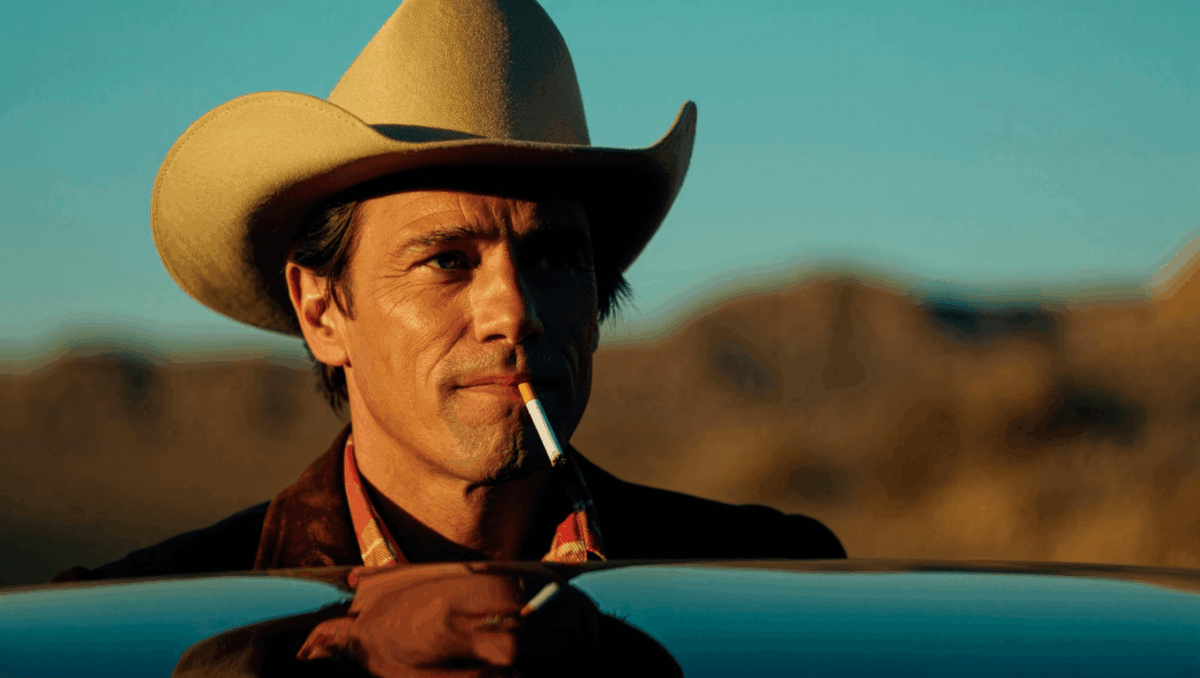
Sam Darnold’s grandfather was the Marlboro Man, and his legacy extends far beyond iconic cigarette ads. Richard “Dick” Hammer was a 1964 Olympic athlete, USC basketball star, and LA firefighter who captured American culture with his rugged cowboy image. The Seattle Seahawks quarterback is now discovering his family’s incredible history.
🔥 Quick Facts
- Grandfather’s Name: Richard Bernard “Dick” Hammer, born July 17, 1930
- Marlboro Man Era: Cast as the fourth Marlboro Man in 1970, appeared throughout the 1970s
- Olympic Achievement: Competed in 1964 Summer Olympics in Tokyo for Team USA volleyball
- USC Legacy: Made Final Four in NCAA basketball tournament in 1954, a record USC hasn’t matched since
The Marlboro Man Behind the Legend
World Baseball Classic 2026 bracket revealed: which teams advance and when to watch
World Cup 2026: three teams set to inherit Iran’s qualification spot
Dick Hammer became one of the most recognizable faces in American advertising history when Philip Morris cast him as the fourth Marlboro Man in 1970. His square-jawed, rugged appearance made him perfect for the iconic cigarette brand’s campaigns. According to the Los Angeles Times, the Marlboro cowboys represented “the most virile image in the advertising world.” Yet Hammer was never entirely comfortable with the role, viewing it primarily as supplementary income to his real calling.
What made Hammer unique was that he wasn’t a professional model or actor seeking fame. Hammer appeared in over 100 commercials throughout his career, with his first being for Aunt Jemima inside a firehouse, cleverly combining his two passions. By the late 1970s, he became increasingly uncomfortable with marketing cigarettes, especially as lung cancer’s death toll mounted. His daughter Chris Darnold later told the Los Angeles Times that the Marlboro role “wasn’t something that he was really proud of, in the end.”
An Olympian and College Basketball Star
Caitlin Clark powers Team USA to dominant win over Senegal in FIBA World Cup qualifier opener
USA moves into WBC quarterfinals after Italy stuns Mexico
Hammer’s athletic achievements dwarf his advertising fame. Born in Long Beach, California, in 1930, he was a standout athlete who competed in multiple sports at elite levels. At 6-foot-2 inches tall, the 1950 Long Beach Press-Telegram described him as “a demon on rebounds and a long-shot artist.” He attended Fullerton Junior College before transferring to USC, where basketball was his primary sport.
In 1954, Hammer helped USC reach the NCAA men’s basketball tournament Final Four, a mark the prestigious program has not achieved since. His contribution to college basketball history is often overshadowed by his later commercial work. More impressively, Hammer represented Team USA in men’s volleyball at the 1964 Summer Olympics in Tokyo, where he witnessed and participated in the first-ever Olympic volleyball match win when the United States defeated the Netherlands. His athletic versatility positioned him as a true Renaissance man of sports.
Firefighter and Television Star: A Life of Service
Career Timeline
| Role | Details |
| Firefighter | LA County firefighter and fire captain, Long Beach |
| Universal Studios | Fire captain of entire Universal Studios lot during 1970s |
| Television | Appeared as Capt. Hammer in NBC’s “Emergency!” 1972 |
| Retirement | Retired from firefighting in 1983 |
Hammer’s true passion was firefighting, not the spotlight. He worked as a firefighter for the LA County Fire Department and eventually became fire captain, managing the entire Universal Studios lot during its 1970s boom. When NBC cast Hammer in the television show “Emergency!” in 1972, it was the perfect role for him. He played Capt. Dick Hammer, essentially playing himself. He departed the show after just 10 episodes in Season 1 because he wanted to devote more time to actual firefighting, refusing to let acting become his primary career. Hammer retired from firefighting in 1983 after decades of dedicated service to the Los Angeles community.
Beyond his Hollywood appearances, Hammer was a special education teacher at Nightingale Elementary School in Long Beach. According to Sports Illustrated, he took these jobs because “he could pull people from cars and lift children from wheelchairs.” His career choices reflected a man who valued service over celebrity, which is why Chris Darnold emphasized that “there was so much more to my dad than just” the Marlboro Man image.
Inherited Athleticism and Family Legacy
Sam Darnold never knew his grandfather personally. Hammer died on October 18, 1999, from lung cancer at age 69, when his grandson was just two years old. Despite this, Darnold’s athletic abilities appear to be genetic gifts from his grandfather. In interviews, Chris Darnold told reporters that Sam inherited her father’s agility and athletic ability. She said, “When Sam was really little, we used to tease him because we would say he got all the DNA because he could do anything. He got my dad’s agility and athletic ability.” She noted that her father “was the type of person that could pick up a game by just watching someone play. Sam’s a lot like that.”
“He’s such a legend in our family, he’s becoming a legend, even outside of our family now. I’ve heard the stories that have gone around our family for years. He’s just an all-time person. He had a ton of accolades.”
— Sam Darnold, Seattle Seahawks QB, on his grandfather (NBC’s Sunday Night Football, February 2026)
What Does Super Bowl Success Mean for Dick Hammer’s Memory?
With Sam Darnold now leading the Seattle Seahawks to Super Bowl LX in February 2026, Dick Hammer’s legacy has resurfaced in unexpected ways. Darnold acknowledged on podcast appearances that his grandfather’s story is “unbelievable” and called him a “true American hero” and a “man’s man.” On Sunday Night Football, Sam said, “He was the Marlboro Man, he was the captain of the firefighting squad in L.A. He was an Olympian, played volleyball in the ’64 Olympics in Tokyo and he even played basketball as well at USC. But I think more than all that, he was just a great person. A great father, a great grandfather to me and all my cousins.”
Hammer’s genuine accomplishments far exceed his commercial fame. He made world history in Tokyo, helped build a college basketball program, protected lives through firefighting, and taught special needs children. The Marlboro Man image became a footnote in a life devoted to service. Now, as his grandson takes the NFL’s biggest stage, Dick Hammer’s remarkable story serves as a reminder that true greatness lies in how we serve others, not in the campaigns we’re remembered for.
Michael Brown is a seasoned sports journalist bringing years of experience covering professional athletics and sporting culture. With a keen eye for breaking stories and player dynamics, this veteran journalist delivers in-depth analysis and exclusive insights from the world’s biggest sporting events. His passion for the game shines through in every story, keeping fans connected to the action both on and off the field.