
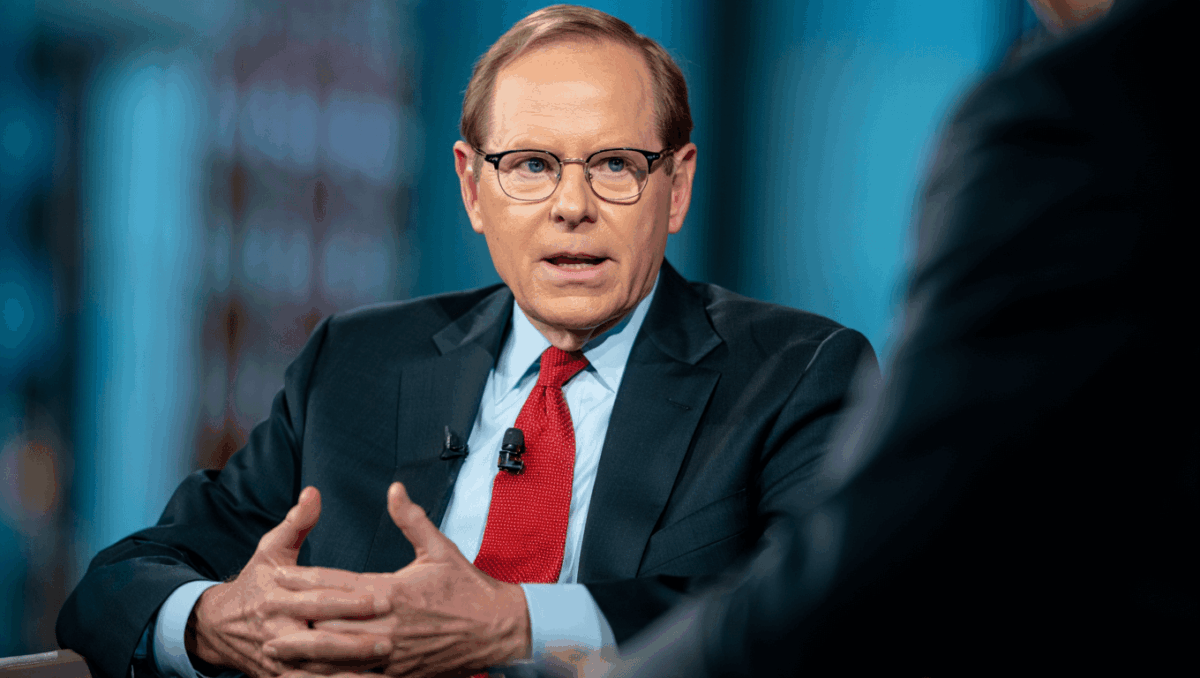
Kevin Hassett, the White House National Economic Council Director, praised the latest inflation report as “really amazing” during his December 21 appearance on Face the Nation. The report showed inflation cooling faster than expected, and Hassett confirmed the administration is moving forward with plans for $2,000 household checks in 2026, though they’ll require Congressional approval.
🔥 Quick Facts
- Core inflation sliding to 1.6% annual rate in three-month moving average, falling below the Federal Reserve’s 2% target
- November inflation report came in cooler than expected, with headline inflation at 2.7% year-over-year
- Tax refund checks of $2,000 per household planned for spring 2026, contingent on Congressional action
- Federal deficit down $600 billion compared to last year, creating fiscal space for refund distributions
The Inflation Report That Changed the Conversation
Intuit emerges as best software stock for 2026 while stock crashes to bargain levels analysts didn’t expect
2026 tax brackets shock Americans with hidden paycheck truth nobody expected
The November Consumer Price Index report delivered better-than-expected news, showing inflation slowing to its lowest pace in months. Hassett emphasized the three-month moving average, which strips out seasonal distortions and shows core inflation running at just 1.6% annually—well below the Fed’s target and the slowest pace in years.
When asked if he trusts the data now after being skeptical of previous reports, Hassett acknowledged the data includes some quirks but defended the overall trajectory. “The error band around the 1.6% inflation is probably pretty tight,” he told Margaret Brennan, though he cautioned that a full survey would provide clearer numbers. The report’s timing, which captured holiday discounts starting around Thanksgiving, affected how housing costs and some other categories were measured.
Marcus Lemonis takes CEO role at Bed Bath & Beyond with $25M cost-cutting plan and watch what industry experts are saying about his next move
SPX surges 34 points at open with shocking tech recovery, here’s what caused the unexpected Venezuela rally
Even Austan Goolsbee, a Federal Reserve governor and Hassett’s old graduate school friend, conceded the Fed should have cut rates faster and will do so more in the future based on these inflation numbers.
Economic Growth and Market Optimism Shape Policy Outlook
| Economic Indicator | 2025 Figure |
| Recent GDP Growth | Nearly 4% across multiple quarters |
| Federal Deficit Reduction | Down $600 billion year-over-year |
| Core Inflation Rate | 1.6% (3-month moving average) |
| Wage Growth | 3.7% for typical workers |
| Real Wage Gains | Approximately 2-2.5% after inflation |
Hassett pointed to strong economic fundamentals that have created the opportunity for tax relief in 2026. The combination of near-4% growth in recent quarters, a significant drop in the federal deficit, and cooling inflation has given the administration confidence that stimulus is fiscally feasible. “In the summer, I wasn’t so sure that there was space for a check like that, but now I’m pretty sure that there is,” Hassett said.
The administration is also highlighting real wage gains despite inflation concerns. With wage growth at 3.7% annually and core inflation at 1.6%, real wages are increasing at roughly 2 to 2.5%, giving workers greater purchasing power. Hassett pointed out that blue-collar workers have already seen an almost $2,000 annual raise this year after accounting for inflation.
Congressional Approval Required for $2,000 Checks Coming in 2026
Hassett confirmed the $2,000 household checks will require Congressional action, though the administration expects to propose the measure when Congress returns. The checks could potentially be funded through tariff revenue or general government revenue, but the final decision on funding will rest with Congress. “That’s an appropriation,” Hassett explained, emphasizing that not every funding mechanism is guaranteed.
The Treasury Secretary previously stated these refunds would target households earning less than $100,000. Spring 2026 remains the target timeline for distribution, following tax season when the administration expects “the largest tax refund cycle in American history” driven by tax code changes from earlier in the year.
When pressed on whether Americans should “bank on” the checks, Hassett cautioned that Congressional approval isn’t automatic. “It’s going to depend on what happens with Congress,” he said during the Face the Nation interview.
Tariffs Delivering Results While Maintaining Flexibility
Hassett defended the administration’s tariff strategy, noting that 2025 tariffs “have proven their mettle” despite earlier warnings that tariffs would kill growth. The economy continues expanding at near-4% while imports from China hit their lowest levels since China joined the WTO. The trade deficit is also shrinking, and the federal government ran surpluses for several months—all while tariffs remained in place.
However, the administration has shown some flexibility on tariff applications. The White House recently exempted coffee imports because the U.S. doesn’t produce significant quantities domestically. Jamieson Greer, leading tariff policy review, is studying other potential exemptions for goods that aren’t produced domestically due to climate constraints or other factors.
Supreme Court Tariff Challenge Looming
A pending Supreme Court decision will determine the fate of tariffs imposed under the International Emergency Economic Powers Act (IEEPA), justified through claims about fentanyl and other national security concerns. Hassett expressed confidence the Court will rule in the administration’s favor. He also suggested that even if the Court ruled against the tariffs, widespread refunds would be unlikely due to administrative complexity.
Will Spring 2026 Bring Economic Relief for American Families?
The convergence of cooling inflation, solid wage growth, improving deficit reduction, and the planned refund checks suggests the Trump administration is positioning 2026 as an economic relief year. However, several uncertainties remain: Congress must approve the $2,000 checks, Americans are currently reporting feeling the pinch of elevated prices, and wage gains may not yet be fully reflected in household budgets.
Hassett acknowledged the reality gap between improving economic data and consumer sentiment. “I think that what happens in the end is that people will see it in their wallets,” he said, comparing the current moment to Trump’s first term when tax changes didn’t appear on paychecks until mid-year. He expects greater visibility of improvements early next year as refunds and wage growth materialize.
“We are going to see the biggest refund cycle ever in the history of America, and people are going to get massive refund checks.”
— Kevin Hassett, National Economic Council Director
Sources
- CBS News – Face the Nation transcript featuring Kevin Hassett interview, December 21, 2025
- Fox Business – Coverage of Hassett’s refund cycle predictions and inflation commentary
- Reuters – White House inflation data analysis and economist reactions

Patrick Graham is a business and finance journalist translating Wall Street’s complexities into stories that matter to everyday readers. With extensive experience in financial journalism and economic analysis, this expert journalist provides sharp insights on market trends, corporate developments, and the economic forces affecting daily life. His reporting helps readers make sense of the business world’s biggest moves.