
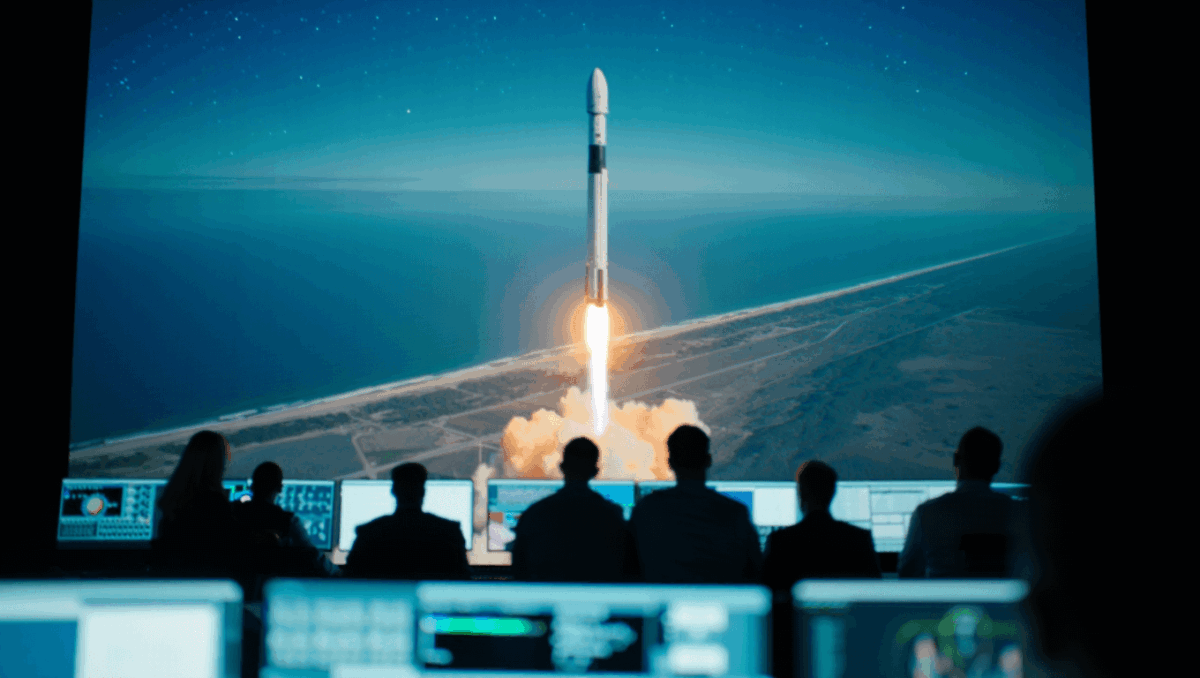
SpaceX launch today marks a milestone as the company targets its 550th Falcon 9 booster landing tonight from California. The Starlink 15-12 mission will lift off from Vandenberg Space Force Base in a late-night launch window. This historic achievement represents nearly a decade of successful rocket recovery operations.
🔥 Quick Facts
- Booster B1093 will make its 9th flight on tonight’s Starlink mission
- Launch window opens at 9:20 PM PST on December 13, extending to 4:54 AM PST
- 27 Starlink v2 mini satellites will be deployed to low-Earth orbit
- This represents 10 years of Falcon 9 first-stage booster recovery success
SpaceX Launch Tonight: The 550th Booster Landing Milestone
Intuit emerges as best software stock for 2026 while stock crashes to bargain levels analysts didn’t expect
2026 tax brackets shock Americans with hidden paycheck truth nobody expected
SpaceX is preparing for another historic moment as it attempts to land the 550th Falcon 9 first-stage booster tonight from Vandenberg Space Force Base in California. The Starlink 15-12 mission will carry 27 Starlink v2 mini satellites to expand the global broadband constellation. Launch is scheduled within a window opening at 9:20 PM Pacific Standard Time on December 13.
This evening’s achievement comes almost exactly 10 years after SpaceX first successfully landed a rocket stage. The company’s commitment to reusable spacecraft has transformed the commercial spaceflight industry. Each successful landing advances SpaceX’s goal of making rockets as reusable as commercial aircraft.
Booster B1093 Continues Impressive Reusability Record
Marcus Lemonis takes CEO role at Bed Bath & Beyond with $25M cost-cutting plan and watch what industry experts are saying about his next move
SPX surges 34 points at open with shocking tech recovery, here’s what caused the unexpected Venezuela rally
Tonight’s launch will mark the 9th flight for booster B1093, emphasizing SpaceX’s evolving reusability strategy. The Falcon 9 Block 5 version has logged impressive numbers, with 548 successful booster landings out of 561 attempts, representing a 97.7% success rate. Individual boosters have flown multiple missions, with some reaching extraordinary flight counts.
The reusability program has become economically transformative for SpaceX. 51 recovered boosters have been refurbished and reflown multiple times. One booster set a record with 31 launches and landings, demonstrating Falcon 9’s durability and reliability. Tonight’s landing will add another chapter to this reusability success story.
Starlink Constellation Expansion and Mission Details
| Mission Parameter | Details |
| Mission Name | Starlink 15-12 |
| Launch Location | SLC-4E, Vandenberg Space Force Base, California |
| Launch Window | 9:20 PM to 4:54 AM PST (Dec 13-14) |
| Payload | 27 Starlink v2 mini satellites |
| Booster | B1093 (9th flight) |
| Landing Site | Autonomous droneship in Pacific Ocean |
The 27 Starlink satellites will join the expanding constellation that has grown to maintain critical internet coverage globally. These v2 mini satellites represent the latest generation of SpaceX’s internet relay technology. The constellation continues expanding, supporting SpaceX’s vision of providing broadband access to underserved regions worldwide.
Late-Night California Launch and Recovery Operations
Launching during overnight hours from Vandenberg Space Force Base provides optimal conditions for successful booster recovery. The autonomous droneship positioned in the Pacific Ocean awaits tonight’s landing attempt. Overnight launches also allow observers along the California coast to witness the spectacular rocket ascent illuminated against the night sky.
Spaceflight Now and other aerospace media outlets will provide live coverage of tonight’s mission. Multiple YouTube livestream channels will broadcast the launch, landing, and satellite deployment live. This mission continues SpaceX’s record of 160+ Falcon 9 launches in 2025 alone.
Why Tonight’s 550th Booster Landing Marks a Historic Milestone?
Reaching 550 recovered Falcon 9 boosters represents a transformation in spaceflight economics and sustainability. A decade ago, landing a rocket was considered nearly impossible. Today, SpaceX routinely recovers and refurbishes these expensive components for subsequent missions. This achievement validates the company’s reusable rocket strategy against skeptics who once doubted its feasibility.
The milestone reflects industry-wide shifts toward sustainability and cost efficiency in space transportation. Each landing reduces launch costs significantly, making space more accessible for commercial, scientific, and defense missions. Tonight’s attempt continues proving that advanced rocket recovery is now routine rather than exceptional.

Patrick Graham is a business and finance journalist translating Wall Street’s complexities into stories that matter to everyday readers. With extensive experience in financial journalism and economic analysis, this expert journalist provides sharp insights on market trends, corporate developments, and the economic forces affecting daily life. His reporting helps readers make sense of the business world’s biggest moves.