
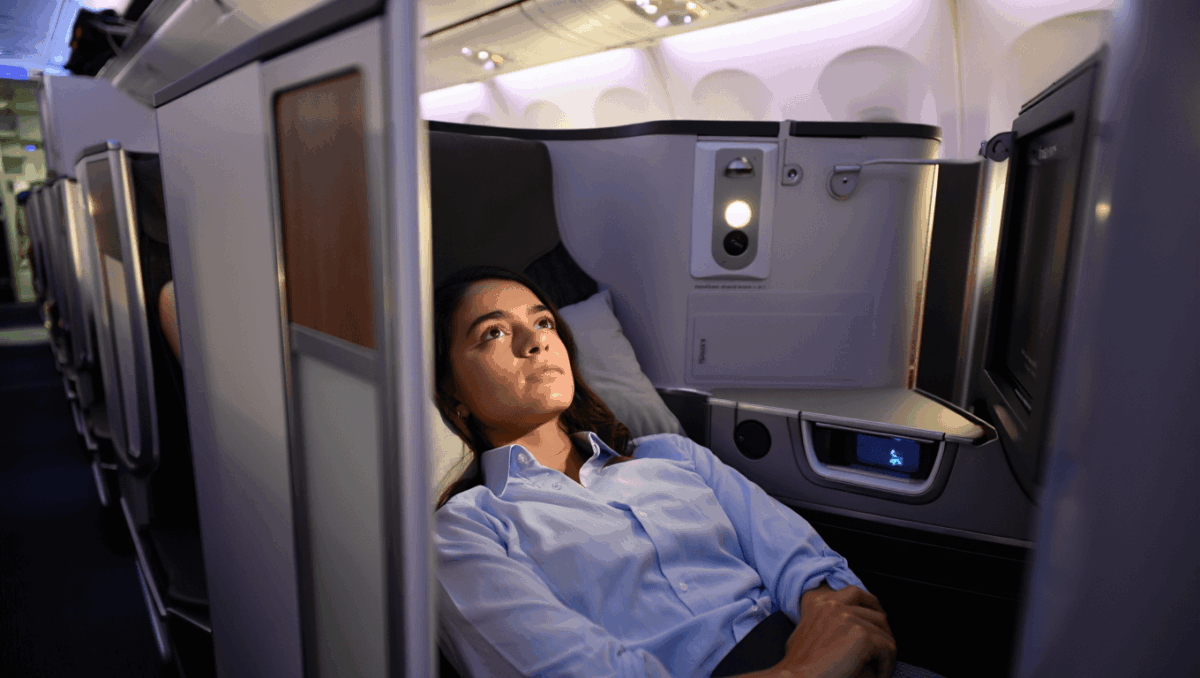
American Airlines introduces the Airbus A321XLR with groundbreaking Flagship Suites, featuring fully enclosed lie-flat business class pods arriving December 18. This narrowbody aircraft redefines premium transatlantic travel with innovative cabin configurations. The JFK-LAX debut marks a major shift in how airlines approach long-range premium comfort.
🔥 Quick Facts
- 20 Flagship Suite seats with privacy doors and lie-flat beds in 1-1 configuration
- First A321XLR flight departs December 18, 2025 from JFK to LAX
- 4,700 nautical mile range enables transatlantic operations starting March 2026
- Total capacity of 155 passengers including 12 premium economy and 123 economy seats
American Airlines Transforms Narrowbody Travel with First-Class Suites
Intuit emerges as best software stock for 2026 while stock crashes to bargain levels analysts didn’t expect
2026 tax brackets shock Americans with hidden paycheck truth nobody expected
The Airbus A321XLR represents a watershed moment for American Airlines’ premium cabin strategy. Unlike previous narrowbody aircraft, this aircraft breaks traditional constraints on what single-aisle planes can offer business class passengers. Each Flagship Suite occupies rows 1 through 10, arranged in an exclusive one-one configuration that puts every seat directly adjacent to the aisle.
American Airlines received its first A321XLR at JFK on December 12, 2025, after months of anticipation. The aircraft will commence paying passenger operations with flight AA 3 departing JFK for Los Angeles on December 18. The inaugural flight is nearly fully booked, demonstrating strong demand for this new premium product.
Flagship Suites Deliver Lie-Flat Luxury on Narrowbody Aircraft
Marcus Lemonis takes CEO role at Bed Bath & Beyond with $25M cost-cutting plan and watch what industry experts are saying about his next move
SPX surges 34 points at open with shocking tech recovery, here’s what caused the unexpected Venezuela rally
The 20 lie-flat seats represent a revolutionary change for transatlantic narrowbody operations. Each suite includes direct aisle access, privacy doors, wireless charging, and lie-flat beds that transform for sleeping during long flights. These pods provide a business class experience previously available only on widebody aircraft.
The suite design incorporates Recaro seating technology optimized for long-range flights. Passengers gain approximately 30% more space than traditional domestic business class seating, with enhanced dining presentations and amenity kits included. The staggered 1-1 seating arrangement means no middle seats and eliminates the awkward middle seat compromises found on larger business cabins.
Three-Class Cabin Configuration Sets New Narrowbody Standard
| Cabin Class | Seat Count | Configuration |
| Flagship Suites (Business) | 20 | 1-1 lie-flat with doors |
| Premium Economy | 12 | 2-2 reclining seats |
| Main Cabin Economy | 123 | 3-3 standard seating |
American Airlines intentionally excludes a traditional first-class cabin on the A321XLR, establishing a three-class model instead. The 12-seat Premium Economy section features Recaro R5 reclining seats in a 2-2 layout similar to Boeing 787-9P premium economy. These seats offer enhanced legroom and recline capabilities at a lower price point than business class.
The 123 economy seats maintain standard 3-3 configurations with 31-inch pitch and Collins Meridian seating. American improved this section with enhanced amenities and updated in-flight entertainment systems compared to earlier Boeing 737 narrowbody offerings.
Transatlantic Expansion Begins with Edinburgh Route Launch
While the A321XLR debuts on the domestic JFK-LAX route, its true purpose emerges in transatlantic service. American Airlines announced the aircraft will operate the JFK-Edinburgh route beginning March 2026, representing the first international service for this aircraft type in the American fleet.
The 4,700 nautical mile maximum range of the A321XLR exceeds the 3,400 nautical mile range of the older A321LR variant by 1,300 miles. This enhanced capability enables profitable point-to-point transatlantic operations without the fuel consumption and operating costs of widebody aircraft. The Edinburgh route validates American’s strategy to deploy premium narrowbody aircraft on thinner long-range routes.
What Does This Innovation Mean for the Future of Premium Air Travel?
American’s A321XLR launch signals a fundamental shift in airline economics and passenger expectations. The aircraft proves that premium leisure and business travelers will accept single-aisle configurations when cabin comfort and service match widebody standards. Industry analysts expect other carriers to accelerate their own narrowbody modernization programs.
The Flagship Suites establish a new benchmark for what business class on transatlantic flights should deliver. Privacy, lie-flat sleeping, direct aisle access, and premium dining transform the narrowbody proposition. American plans to grow premium seating across its fleet by approximately 30% over coming years, with A321XLR aircraft central to this expansion strategy.
“This aircraft offers customers more personal space, a privacy door and lie-flat seating, representing a milestone in premium narrowbody aviation.”
American Airlines, Press Release
Sources
- USA Today – In-depth coverage of American Airlines A321XLR cabin preview and specifications
- The Points Guy – Comprehensive analysis of Flagship Suites debut and route planning
- Simple Flying – Technical specifications and industry assessment of A321XLR deployment

Patrick Graham is a business and finance journalist translating Wall Street’s complexities into stories that matter to everyday readers. With extensive experience in financial journalism and economic analysis, this expert journalist provides sharp insights on market trends, corporate developments, and the economic forces affecting daily life. His reporting helps readers make sense of the business world’s biggest moves.