
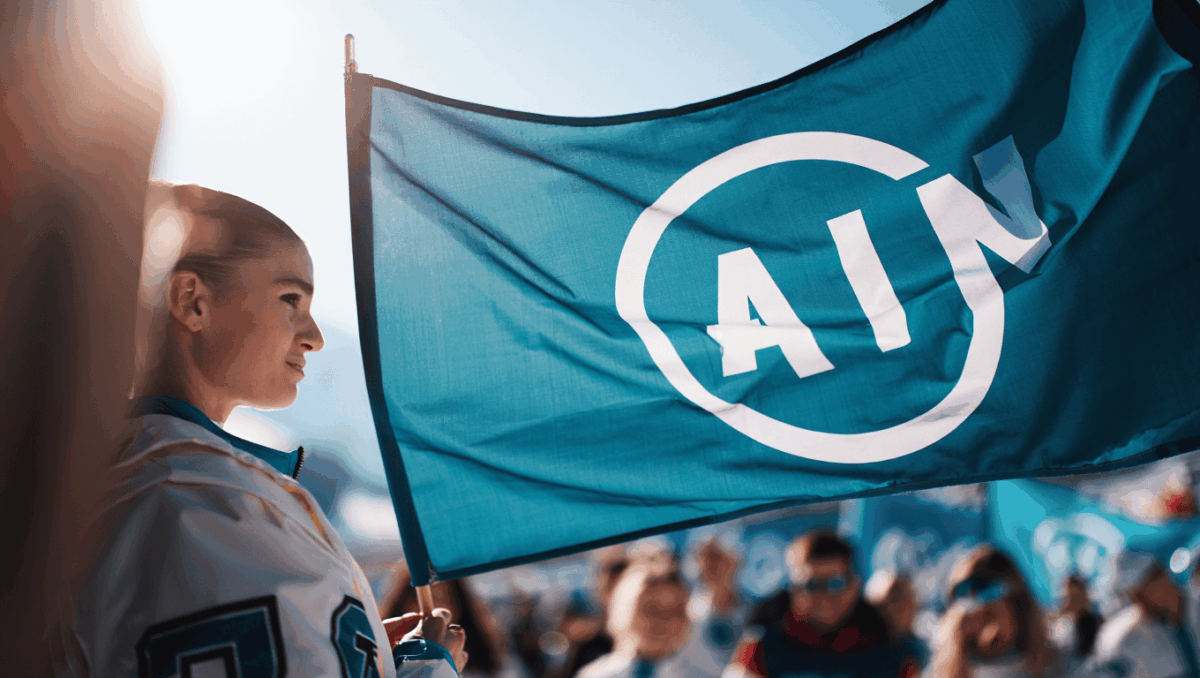
AIN stands for Individual Neutral Athletes, the unusual Olympic designation allowing restricted Russian and Belarusian athletes to compete at the 2026 Winter Olympics in Milan-Cortina. Since Russia’s invasion of Ukraine in February 2022, the nation remains banned from Olympic competition, but 13 approved Russian athletes and 7 from Belarus qualified to participate under this controversial neutral status instead.
🔥 Quick Facts
- AIN Meaning: Individual Neutral Athletes, French acronym for Athlètes Individuels Neutres, allowing Russian and Belarusian athletes to compete separately
- First Introduced: 2024 Paris Olympics, replacing the Russian Olympic Committee (ROC) designation after Russia’s Olympic suspension
- 2026 Numbers: 13 Russian and 7 Belarusian athletes qualified, far fewer than the 32 AINs who competed in Paris 2024
- Special Symbol: A teal flag with white circle inscribed with “AIN” plus a melodyless anthem for medal ceremonies
What Does AIN Actually Mean
World Baseball Classic 2026 bracket revealed: which teams advance and when to watch
World Cup 2026: three teams set to inherit Iran’s qualification spot
AIN is a French acronym standing for “Athlètes Individuels Neutres”, meaning “Individual Neutral Athletes” in English. The designation represents approved athletes with Russian or Belarusian passports who meet strict eligibility criteria set by the International Olympic Committee (IOC). These athletes cannot represent their home countries, cannot wear national colors, and compete as independent individuals rather than as national teams.
The IOC introduced this system after the Russian invasion of Ukraine prompted a ban on both Russian and Belarusian teams from Olympic competition. However, individual athletes from these nations who could prove they had no involvement in pro-war activity and met anti-doping standards were allowed a pathway to compete.
Why Russia Can’t Compete Under Its Own Flag
Caitlin Clark powers Team USA to dominant win over Senegal in FIBA World Cup qualifier opener
USA moves into WBC quarterfinals after Italy stuns Mexico
The Russian Olympic Committee (ROC) was banned in October 2023 by the IOC with immediate effect until further notice. This unprecedented suspension stemmed from Russia’s actions being deemed “a breach of the Olympic Charter” due to territorial concerns regarding Ukraine. The ban continues through the 2026 season, meaning Russia cannot field a national team or parade in the opening ceremony.
Even before Ukraine, Russia faced Olympic restrictions. In 2019, WADA (World Anti-Doping Agency) ruled out Russia from the next Olympic cycle following what authorities believed was a state-sponsored doping system. The current ban represents an even stricter consequence rooted in geopolitical conflict rather than solely sporting violations.
The Strict Vetting Process and Eligibility
AIN athletes undergo rigorous background checks before approval. Each candidate must first be vetted and approved by their sport’s international federation, then by a special IOC review panel designed specifically for evaluating neutral athlete eligibility. The process examines whether athletes have ties to pro-war propaganda, government positions, or military involvement.
| Requirement | Details |
| Background Check | Athletes must prove no involvement in pro-war activity or government positions |
| Anti-Doping | All AINs must meet anti-doping requirements applicable to their sport |
| Federation Approval | Each sport’s international federation must approve individual athletes first |
| IOC Panel Review | Final approval by special IOC panel evaluating compliance with all criteria |
These strict conditions explain the dramatic drop from 32 AINs at Paris 2024 to only 20 athletes at Milan-Cortina 2026. The vetting has become more rigorous, and fewer Russian and Belarusian athletes meet the heightened standards.
“(After the invasion of Ukraine), the IOC wanted a backdoor way out of that problem, so they allowed athletes who could demonstrate they were not involved in supporting Russia to compete as neutral athletes.”
— Analysis from The New York Times
The Teal Flag, Wordless Anthem, and Restrictions
AIN athletes compete under a distinctive teal flag, featuring a white circle inscribed with the letters “AIN.” Instead of national anthems, a melody without lyrics plays during medal ceremonies, eliminating any national identity. These visuals symbolize the limbo status of individual athletes caught in geopolitical conflict.
Restrictions extend to uniforms and symbols. Athletes cannot wear national flag colors in team events, cannot wave flags during competition, and receive no access to national team benefits. They compete entirely as individuals, not as representatives of their countries. This means no team medals, no country counted in medal standings, and minimal official recognition beyond their individual achievements.
Could This Designation Disappear at Future Olympics?
The AIN status remains temporary and contingent on Russia and Belarus maintaining their Olympic bans. If geopolitical situations shift or sanctions are lifted by the IOC, the designation could vanish entirely. Currently, the ban remains in place through at least 2026, but the IOC has not committed to extending it beyond that date.
Some experts suggest the IOC’s decision to allow individual neutral athletes serves as a compromise between complete exclusion and full national participation. Whether this approach continues depends on future IOC executive board decisions and broader international diplomatic changes regarding Russia and Ukraine.

Michael Brown is a seasoned sports journalist bringing years of experience covering professional athletics and sporting culture. With a keen eye for breaking stories and player dynamics, this veteran journalist delivers in-depth analysis and exclusive insights from the world’s biggest sporting events. His passion for the game shines through in every story, keeping fans connected to the action both on and off the field.