
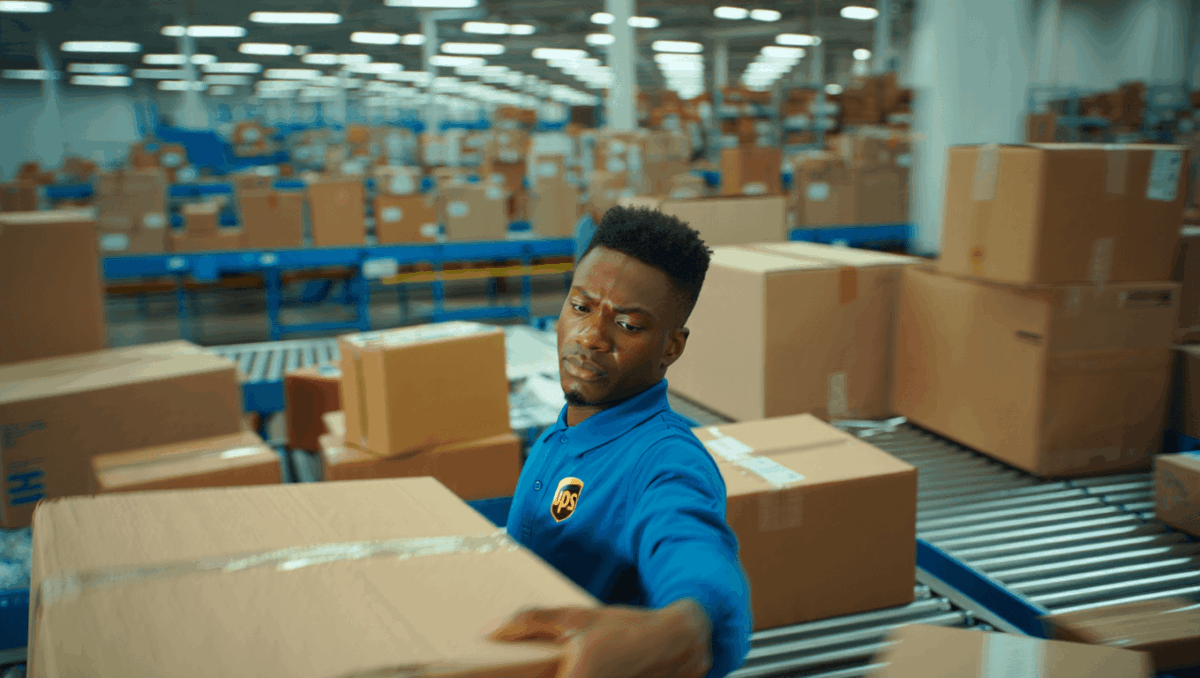
Delivery companies face a mounting environmental crisis as the holiday rush peaks, with fast shipping options driving up carbon emissions by 10-12%. According to researchers at MIT’s Center for Transportation and Logistics, the surge in two-day and next-day delivery demands during December has created a paradox for logistics firms. The pressure to meet aggressive delivery timelines forces companies to send partially full trucks earlier than optimal, creating inefficiencies that directly translate to higher pollution levels across the entire supply chain.
🔥 Quick Facts
- Fast shipping increases emissions by 10-12% compared to standard delivery, according to MIT researchers
- Delaying delivery by 1-2 days reduces CO2 emissions by 36%, and waiting 3-4 days cuts emissions by 56%
- FedEx and Amazon expect 5-8% volume increases during the 2025 holiday season, handling approximately 2.3 billion packages
- Amazon’s consolidated delivery program avoided 100,000 tons of carbon emissions in the first nine months of 2025
The Economics of Speed in Holiday Logistics
Intuit emerges as best software stock for 2026 while stock crashes to bargain levels analysts didn’t expect
2026 tax brackets shock Americans with hidden paycheck truth nobody expected
The holiday shipping surge creates a perfect storm for environmental impact. Deliveries are projected to jump 5% from last year’s peak season, with logistics companies scrambling to maintain their competitive edge through faster shipping options. However, this race for speed comes at a significant cost to the environment.
Sreedevi Rajagopalan, a research scientist at MIT’s Center for Transportation and Logistics, explains the core problem. When customers choose faster shipping and earlier delivery dates, the entire system shifts from optimized routing to whatever gets the package out fastest. This results in trucks leaving warehouses before they’re full, drivers looping the same neighborhoods multiple times daily, and inefficient fuel consumption that multiplies across millions of deliveries.
Environmental Impact of Fast Delivery Options
Marcus Lemonis takes CEO role at Bed Bath & Beyond with $25M cost-cutting plan and watch what industry experts are saying about his next move
SPX surges 34 points at open with shocking tech recovery, here’s what caused the unexpected Venezuela rally
The carbon footprint of expedited shipping varies dramatically based on transportation methods. Air freight produces far more emissions than trains or ground delivery, making it the most carbon-intensive option available to retailers. To meet tight delivery windows during the holiday season, major carriers increasingly rely on aviation, which significantly amplifies overall emissions.
When multiple small orders arrive throughout the week with fast shipping selected, the environmental damage compounds. A customer placing an order in the morning and another in the evening may force the logistics company to process separate shipments rather than consolidating them. This results in half-full trucks making duplicate runs to the same neighborhoods, effectively doubling fuel consumption for the same total goods delivered.
| Delivery Speed | Emission Increase | CO2 Reduction vs Fast |
| 2-Day or Faster | +10-12% | Baseline (highest emissions) |
| 1-2 Days Delayed | -36% | 36% reduction |
| 3-4 Days Delayed | -56% | 56% reduction |
| Standard Shipping | -40-50% | Significantly lower |
How Logistics Giants Are Responding to Peak Season Pressures
Amazon, FedEx, and other major carriers are implementing strategies to balance speed with sustainability. Chris Atkins, director of Worldwide Operations Sustainability at Amazon, notes that the company leverages supply chain efficiencies at scale to offer both better speed and sustainability outcomes simultaneously. By placing fulfillment centers strategically closer to customers, Amazon reduces mileage while maintaining fast delivery capabilities.
The strategies being deployed include electric delivery van expansion, mode-shifting to less carbon-intensive transportation like rail and bicycles in dense urban areas, and restructuring networks to minimize empty truck miles. Amazon’s single-day consolidation program generated remarkable results in 2025, with customers opting for unified delivery reducing more than 300 million delivery stops and avoiding 100,000 metric tons of carbon emissions during the first nine months of the year alone.
Can Consumers Actually Make a Difference This Holiday Season?
Research demonstrates that consumer behavior significantly impacts delivery emissions. When customers understand the environmental cost of fast shipping, they often choose slower options, according to studies conducted at universities including Georgia Southern University. Christopher Faires, an assistant professor of logistics and supply chain management, emphasizes that consumers can save money while reducing their carbon footprint simultaneously.
Simple choices yield dramatic results. Consolidating orders into a single weekly delivery, skipping the overnight option, and selecting standard shipping instead of two-day delivery all contribute meaningfully to lower emissions. MIT research showed that consumers presented with environmental impact information in visual formats like tree equivalents chose delayed shipping significantly more often than those without such information, suggesting that transparency drives behavioral change.
“For the same demand, fast shipping definitely increases emissions 10 to 12%. Vans are half full, and you make multiple rounds, multiple trips to the same location … your fuel consumption goes up, and you’re not able to consolidate.”
— Sreedevi Rajagopalan, Research Scientist, MIT Center for Transportation and Logistics
What Does the Future of Holiday Shipping Look Like?
The logistics industry faces increasing regulatory pressure and consumer awareness around carbon emissions. While fast shipping isn’t likely to disappear entirely, experts agree that meaningful climate impact reductions are achievable through coordinated action from both companies and customers. The 2025 holiday season represents a critical moment where shipping volumes peak, but so does opportunity for behavior change.
Logistics firms are investing heavily in electric vehicle fleets, sustainable packaging, and route optimization algorithms that balance speed with efficiency. Consumer demand for sustainable options continues growing, with shopping platforms increasingly offering carbon reduction information at checkout. The intersection of environmental consciousness and competitive advantage suggests that the logistics companies successfully integrating sustainability into their peak season operations will likely dominate markets in coming years.
Sources
- PBS News/Newshour – Fast shipping environmental impact research and expert interviews from MIT and Georgia Southern University
- Supply Chain Dive – 2025 Holiday delivery projections and carrier volume forecasts for Amazon, FedEx, and UPS
- American Academic Research – Carbon footprint analysis and consumer behavior studies on delivery speed preferences

Patrick Graham is a business and finance journalist translating Wall Street’s complexities into stories that matter to everyday readers. With extensive experience in financial journalism and economic analysis, this expert journalist provides sharp insights on market trends, corporate developments, and the economic forces affecting daily life. His reporting helps readers make sense of the business world’s biggest moves.