
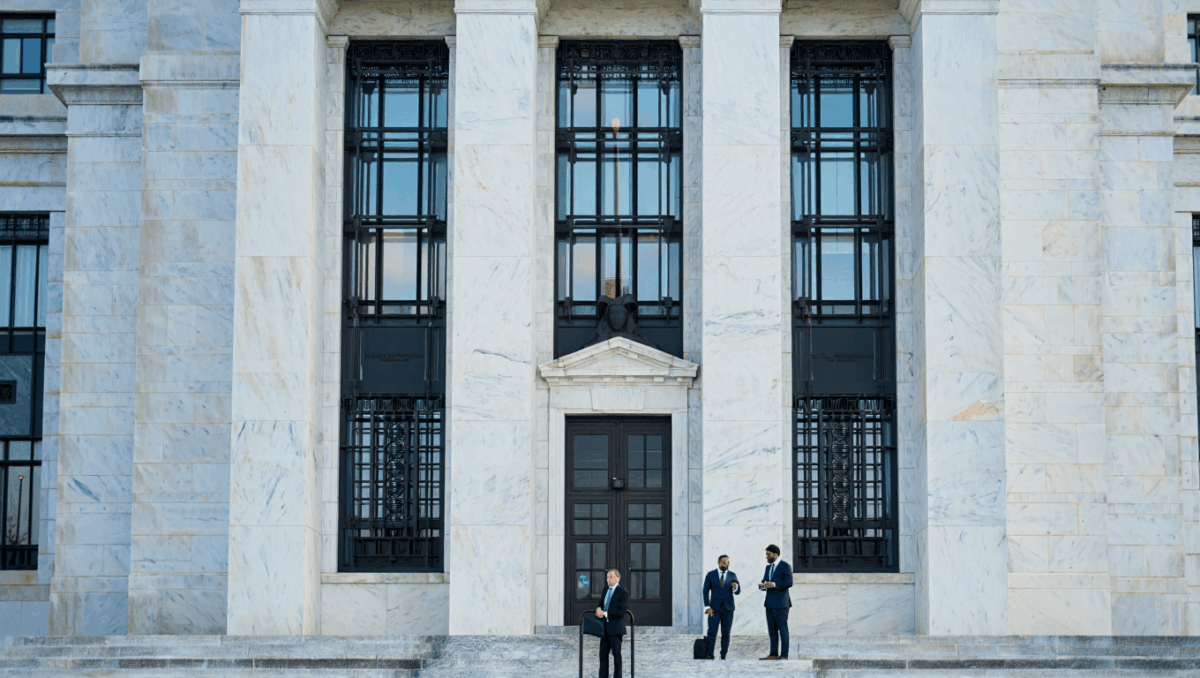
The prime rate is holding steady at 7.00% after the Federal Reserve delivered its third rate cut of 2025. The Fed cuts its benchmark interest rate by 25 basis points, bringing the federal funds rate to a range of 3.5% to 3.75%. Understanding what this means for your wallet requires looking beyond the headlines at how banks, lenders, and financial institutions respond.
🔥 Quick Facts
- The Federal Reserve cut rates by 25 basis points on December 10, 2025, its third cut of the year
- The prime rate will stay at 7.00% because it’s 3 percentage points above the federal funds rate
- The vote was divisive, with 3 committee members dissenting—unusual for the central bank
- The Fed signaled only one more rate cut planned for 2026, signaling a more cautious approach going forward
What the Prime Rate Stays Flat Despite Fed Action
Intuit emerges as best software stock for 2026 while stock crashes to bargain levels analysts didn’t expect
2026 tax brackets shock Americans with hidden paycheck truth nobody expected
Many consumers wonder why the prime rate hasn’t changed if the Federal Reserve just cut interest rates. The answer lies in how banks price their most important benchmark rate. The prime rate is what commercial banks charge their most creditworthy customers for loans.
Banks set the prime rate by adding a fixed margin—typically 3 percentage points—to the Fed’s federal funds rate. When the Fed’s rate was between 3.75% and 4.00%, the prime rate was 7.25%. Now that the Fed cut to 3.50% to 3.75%, the math stays consistent: the prime rate adjusts to 7.00%. This relationship means bigger changes take time to ripple through your personal finances.
How This Rate Cut Actually Impacts Your Mortgage, Auto Loan and Credit Card
Marcus Lemonis takes CEO role at Bed Bath & Beyond with $25M cost-cutting plan and watch what industry experts are saying about his next move
SPX surges 34 points at open with shocking tech recovery, here’s what caused the unexpected Venezuela rally
The connection between the federal funds rate, prime rate, and your personal borrowing costs isn’t immediate. Different loan types respond at different speeds. Credit cards typically adjust quickly—sometimes within days—because they’re directly tied to the prime rate. If you carry a balance, expect your interest charges to slightly decrease.
Mortgages and auto loans track different benchmarks and adjust more slowly. Fixed-rate mortgages are influenced by long-term inflation expectations and bond markets, not the Fed’s overnight lending rate. Your existing mortgage usually won’t change at all if you locked in a 30-year rate. But new borrowers will likely see slightly lower rates as lenders adjust their pricing throughout the coming months. Home buyers shopping now could see mortgage rates fall from current levels of around 6.4% toward 5.9% by year-end 2026, according to forecasts from Fannie Mae.
| Financial Product | Connection to Rate Cut | Timeline for Changes |
| Credit Cards | Directly tied to prime rate | Days to weeks |
| Home Equity Lines of Credit (HELOC) | Directly tied to prime rate | Days to weeks |
| Variable Rate Home Loans | Tied to prime with margin | Weeks to months |
| Fixed-Rate Mortgages | Indirect (bond market dependent) | Gradual over months |
| Savings Accounts and CDs | Indirect (banks’ decision) | Weeks to months |
Fed’s Unexpected Division Signals Growing Uncertainty About Rate Cuts
What made this December decision unusual was the voting breakdown. The Federal Open Market Committee (FOMC) approved the 25-basis-point cut by a narrow margin, with three members voting against the cut. Two officials wanted to keep rates unchanged, while one member voted for a much larger 50-basis-point cut. This dissent highlighted fundamental disagreement about the right path forward.
Federal Reserve Chair Jerome Powell acknowledged the economic uncertainty in recent remarks. While inflation has come down from its peak—currently sitting at 2.8% according to the Fed’s preferred measurement—it remains above the central bank’s 2% target. The job market also shows signs of weakness, with employment growth slowing. These conflicting signals make the committee’s next moves unpredictable.
What the Fed’s 2026 Forecast Means for Your Long-Term Financial Planning
Here’s where things get interesting for your wallet. The Fed is signaling that only one rate cut is likely in 2026—a dramatic shift from the three cuts delivered in 2025. This more cautious stance suggests policymakers want to pause and assess whether inflation will stay under control and whether the economy needs more support.
For savers, the implications could mean your high-yield savings account rates and certificates of deposit (CDs) might not improve much next year. Banks have been generous with savings rates to attract deposits, but if the Fed stays patient, that generosity could fade. For borrowers with variable-rate loans or those planning major purchases, the window for improving terms may be narrowing. If you’re considering refinancing a HELOC or taking out an adjustable-rate mortgage, locking in rates sooner rather than later could protect you if the Fed pauses rate cuts longer than expected.
“The Committee seeks to achieve maximum employment and inflation at the rate of 2 percent over the longer run. Uncertainty about the economic outlook is elevated.”
— Federal Open Market Committee, December 10, 2025 Statement
Sources
- Federal Reserve – Official FOMC statement and December 10, 2025 rate decision announcement
- Reuters – Coverage of December rate cut impact on consumer finances and mortgage rates
- Investopedia – Prime rate definition and how it affects mortgages, auto loans, and credit cards

Patrick Graham is a business and finance journalist translating Wall Street’s complexities into stories that matter to everyday readers. With extensive experience in financial journalism and economic analysis, this expert journalist provides sharp insights on market trends, corporate developments, and the economic forces affecting daily life. His reporting helps readers make sense of the business world’s biggest moves.