
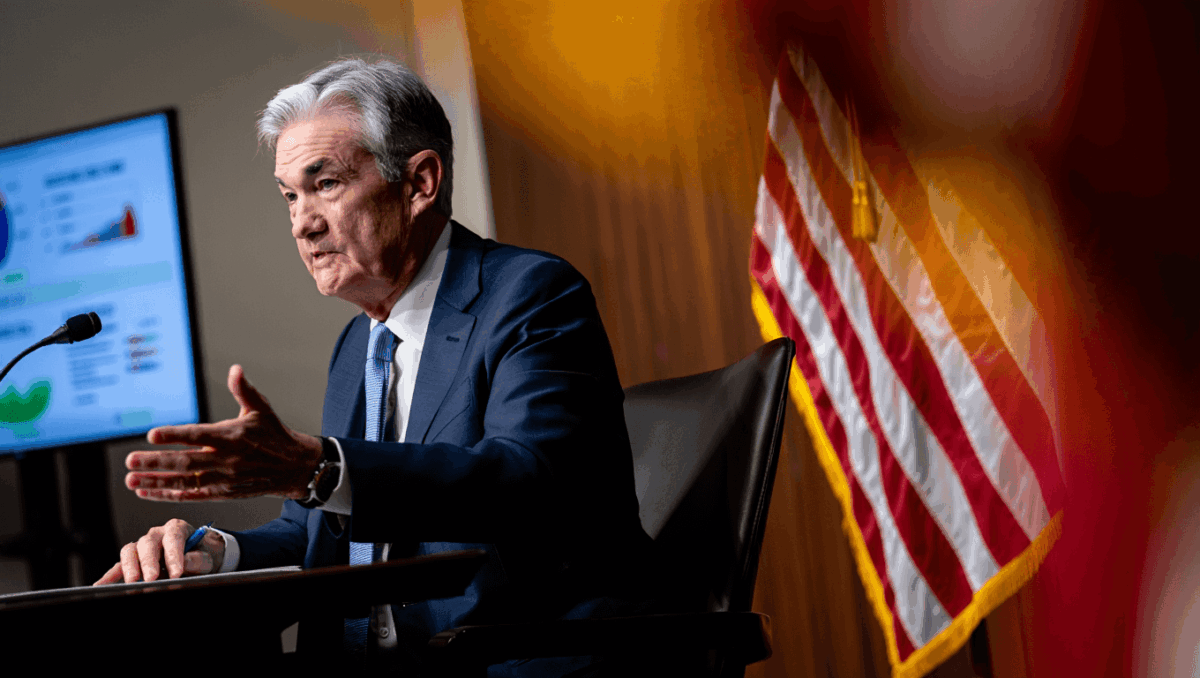
Current interest rates just dropped as the Federal Reserve completed its third consecutive rate cut this year, bringing the benchmark federal funds rate to a new range of 3.5% to 3.75%. The announcement came Wednesday during the Fed’s final meeting of 2025, signaling a meaningful shift in borrowing costs. Mortgage rates have already begun declining below the 6.3% level that dominated recent months.
🔥 Quick Facts
- Federal funds rate cut by 25 basis points to 3.5%-3.75% on December 10, 2025
- Average 30-year mortgage rates dropped to approximately 6.09-6.12%, down from 6.19% just one week earlier
- This represents the third rate reduction in 2025 following cuts in September, October, and December
- Jerome Powell signaled the Fed expects only one additional cut in 2026 as inflation remains sticky
Federal Reserve Cuts Rates for Third Time This Year
Intuit emerges as best software stock for 2026 while stock crashes to bargain levels analysts didn’t expect
2026 tax brackets shock Americans with hidden paycheck truth nobody expected
The Federal Open Market Committee voted to reduce the benchmark federal funds rate by 25 basis points during its December 10 meeting. The decision brought the rate to its lowest level since November 2022, reflecting the Fed’s effort to support economic growth. This marked the final policy decision of 2025 after an unusually active year of rate reductions.
Notably, the vote was not unanimous, with three committee members dissenting—an unusual occurrence for the Fed. This division reflects growing debate about whether rate cuts should continue next year given persistent inflation concerns. Despite the disagreement, Chair Jerome Powell emphasized the Fed remains focused on balancing employment gains with price stability.
Marcus Lemonis takes CEO role at Bed Bath & Beyond with $25M cost-cutting plan and watch what industry experts are saying about his next move
SPX surges 34 points at open with shocking tech recovery, here’s what caused the unexpected Venezuela rally
The three cuts throughout 2025 total 75 basis points, effectively reducing borrowing costs across the economy. This follows a period of aggressive rate increases that began in 2022 and ran through mid-2023.
Mortgage Rates Dip Below 6.3% as Borrowing Costs Ease
Homebuyers and mortgage shoppers saw immediate relief, with average 30-year fixed mortgage rates declining to approximately 6.09-6.12% as of December 10. This represents a meaningful drop from the 6.19% average recorded just days earlier on December 4. The decline offers welcome news for prospective homebuyers after months of elevated borrowing costs that dampened housing affordability.
The connection between the Fed’s benchmark rate and mortgage rates operates through the 10-year Treasury yield, which influences long-term mortgage pricing. As market participants anticipate lower Fed rates ahead, Treasury yields typically decline, pulling mortgage rates lower. The mortgage rate decline lagged the Fed announcement by several hours, as markets processed the implications of the rate cut and the Fed’s forward guidance.
Even with the current decline, mortgage rates remain significantly elevated compared to the 2021 era when rates hovered near 2.65%. However, from the perspective of 2024 when rates exceeded 7%, the current level of 6.1% represents substantial relief.
What Current Interest Rate Changes Mean for Consumers
| Interest Rate Type | Current Level | Impact on Consumers |
| Federal Funds Rate | 3.5%-3.75% | Guides pricing for credit cards, home equity lines, adjustable mortgages |
| 30-Year Fixed Mortgage | ~6.1% | Modest decline improving home affordability; historically still elevated |
| Credit Card Rates | Variable (20-30%) | May decline slowly if banks pass cuts to consumers; not immediate |
| Savings Account Yields | Variable (3-5%) | Expected to decline as banks adjust rates downward |
Fed Signals Pause in Rate Cuts as 2026 Approaches
While the December rate cut delivered immediate relief, the Fed struck a decidedly cautious tone about future reductions. The committee’s latest economic projections indicate only one additional rate cut expected in 2026, a significant slowdown from the three cuts delivered in 2025. This “hawkish” approach to an otherwise dovish rate cut surprised some market observers.
Chair Powell explained that persistent inflation—running at 2.8% in September, above the Fed’s target—requires continued vigilance. The Fed specifically cited sticky price pressures in certain sectors despite earlier improvements. Additionally, data gaps created by the recent government shutdown complicated the Fed’s ability to assess economic conditions, making policymakers more cautious about aggressive future cuts.
The implication is clear: current interest rates may represent a plateau rather than the beginning of a sustained decline. Homebuyers considering lockingm fixed-rate mortgages before potential stagnation should act within the coming months before rates potentially stabilize or even edge higher.
Will Current Interest Rates Drop Further in Coming Months?
The trajectory of current interest rates in 2026 remains highly uncertain despite the December rate cut. Market expectations range significantly, with some analysts predicting rates could edge toward 6% by year-end 2026, while others forecast rates remaining entrenched above 6.2%. The divergence reflects genuine uncertainty about inflation’s path and Fed policy intentions.
Economists note that interest rate decisions depend critically on inflation data arriving over the coming weeks and months. If price pressures accelerate, the Fed could pause cuts entirely or eventually raise rates again. Conversely, if inflation continues declining and employment softens, additional rate cuts become possible. The current range of 3.5-3.75% provides the Fed flexibility to adjust in either direction.
For homebuyers and borrowers, this uncertainty suggests locking in fixed rates sooner rather than waiting for further declines that may never materialize. The 6.1% mortgage rate available today represents a significant discount from 2024 levels, even if not as favorable as rates from earlier in 2024.
Sources
- CNN Business – Comprehensive analysis of the Fed’s December 10 rate decision and immediate market reactions
- Federal Reserve – Official FOMC statement and economic projections from the December meeting
- Freddie Mac Primary Mortgage Market Survey – Current and historical mortgage rate data through December 10, 2025

Patrick Graham is a business and finance journalist translating Wall Street’s complexities into stories that matter to everyday readers. With extensive experience in financial journalism and economic analysis, this expert journalist provides sharp insights on market trends, corporate developments, and the economic forces affecting daily life. His reporting helps readers make sense of the business world’s biggest moves.