
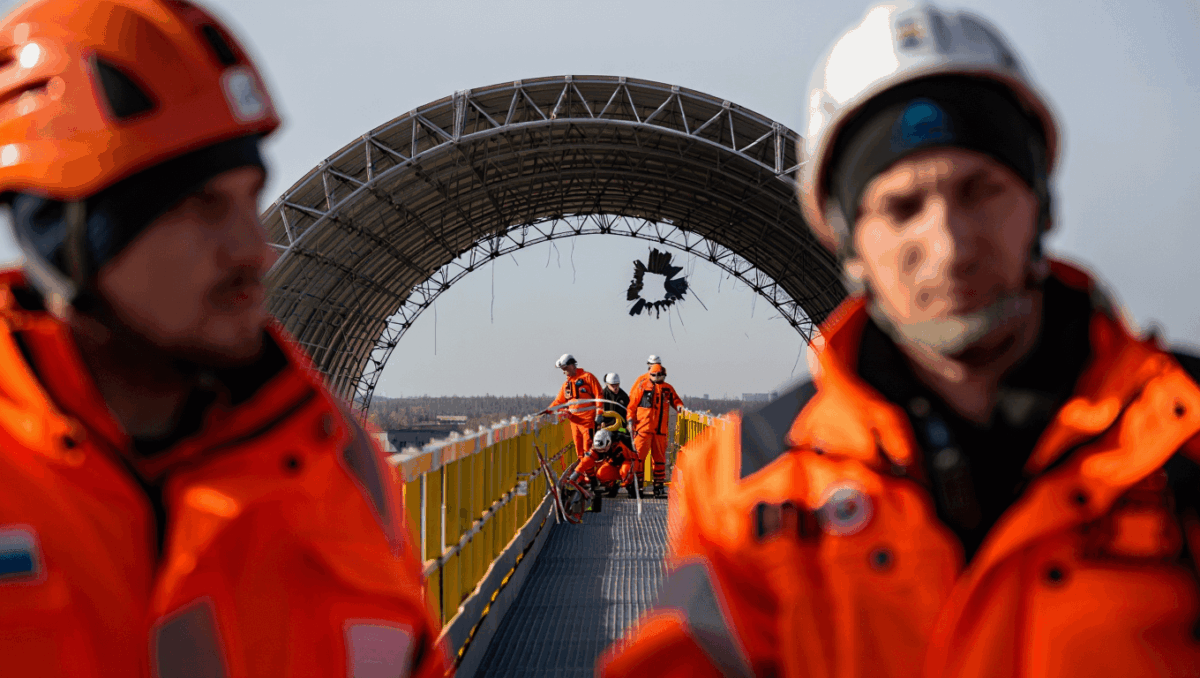
Chernobyl’s damaged protective shelter faces a costly and lengthy restoration. The New Safe Confinement (NSC) structure, which cost $1.75 billion to build, suffered significant damage in a February 2025 drone strike. Officials now warn that fully restoring the facility will require billions more and take 3 to 4 years to complete once work begins in earnest.
🔥 Quick Facts
- The New Safe Confinement cost €1.5 billion ($1.75 billion) to construct and was completed in 2019
- A drone strike in February 2025 punched a 15-square-meter hole in the protective structure’s outer roof
- The IAEA confirmed the NSC has lost its primary safety functions including confinement capability
- Full restoration is expected to cost billions of dollars and take 3-4 years after work begins
The Drone Strike That Changed Everything
Intuit emerges as best software stock for 2026 while stock crashes to bargain levels analysts didn’t expect
2026 tax brackets shock Americans with hidden paycheck truth nobody expected
On February 14, 2025, a drone carrying a high-explosive warhead struck the protective shelter structure at Chernobyl. The impact created a significant breach in the outer roof of the steel confinement, which was designed to last 100 years. Ukraine blamed Russia for the attack, while Moscow denied responsibility.
The 260-meter wide and 110-meter high arch-shaped structure stands as one of the most ambitious engineering projects ever completed. It was built to contain radiation during the eventual decommissioning of Reactor No. 4, which exploded in the 1986 disaster. The protective shield was supposed to enable safe removal of contaminated materials for decades to come.
Catastrophic Loss of Safety Functions
Marcus Lemonis takes CEO role at Bed Bath & Beyond with $25M cost-cutting plan and watch what industry experts are saying about his next move
SPX surges 34 points at open with shocking tech recovery, here’s what caused the unexpected Venezuela rally
The International Atomic Energy Agency (IAEA) conducted an inspection in early December 2025 and reported alarming findings. The drone impact degraded the structure substantially, causing the NSC to lose its primary safety functions. This includes its critical confinement capability, which keeps radiation contained and prevents external contamination.
Rafael Grossi, the IAEA director general, stated that the inspection found no permanent damage to load-bearing structures, which is a positive indicator. However, he emphasized that “comprehensive restoration remains essential” to prevent further degradation and ensure long-term nuclear safety at the site.
The Massive Cost and Timeline for Repairs
| Restoration Phase | Timeline | Details |
| Temporary Repairs | 2026 | Initial containment function restoration work |
| Full Restoration Start | 2026 onwards | Comprehensive reconstruction project begins |
| Expected Completion | 3-4 years total | Full restoration projected to cost billions |
| Funding Support | 2026+ | EBRD pledged financial support for repairs |
Ukrainian officials announced that primary repairs are scheduled for completion by the end of 2026, with full restoration taking considerably longer. The European Bank for Reconstruction and Development (EBRD) has pledged to provide financial support for the restoration effort.
The Chernobyl Shelter Fund, which supported the original NSC construction, involved contributions from over 45 donor countries. International cooperation will be essential again, as the restoration project represents one of the most complex nuclear engineering challenges globally.
Ukraine’s Nuclear Legacy and Decommissioning Challenges
Chernobyl represents the worst nuclear disaster in history. The 1986 explosion forced the evacuation of 330,000 people and created a permanent exclusion zone around the destroyed reactor. The Soviet response initially involved building a hastily constructed concrete “sarcophagus” with only a 30-year lifespan.
That temporary structure deteriorated rapidly, necessitating the construction of the New Safe Confinement in the 2010s. The NSC was designed to provide a 100-year protective environment for safe decommissioning operations. The structure cost countries, international agencies, and private donors nearly $2 billion to complete by 2019.
“Comprehensive restoration remains essential to prevent further degradation and ensure long-term nuclear safety.”
— Rafael Grossi, IAEA Director General
What Does the Damage Mean for Chernobyl’s Future?
The damaged NSC complicates Ukraine’s long-term decommissioning strategy significantly. Officials had planned eventual removal of the old sarcophagus, contaminated reactor building, and melted nuclear fuel. The breach means that radiation control measures must be enhanced immediately to prevent environmental contamination.
Temporary measures implemented during summer and autumn 2025 by Ukrainian teams have helped limit further deterioration. The IAEA continues monitoring for corrosion and moisture ingress, both of which pose risks to structural integrity. Securing adequate international funding and coordinating restoration efforts amid ongoing geopolitical tensions add complexity to an already challenging project.
Sources
- The Guardian – Comprehensive reporting on IAEA inspection findings and structural damage assessment
- International Atomic Energy Agency – Official statements on safety functions and restoration requirements
- Reuters – Breaking news coverage of the drone strike impact and initial reports

Patrick Graham is a business and finance journalist translating Wall Street’s complexities into stories that matter to everyday readers. With extensive experience in financial journalism and economic analysis, this expert journalist provides sharp insights on market trends, corporate developments, and the economic forces affecting daily life. His reporting helps readers make sense of the business world’s biggest moves.