
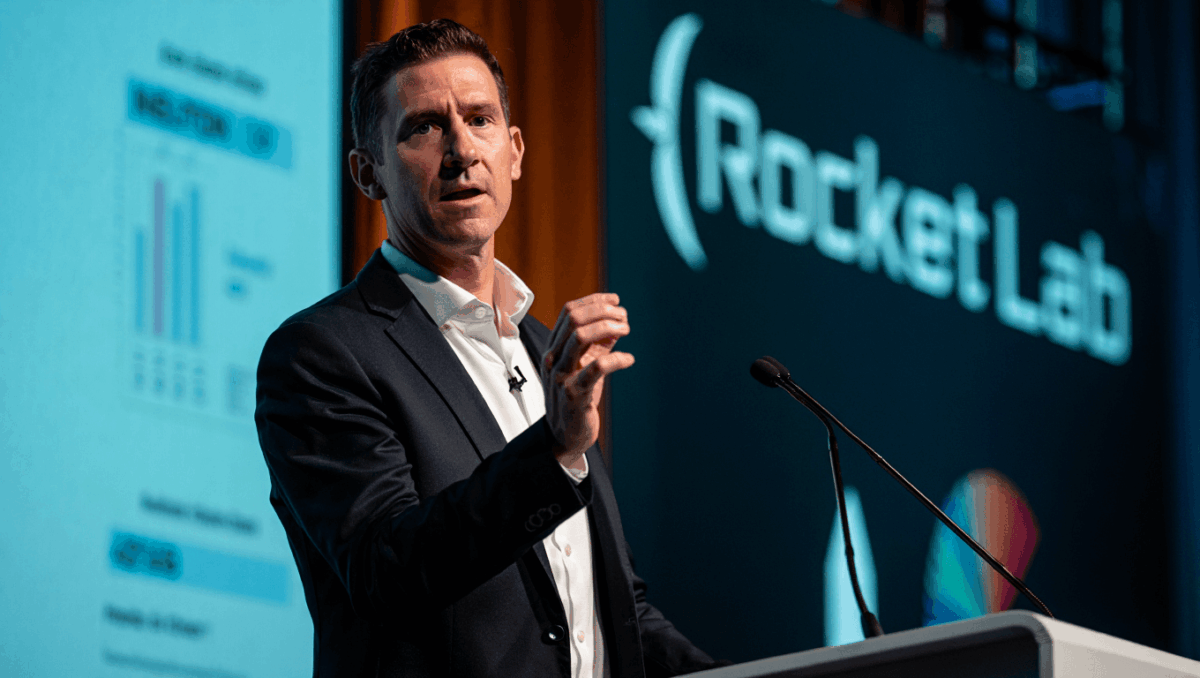
Rocket Lab stock bounced back from a devastating 27% crash as Wall Street analysts raise price targets to $65+ ahead of what could be a transformative 2026. The aerospace company faces a pivotal year with Neutron rocket milestones looming, and bullish sentiment remains despite recent volatility. Can this comeback stick?
🔥 Quick Facts
- RKLB stock dropped 27% from recent highs before staging recovery, currently trading near $49.06 as of December 8, 2025
- Consensus price target hit record $65.67 with major analysts including Stifel ($65) and Cantor Fitzgerald ($72) raising targets
- Q3 2025 earnings crushed expectations: Record $155 million revenue (48% YoY growth), beating analyst bids by $3+ million
- Neutron reusable rocket delayed to Q1 2026, but 1.1 billion backlog and Electron launches accelerating provide near-term growth catalysts
From Crash to Rebound: Why Wall Street Stayed Bullish
Intuit emerges as best software stock for 2026 while stock crashes to bargain levels analysts didn’t expect
2026 tax brackets shock Americans with hidden paycheck truth nobody expected
Despite the 38% plunge over the past month, Wall Street refused to turn bearish on Rocket Lab. Multiple analysts maintained or upgraded their ratings, viewing the selloff as capitulation driven by fear rather than fundamentals.
The crash stemmed from Neutron’s delayed first launch announcement during Q3 earnings. Investors feared the company’s crown jewel—the medium-lift reusable rocket targeting the $12 billion market captured by SpaceX’s Falcon 9—had slipped beyond reach. Yet analysts noted the company’s record Electron revenue and expanding margins told a different story.
Marcus Lemonis takes CEO role at Bed Bath & Beyond with $25M cost-cutting plan and watch what industry experts are saying about his next move
SPX surges 34 points at open with shocking tech recovery, here’s what caused the unexpected Venezuela rally
Stifel raised its target to $65 on November 7, emphasizing strong launch cadence and a 37% gross margin that exceeded expectations. Shortly after, Cantor Fitzgerald pushed its target to $72, maintaining a Buy rating despite the near-term uncertainty.
Record Q3 Earnings Hide a Powerful Growth Engine
Rocket Lab’s Q3 financial beat provides the real foundation for the rebound narrative. The company posted $155 million in quarterly revenue, crushing estimates of $152 million and growing at 48% year-over-year.
| Financial Metric | Q3 2025 Result |
| Quarterly Revenue | $155 million (Beat estimates by ~$3M) |
| YoY Growth Rate | 48% increase vs. Q3 2024 |
| Gross Margin | 37% record high (historically ~25%) |
| Total Backlog | $1.1 billion (17 new Electron contracts added) |
| Revenue per Launch | Up 44.3% YoY (pricing power) |
The margin expansion is critical. Rocket Lab’s gross margin hit 37% in Q3, a record level that signals operational efficiency and pricing power. For context, analysts had modeled closer to 30%, meaning the company is executing better than expected on the core Electron business while Neutron remains under development.
The $1.1 billion backlog represents roughly 18 months of revenue visibility at current run rates, providing investors confidence that near-term growth doesn’t depend entirely on Neutron success.
2026: The Year Neutron Finally Takes Off
The Neutron delay to Q1 2026 spooked markets, but analysts frame it as prudent risk management rather than competence failure. Peter Beck, CEO, emphasized maximizing success odds over arbitrary timelines—a messaging shift that resonated with long-term investors.
2026 consensus revenue forecast stands at $892.2 million across 14 analyst estimates, representing roughly 50%+ growth from 2025. This assumes Electron volume growth carries through while Neutron preparation ramps.
The bigger catalyst arrives if Neutron’s first test flight succeeds. Success would unlock contracts in the medium-lift segment currently dominated by SpaceX, potentially tripling addressable market. Failure would reset expectations, but analysts note peak R&D spending is nearing, suggesting improving profitability even without immediate Neutron revenue.
Analyst Sentiment Proves Remarkably Resilient
A consensus of 15 analysts rates RKLB a moderate buy with an average score of 4.13 out of 5, up from 4.07 two months ago despite the crash. This upgrading trend contradicts bearish price action, suggesting professionals see valuation disconnects.
“Analyst sentiment remains strong, with consensus price targets rising steadily to a record $58.17 despite RKLB’s sharp recent pullback.”
— Yahoo Finance, December 5, 2025
The gap between current price ($49.06) and consensus target ($65.67) implies 34% upside within 12 months. Aggressive targets from Cantor Fitzgerald ($72) and Morgan Stanley ($71) suggest Wall Street sees outsized returns if execution continues.
Can Rocket Lab Sustain the Recovery Beyond 2026?
The recovery hinges on three factors: Electron volume scaling, gross margin sustainability above 35%, and Neutron timeline credibility. Miss any of these, and bullish sentiment could evaporate quickly.
Near-term risks include macro pullback in defense/space spending, competitive pressure from established players, and execution risks on Neutron. Yet the strong backlog and record margins suggest management has built defensible momentum.
The December 8 bounce from lows reflects this calculation: Wall Street believes $65+ targets are achievable if Rocket Lab delivers on its 2026 roadmap. The 27% crash created a compelling risk-reward setup for investors willing to bet on execution.
Sources
- Yahoo Finance – Analyst sentiment and consensus price targets
- GlobeNewswire – Q3 2025 official earnings announcement
- Nasdaq – 2026 catalyst analysis and price target research

Patrick Graham is a business and finance journalist translating Wall Street’s complexities into stories that matter to everyday readers. With extensive experience in financial journalism and economic analysis, this expert journalist provides sharp insights on market trends, corporate developments, and the economic forces affecting daily life. His reporting helps readers make sense of the business world’s biggest moves.