
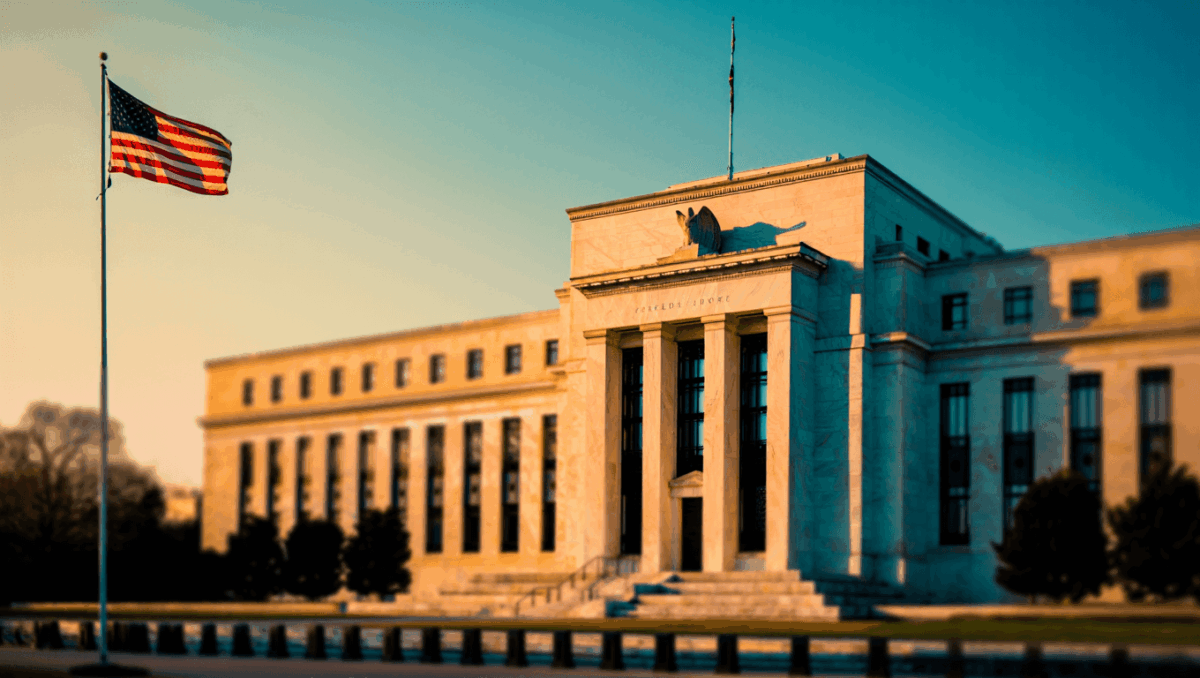
The Federal Reserve has finally stopped losing money after three years of unprecedented financial strain tied to its pandemic-era policies. Recent data shows the central bank’s deferred asset—a measure of accumulated losses—is shrinking for the first time since the downturn began.
🔥 Quick Facts
- Fed’s deferred asset fell from $243.8 billion to $243.2 billion between early November and November 26
- Federal Reserve projected to earn over $2 billion in profits this quarter, the first profitability in three years
- The central bank lost money since September 2022 due to interest rate mismatches from rapid rate hikes
- Quantitative Tightening officially ended on December 1, 2025, halting portfolio reductions
How the Fed Turned Financial Corner After Three-Year Struggle
Intuit emerges as best software stock for 2026 while stock crashes to bargain levels analysts didn’t expect
2026 tax brackets shock Americans with hidden paycheck truth nobody expected
The Federal Reserve appears to have finally turned the corner following nearly three years of losses that shocked financial markets and raised questions about central bank operations. Between early November and November 26, the Fed’s deferred asset—an accounting mechanism that tracks accumulated losses—shrank by $600 million, marking a clear reversal of a damaging trend.
This milestone comes as the central bank implements interest rate cuts that reduce its payout obligations to banks. The reduction may seem modest, but analysts view it as highly significant. Bill Nelson, chief economist at the Bank Policy Institute and former Fed staffer, indicated that the combined profits of the twelve Reserve Banks could exceed $2 billion in the current quarter.
Understanding the Deferred Asset and Balance Sheet Recovery
Marcus Lemonis takes CEO role at Bed Bath & Beyond with $25M cost-cutting plan and watch what industry experts are saying about his next move
SPX surges 34 points at open with shocking tech recovery, here’s what caused the unexpected Venezuela rally
The deferred asset represents losses that must be covered before the Fed can resume returning profits to the U.S. Treasury. Normally, the Fed operates as a steady revenue generator for the federal government by earning income from its Treasury and mortgage bond holdings and financial services. However, the pandemic disrupted this decades-long pattern.
During the COVID-19 crisis, the Fed purchased bonds aggressively, expanding its holdings to a peak of $9 trillion by summer 2022. When inflation surged, the Fed raised interest rates sharply starting in early 2022, creating a critical mismatch: the central bank earned lower returns on its older bond purchases while paying higher interest rates to banks to maintain the federal funds rate. This negative carry generated unprecedented losses.
| Metric | Status |
| Deferred Asset (Nov 26) | $243.2 billion |
| Expected Q4 2025 Profit | $2+ billion |
| Federal Funds Rate (Current) | 3.75%-4.00% |
| Peak in 2023 | 5.25%-5.50% |
Rate Cuts and Interest on Reserve Balances Drive Recovery
The Fed’s return to profitability stems directly from interest rate reductions implemented throughout 2025. Starting with a quarter-point cut in October, the Federal Reserve brought the federal funds rate down from the 5.25%-5.50% range held during 2023. As of December 2025, the rate stands at 3.75%-4.00%.
Derek Tang, analyst at LHMeyer, confirmed that “negative carry has ended” at the same time the Interest on Reserve Balances (IORB) was reduced 25 basis points in October. This shift means the Fed now collects more from its bond portfolio than it pays to banks, reversing the loss-making trajectory. Expert Matthew Luzzetti from Deutsche Bank explained that as market yields rise above the interest paid on reserves, Fed losses naturally stop and reverse.
Quantitative Tightening Ends, Balance Sheet Stabilizes at $6.45 Trillion
On December 1, 2025, the Federal Reserve officially concluded Quantitative Tightening (QT), a policy tool used since June 2022 to reduce the central bank’s bloated balance sheet. The Fed allowed approximately $2.4 trillion in securities to mature and run off without replacement, shrinking holdings from their $9 trillion pandemic peak.
Instead of continuing balance sheet reductions, the Fed will now reinvest maturing securities, effectively stabilizing the balance sheet at approximately $6.45 trillion. This shift came after money market conditions signaled that reserve levels had reached “ample” levels, reducing the need for continued contraction. Analysts view the QT halting as crucial context for understanding the Fed’s return to profitability.
“The Federal Reserve appears to have finally turned the corner on a three-year-long string of unprecedented loss-making tied to how it has implemented monetary policy in the wake of the COVID-19 pandemic.”
— Reuters, Federal Reserve Analysis, December 3, 2025
Will the Fed Return Cash to Treasury in 2026, and What Does This Recovery Mean?
Despite achieving profitability this quarter, the Fed will not immediately resume transferring profits to the U.S. Treasury. The central bank must first cover the $243.2 billion deferred asset accumulated during the loss years. Most analysts expect this paydown process to stretch across multiple years, potentially four to five years before Treasury transfers resume at normal levels.
Fed officials have repeatedly emphasized that profits and losses carry no bearing on the central bank’s ability to conduct monetary policy. However, some elected officials have criticized the Fed’s practice of paying interest on reserve balances, arguing it constitutes an effective subsidy to the financial system. The return to profitability addresses these concerns while the Fed continues monitoring labor market conditions and inflation, potentially enabling additional rate cuts in coming quarters.
Sources
- Reuters – Federal Reserve financial data and deferred asset analysis
- Seeking Alpha – Quantitative Tightening end and operating income data
- Moomoo Financial – Federal Reserve recovery metrics and balance sheet developments

Patrick Graham is a business and finance journalist translating Wall Street’s complexities into stories that matter to everyday readers. With extensive experience in financial journalism and economic analysis, this expert journalist provides sharp insights on market trends, corporate developments, and the economic forces affecting daily life. His reporting helps readers make sense of the business world’s biggest moves.