
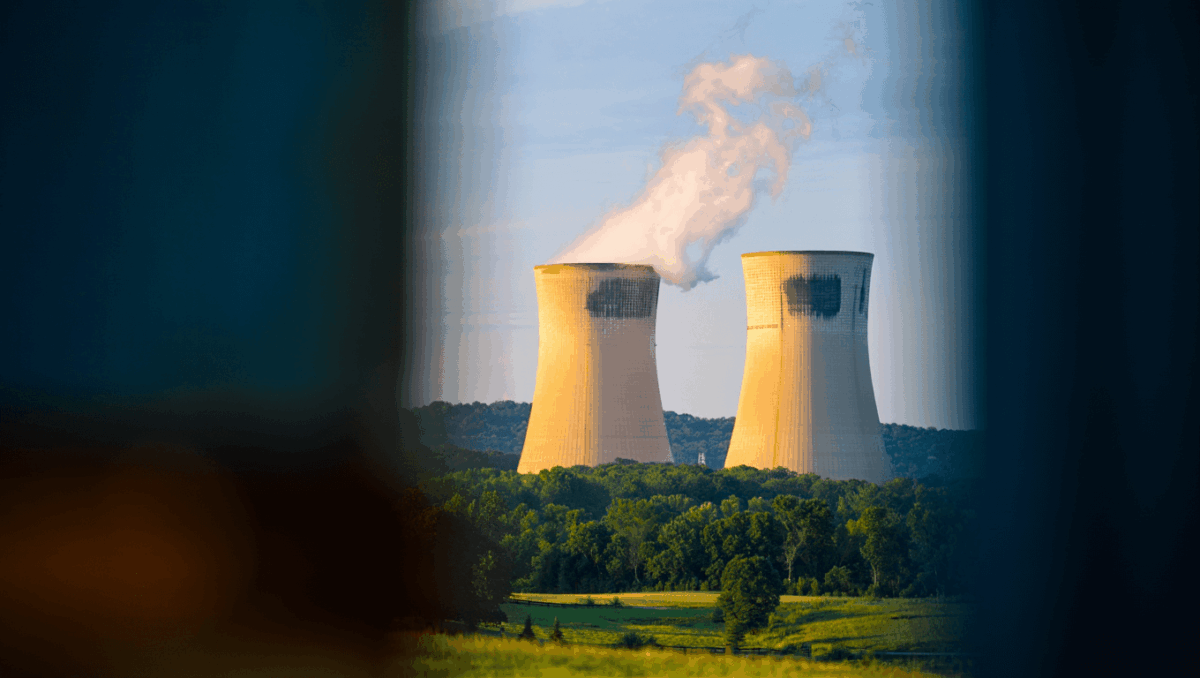
The Trump administration just handed Three Mile Island a major financial lifeline—a $1 billion federal loan to restart its nuclear reactor and power massive Microsoft AI data centers. This historic deal marks a dramatic comeback for America’s most infamous nuclear site, shuttered since 2019 and ready to transform the energy landscape by 2027. The announcement signals a seismic shift in how the nation will fuel the artificial intelligence boom.
🔥 Quick Facts
- $1 billion federal loan closed by Department of Energy in mid-November 2025
- Constellation Energy receiving funds to restart 835-megawatt Unit 1 reactor
- Microsoft will purchase entire output via 20-year power purchase agreement
- Nuclear plant expected operational by 2027, renamed Crane Clean Energy Center
The Trump Administration’s Nuclear Gamble on AI Power
Intuit emerges as best software stock for 2026 while stock crashes to bargain levels analysts didn’t expect
2026 tax brackets shock Americans with hidden paycheck truth nobody expected
The loan announcement demonstrates the Trump administration’s aggressive pivot toward nuclear energy as essential infrastructure for the artificial intelligence race. Energy Secretary Christopher Wright called the Three Mile Island restart a “poster child” for the administration’s dual agenda—reducing electricity costs while securing America’s position in the global AI competition.
This funding represents the first time the Department of Energy’s Loan Programs Office (LPO) issued and closed a loan simultaneously under the Trump framework, signaling unprecedented momentum. Greg Beard, head of the LPO, emphasized that the $1 billion addresses critical grid needs: “This type of energy is important because it’s large, stable, affordable base load power.”
Microsoft’s Historic $1.6 Billion Commitment to Carbon-Free Computing
Marcus Lemonis takes CEO role at Bed Bath & Beyond with $25M cost-cutting plan and watch what industry experts are saying about his next move
SPX surges 34 points at open with shocking tech recovery, here’s what caused the unexpected Venezuela rally
Constellation Energy signed the groundbreaking agreement last year with Microsoft to restart Unit 1, committing to a total $1.6 billion investment in plant restoration. Microsoft’s Vice President of Energy Bobby Hollis emphasized that existing closed nuclear plants offer faster carbon-free electricity than new reactor construction or emerging technologies.
The technology giant will purchase the entire 835-megawatt capacity through a 20-year contract, effectively making Microsoft the primary beneficiary of the facility’s rebirth. This arrangement transforms Three Mile Island from a cautionary tale into a symbol of clean energy innovation for AI infrastructure.
Three Mile Island’s Journey: From Disaster to Data Center Power Source
| Timeline Event | Details |
| 1979 Meltdown | Unit 2 partial meltdown, worst US nuclear disaster, reactor permanently disabled |
| 1985 Restart | Unit 1 restarted after accident recovery period |
| 2019 Shutdown | Unit 1 closed permanently, deemed unprofitable by Constellation |
| November 2024 | Microsoft power purchase agreement announced |
| November 2025 | $1 billion federal loan approved and closed |
| 2027 Target | Plant expected to resume electricity generation |
Constellation CEO Joe Dominguez acknowledged the historic significance: “What we’re seeing right now is a renewed interest across the country in nuclear, understanding that the first and most important thing we need to do is bring back to life assets that we mistakenly closed.”
What This Means for America’s Nuclear Renaissance and Energy Prices
The Three Mile Island restart signals a broader Trump administration commitment to nuclear power as the foundation of future energy systems. With the Department of Energy’s Loan Programs Office controlling over $250 billion in capital—with a substantial portion earmarked for nuclear projects—industry experts predict multiple similar deals coming this decade.
Energy Secretary Wright stated that the administration is prioritizing three nuclear strategies: keeping existing plants operational, reopening prematurely closed facilities, and expediting new reactor construction. The restart also addresses the Pennsylvania grid’s urgent electricity demands as data center expansion drives unprecedented power needs.
Will This Nuclear Investment Actually Lower Energy Costs or Create New Burdens?
Environmental advocates express concern about long-term electricity affordability. While the Trump administration frames nuclear as cost-effective, critics note that grid operator PJM’s recent capacity auction fell short of meeting reserve targets despite hitting the maximum price cap. The Sierra Club argues that consumers risk bearing costs for corporate AI infrastructure.
“As we approach the holiday season, families should be spending their hard-earned dollars on family meals and presents for each other, not forking more money over to the utility companies and Big Tech’s power needs.”
— Jessi Eidbo, Sierra Club Senior Advisor
Constellation maintains that restarting existing nuclear plants offers faster grid relief than building new generation from scratch, which requires 5-7 years of construction. The company notes that Palisades Nuclear Station in Michigan already became the nation’s first reactor restart in 2025, validating this strategy.
Sources
- Reuters – Coverage of $1 billion Constellation loan by Department of Energy and project timeline
- Pennsylvania Capital-Star – Energy Secretary Wright’s December 2025 site visit and policy impact analysis
- U.S. Department of Energy – Official loan approval and Loan Programs Office statements

Patrick Graham is a business and finance journalist translating Wall Street’s complexities into stories that matter to everyday readers. With extensive experience in financial journalism and economic analysis, this expert journalist provides sharp insights on market trends, corporate developments, and the economic forces affecting daily life. His reporting helps readers make sense of the business world’s biggest moves.