
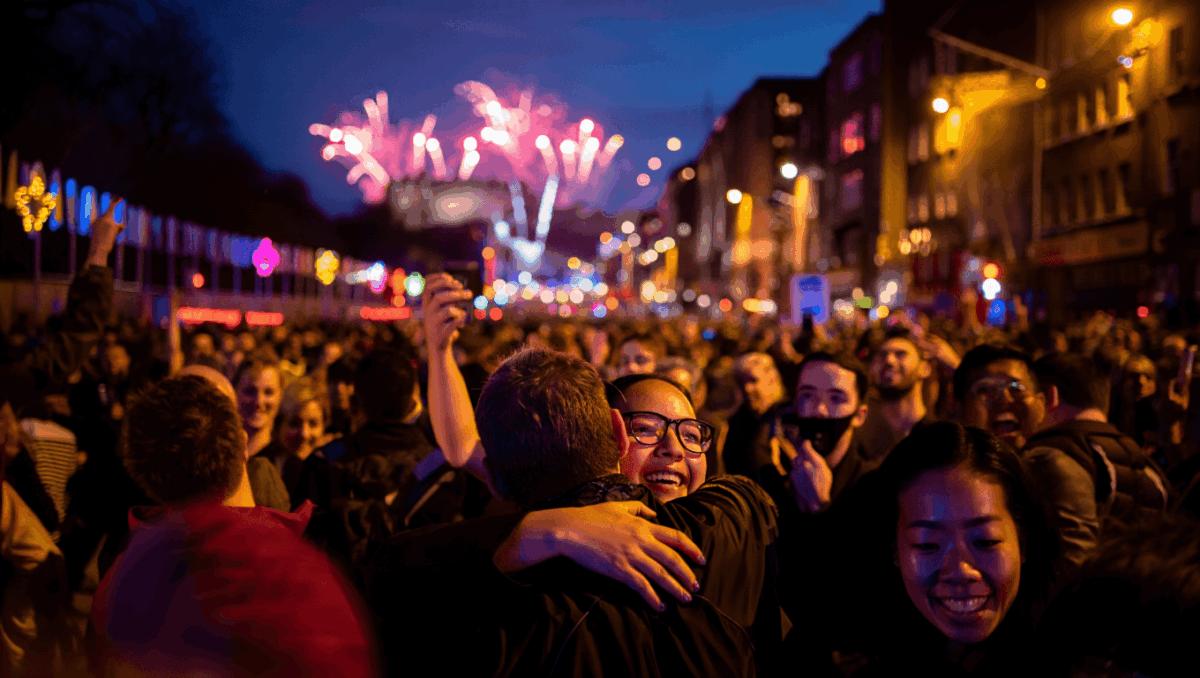
Edinburgh’s Hogmanay celebrations are set to sizzle tonight after the city unveiled a bold new funding strategy. The Scottish capital’s new visitor levy could inject millions into future festivals, helping recover from a devastating £430,000 financial hit from last year’s cancelled New Year’s events. As thousands gather for tonight’s celebration, city officials are already planning how to make next year’s bash even bigger and better.
🔥 Quick Facts
- Edinburgh’s 5% visitor levy launches on July 24, 2026, applying to all overnight accommodation stays
- Expected to generate £50 million annually for city infrastructure and cultural events like Hogmanay
- Edinburgh becomes the first UK city to introduce a transient visitor levy similar to Barcelona and other European cities
- Last year’s cancelled Hogmanay cost the council £430,000 in lost grants and expected tourism revenue
The Levy’s Game-Changing Impact on Hogmanay Recovery
Intuit emerges as best software stock for 2026 while stock crashes to bargain levels analysts didn’t expect
2026 tax brackets shock Americans with hidden paycheck truth nobody expected
Edinburgh Council leader revealed today that the controversial visitor levy represents a historic opportunity for sustainable event funding. The 5% charge on accommodation bills before VAT applies to visitors’ first five nights, creating a revenue stream that officials believe will transform how the city funds its world-renowned celebrations. This approach mirrors successful schemes in European capitals seeking to balance tourism with infrastructure investment.
The levy addresses an urgent problem highlighted by last year’s weather-related cancellation. The Scottish capital’s event organizers faced massive financial exposure when extreme weather conditions forced last-minute cancellations of the outdoor street party and related activities. That sudden loss created a funding crisis that officials want to prevent from recurring.
How the Tourism Tax Will Fund Tonight’s Celebration and Beyond
Marcus Lemonis takes CEO role at Bed Bath & Beyond with $25M cost-cutting plan and watch what industry experts are saying about his next move
SPX surges 34 points at open with shocking tech recovery, here’s what caused the unexpected Venezuela rally
The revenue split is strategically designed to support events like Hogmanay. According to council funding plans, 50% of levy revenue will fund City Operations and Infrastructure improvements, while 35% will support Culture, Heritage and Events including major festivals. This means that Edinburgh’s Hogmanay—the city’s most iconic winter celebration—stands to receive significant new annual funding.
| Funding Category | Percentage of Levy Revenue |
| City Operations & Infrastructure | 50% |
| Culture, Heritage & Events | 35% |
| Annual Expected Revenue | £50 Million |
| Levy Implementation Date | July 24, 2026 |
Tonight’s Hogmanay Festival Brings Edinburgh Back to Global Stage
Despite the financial challenges of the past year, Edinburgh’s Hogmanay is returning in full force tonight with a four-day celebration running from December 29, 2025 through January 1, 2026. The festivities kicked off with the iconic Torchlight Procession on December 29, featuring more than 15,000 torch bearers marching through historic streets creating a spectacular river of fire.
Tonight’s main event features the legendary Street Party on Princes Street with live entertainment, followed by fireworks exploding over Edinburgh Castle at midnight. Music performances include folk-rock powerhouses Peat & Diesel (December 30) and the famed traditional Street Party atmosphere on New Year’s Eve itself. The celebration culminates with First Footin’ on New Year’s Day, a Scottish tradition of visiting friends and neighbors after midnight.
Lessons From Last Year’s Weather Disaster Shape Future Festival Strategy
Last December’s cancellation demonstrated the vulnerability of event-dependent revenues. When extreme weather conditions forced organizers to pull the plug just one day before scheduled celebrations, the council faced immediate financial fallout. The £430,000 loss included grants distributed to organizers and projected tourism income that evaporated overnight.
This year’s forecast shows dramatically different conditions. Meteorologists predict dry conditions with minimal weather risk, sharply contrasting with last year’s dangerous wind speeds that triggered safety concerns. The successful execution of tonight’s four-day festival demonstrates Edinburgh’s determination to bounce back and prove 2024’s cancellation was an anomaly, not a pattern.
Will the Visitor Levy actually transform Edinburgh’s cultural event funding model?
The 5% levy represents a transformative moment for Edinburgh’s tourism economics. City leaders argue that visitors benefit from world-class venues, infrastructure, and cultural programming—justifying a modest accommodation surcharge. The approach aligns Edinburgh with Barcelona, Kyoto, and other major tourist destinations implementing similar sustainability charges.
However, the levy doesn’t launch until July 2026, creating a critical 18-month gap before event organizers see meaningful financial relief. Tonight’s celebration must succeed with existing funding while officials prepare implementation. The city’s tourism strategy hinges on delivering exceptional Hogmanay experiences that justify asking visitors to pay more for future stays.

Patrick Graham is a business and finance journalist translating Wall Street’s complexities into stories that matter to everyday readers. With extensive experience in financial journalism and economic analysis, this expert journalist provides sharp insights on market trends, corporate developments, and the economic forces affecting daily life. His reporting helps readers make sense of the business world’s biggest moves.