
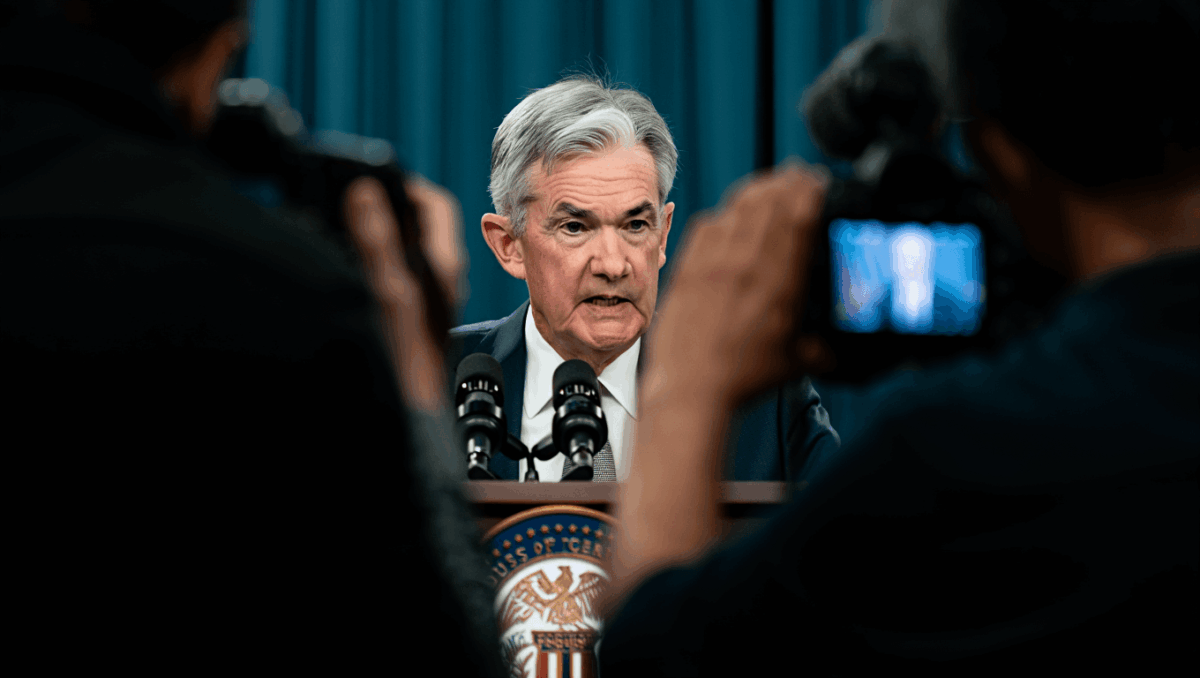
The Federal Reserve cut its benchmark interest rate by 0.25 percentage points on December 10, 2025, marking the third consecutive rate reduction this year. The central bank signaled a dramatic slowdown in future cuts, with policymakers projecting just one rate reduction in 2026 compared to three this year. Inflation remains stubbornly above the Fed’s 2% target, creating uncertainty about the path forward.
🔥 Quick Facts
- Fed cuts rates by 0.25% on December 10, 2025, bringing the federal funds rate to 3.5%-3.75%
- This marks the third consecutive rate cut in 2025 after similar moves in September and October
- Median Fed projections show only one rate cut expected in 2026, signaling a pause in easing cycles
- Core inflation remains above the Fed’s 2% target, with economists forecasting persistent price pressures through 2028
Third Cut Signals Shift in Fed Strategy
Intuit emerges as best software stock for 2026 while stock crashes to bargain levels analysts didn’t expect
2026 tax brackets shock Americans with hidden paycheck truth nobody expected
The Federal Reserve approved its third rate cut of 2025 after its two-day policy meeting ending December 10. The decision brings the federal funds rate down to a 3.5%-3.75% range, the lowest level since 2022. This represents a significant shift from the aggressive rate-hiking campaign that began in 2022 to combat inflation.
Fed Chair Jerome Powell emphasized concerns about inflation remaining sticky despite the rate reductions. The committee noted that uncertainty about economic data and labor market conditions influenced today’s decision. Markets widely expected the quarter-point cut, making today’s announcement less of a surprise than the forward guidance on future policy.
What the Fed’s 2026 Projections Really Mean
Marcus Lemonis takes CEO role at Bed Bath & Beyond with $25M cost-cutting plan and watch what industry experts are saying about his next move
SPX surges 34 points at open with shocking tech recovery, here’s what caused the unexpected Venezuela rally
The most significant market takeaway came from the Fed’s fresh economic projections, commonly called the Summary of Economic Projections (SEP). According to median forecasts from Federal Reserve officials, only one rate cut is expected in 2026, a stark contrast to the three cuts delivered in 2025.
This dramatic slowdown reflects the Fed’s growing concern about persistent inflation. The committee continues to expect inflation to remain above its 2% target through 2028, according to the projections released today. Some policymakers expressed concerns about cutting rates too quickly while prices remain elevated, creating what some economists call a “divided Fed” on the right policy path forward.
| Metric | Current Level | 2026 Projection |
| Federal Funds Rate | 3.5%-3.75% | 3.25%-3.5% (one cut) |
| Inflation (PCE) | Above 2% target | Projected above 2% through 2028 |
| Rate Cuts Planned | Three in 2025 | One in 2026 (median) |
| Economic Outlook | Moderate expansion | Continued growth with inflation concerns |
Why Inflation Matters More Than You Think
The Federal Reserve faces a delicate balancing act between supporting employment and bringing inflation back to its long-term 2% target. Today’s statement confirmed that price pressures remain stubbornly elevated despite nearly two years of higher interest rates. The committee specifically noted that uncertainty about future inflation trends influenced its decision to slow the cutting pace.
This is where 2026 becomes critical for borrowers and savers alike. If inflation proves more persistent than Fed officials expect, the central bank may have to keep rates higher for longer. Conversely, if economic growth slows unexpectedly, the Fed might need to cut rates faster than today’s projections suggest. This forward guidance typically drives market movements more than the actual rate decision itself.
What This Means for Your Wallet in 2026
Today’s announcement signals that borrowing costs will remain elevated throughout most of 2026, assuming the Fed sticks to its median projection of just one rate cut next year. Mortgage rates, credit card rates, and auto loan rates have already moved higher in recent months as traders betting on a slower pace of cuts repriced financial markets. Fixed-rate mortgages are expected to remain in the 6-7% range depending on loan terms and borrower credit profiles.
Savers may benefit from today’s announcement if banks maintain higher yields on savings accounts and certificates of deposit. The central bank’s cautious approach also supports bond yields, which have become more attractive to conservative investors. The key takeaway for households: don’t expect dramatic relief from higher borrowing costs anytime soon, but the worst of rate hikes appears to be behind us.
“Inflation is still a bit too high and there is more work to do, so we want to proceed carefully.”
— Federal Reserve Chair Jerome Powell, remarks following the December 10 rate decision
When Will You See Meaningful Rate Cuts Resume?
The Federal Reserve’s projections suggest meaningful rate cuts may not resume until late 2026 or 2027, depending on inflation data. Today’s decision represents a significant pivot from the market expectations that existed just weeks ago when investors were pricing in multiple cuts throughout 2026. This shift creates potential volatility for stock and bond investors who must recalibrate their portfolios for a slower path of monetary easing.
Economic reports scheduled for late 2025 and early 2026 will be closely watched by Fed officials. Jobs reports, inflation data (measured by the Personal Consumption Expenditures index), and retail sales figures will determine whether the Fed’s cautious stance proves justified. If these reports show inflation accelerating, expect the Fed to pause cuts indefinitely. If they show cooling prices, the Fed might establish itself as more dovish than today’s guidance suggests.
Sources
- Federal Reserve — Official FOMC statement and economic projections released December 10, 2025
- Reuters — Coverage of Fed rate cut and forward guidance on 2026 monetary policy
- CNBC — Live market analysis and Fed decision commentary

Patrick Graham is a business and finance journalist translating Wall Street’s complexities into stories that matter to everyday readers. With extensive experience in financial journalism and economic analysis, this expert journalist provides sharp insights on market trends, corporate developments, and the economic forces affecting daily life. His reporting helps readers make sense of the business world’s biggest moves.