
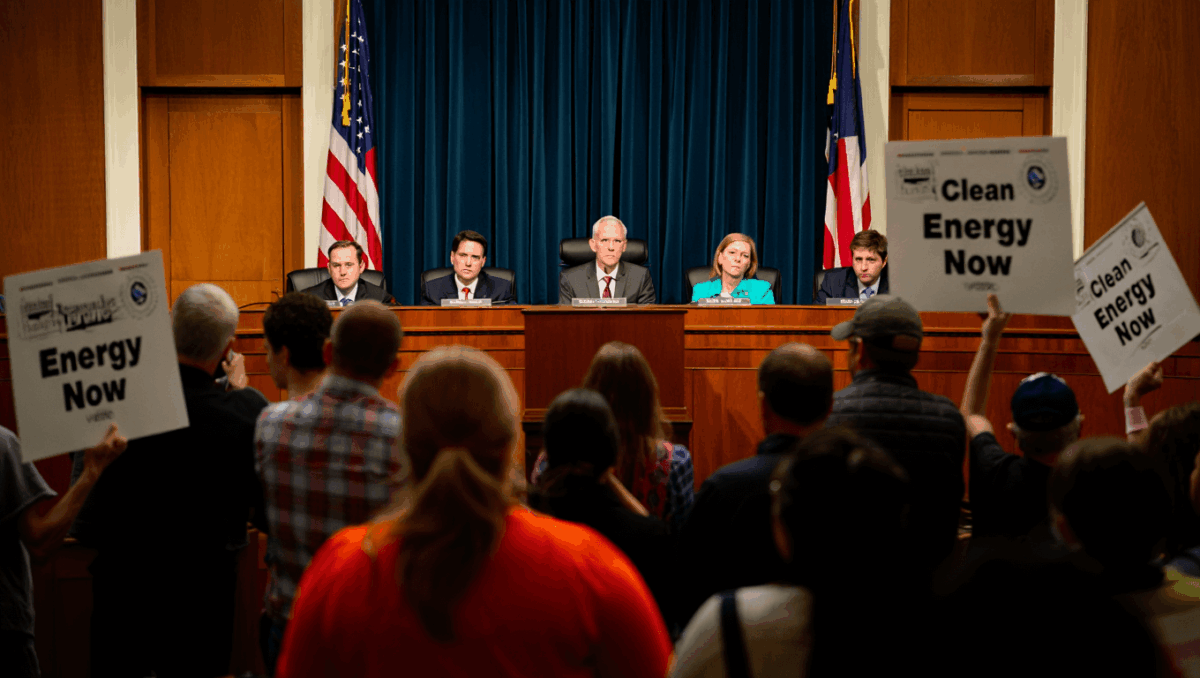
Georgia Power faces a pivotal vote today on its massive $16 billion data center expansion that could reshape the state’s power grid. The Georgia Public Service Commission is scheduled to decide whether to approve nearly 10,000 megawatts of new generation capacity by 9:30 AM, equal to powering about 8.3 million homes.
🔥 Quick Facts
- $16 billion investment across multiple generation sources over five years
- 90% capacity dedicated to data centers, with natural gas, battery storage, and solar components
- Stipulated agreement announced December 10 after surprise negotiations between PSC staff and Georgia Power
- Three-year rate freeze through 2028 protects residential customers initially, with promised $100 annual savings after
The Historic Energy Decision Facing Georgia’s Regulators
Intuit emerges as best software stock for 2026 while stock crashes to bargain levels analysts didn’t expect
2026 tax brackets shock Americans with hidden paycheck truth nobody expected
Georgia Power estimates that 80% of its future demand growth comes directly from data centers seeking power-hungry computing infrastructure. The state has witnessed explosive data center growth, with pipeline projects jumping from 1.6 gigawatts in 2021 to 19 gigawatts in 2025.
The expansion represents one of the largest single power generation requests in U.S. history. CEO Kimberly Greene argues the investment stabilizes rates by spreading infrastructure costs across high-demand commercial users.
What the $16B Expansion Actually Includes
| Generation Source | Capacity (MW) | Investment Component |
| Natural Gas Plants | 3,600 MW | Primary generation source (36% of total) |
| Battery Storage | 3,000 MW | Grid stabilization and peak demand management |
| Solar & Battery Hybrid | 350 MW | Renewable energy component (3.5% of total) |
| Additional Capacity | 2,800+ MW | Transmission upgrades across 1,000+ miles of lines |
| Total | 10,000 MW | Complete by 2031 |
Marcus Lemonis takes CEO role at Bed Bath & Beyond with $25M cost-cutting plan and watch what industry experts are saying about his next move
SPX surges 34 points at open with shocking tech recovery, here’s what caused the unexpected Venezuela rally
The plan heavily emphasizes natural gas generation, which currently comprises 56% of Georgia Power’s energy mix. Environmental groups expressed concern about the fossil fuel dependency, with solar and renewables representing only a small portion.
Last-Minute Agreement Sparks Public Outrage
On December 10, Georgia Power and PSC staff announced a surprise stipulated agreement after weeks of contentious hearings. The sudden development prompted protesters to disrupt the public hearing with chants of “Power to the people, not Georgia Power.”
Jennifer Whitfield from the Southern Environmental Law Center criticized the promised rate savings as vague and uncertain, saying the $100 annual household benefit after 2028 provides no guarantee. She noted that such savings depend on future rate cases that may never occur.
“It doesn’t mean that in 2029 residential customers will see their bills go down. What it means is that when they do all the various accounting, they promise that if we have a rate case, which we may not, that this class of customers will put downward pressure on the costs otherwise attributed to residential customers, which is just a really long, complicated way of saying, ‘we don’t know what’s going to happen.'”
— Jennifer Whitfield, Senior Attorney, Southern Environmental Law Center
Critics Warn of Massive Rate Increases Despite Promises
Stephen A. Smith, executive director of the Southern Alliance for Clean Energy, countered Georgia Power’s claims with analysis showing monthly power bills could rise approximately $20 per household on average. He characterized the agreement as politically timed, noting the utility rushed approval before new commissioners take office in January.
Brionté McCorkle of Georgia Conservation Voters called the deal “a slap in the face” to voters who recently supported candidates campaigning on affordable energy. She emphasized that data center companies driving the demand bear almost no cost, while families shoulder decades of higher bills.
What happens if the vote passes today and beyond?
If approved by the five-member commission, Georgia Power would proceed with full implementation of the expansion through 2031. The company has committed to maintaining a three-year rate freeze through 2028, protecting residential and small business customers from immediate increases.
Key commissioners have signaled openness to the plan, but Commissioner Bill McKenzie voted against preliminary data center rules late last week. Commissioner-elect Peter Hubbard suggested cleaner alternatives like net metering and demand adjustment programs could meet data center needs without massive fossil fuel investments.
Sources
- DataCenter Dynamics – Comprehensive technical breakdown of generation capacity and investment components
- Georgia Recorder – Detailed coverage of public hearing disruptions and stakeholder reactions
- Georgia Power – Official company statements and rate freeze commitment details

Patrick Graham is a business and finance journalist translating Wall Street’s complexities into stories that matter to everyday readers. With extensive experience in financial journalism and economic analysis, this expert journalist provides sharp insights on market trends, corporate developments, and the economic forces affecting daily life. His reporting helps readers make sense of the business world’s biggest moves.