
GTA 6 212 GB install: 5 quick PS5 and Xbox fixes before pre-load
Nintendo Switch 2 bundle $50 off: early Black Friday deals now available
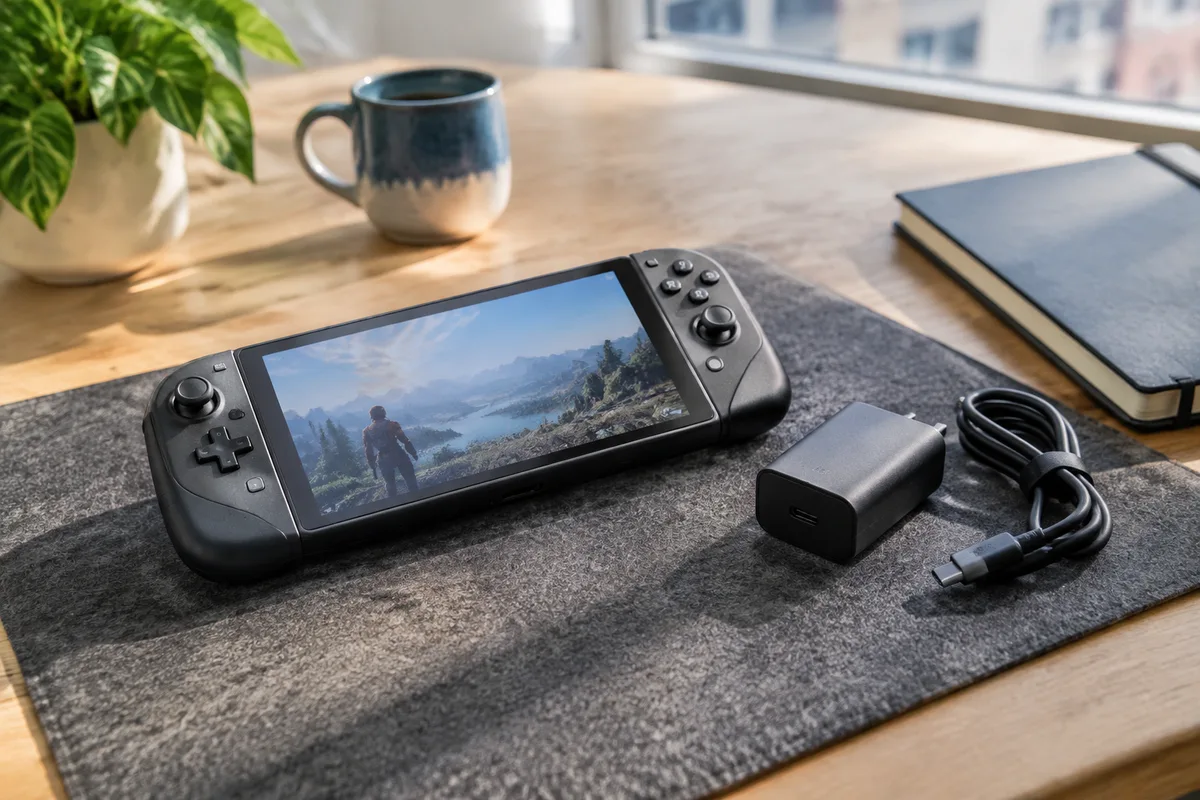
The handheld gaming market has rarely been this polarized: underpowered, overpriced options on one side and flagship devices that command near-laptop money on the other. Acer’s new Predator Atlas 7, priced at about £900 in the U.K., is a notable outlier — a compact Windows handheld that delivers performance closer to much pricier rivals, a fact that matters as component costs keep pushing competitors’ prices higher.
Under the hood the Atlas 7 houses an Intel Arc G3 configuration paired with 16GB LPDDR5X, and that combination changes the usual value equation for portable PC gaming.
Quick take
PC controllers 2026: 7 tested models that finally fix joystick drift
PS5 Prism Collection pre-orders open in US: translucent controllers and faceplates hit stores
- Who should care: players who want true 1080p gaming on a handheld without paying flagship premiums.
- Why it’s notable: outperforms some more expensive Ryzen-based handhelds in real-world tests while keeping retail cost relatively restrained.
- Main trade-offs: a 60Wh battery that limits unplugged playtime and fans that grow loud under heavy load.
Key specifications
| Display | 7-inch 1920×1080 LCD, 120Hz |
| Processor / GPU | Intel Arc G3 (B370 GPU) |
| Memory | 16GB LPDDR5X |
| Storage | 512GB PCIe Gen4 |
| Battery | 60Wh |
| Ports | 2× Thunderbolt 4, microSD slot, 3.5mm audio |
| Price (U.K.) | £899 |
The hardware balance here is deliberate: Acer trades a smaller battery and a relatively modest display brightness for a GPU and memory configuration tuned to deliver strong frame rates at 1080p on a small screen. In practice that pays off.
Performance in brief
The Atlas 7 routinely cleared the Ryzen Z2 Extreme-based Ally X20 in synthetic and game tests, and came close to Intel’s higher-tier Arc G3 Extreme units in many workloads — impressive given the price gap. When enabled, XeSS upscaling plus multi-frame generation further smooths performance without obvious visual issues on the handheld’s 7-inch panel.
| Benchmark / Game | Acer Predator Atlas 7 (Arc G3) | Competitor (Ryzen Z2 Extreme) | Top-end Arc G3 Extreme |
|---|---|---|---|
| 3DMark Time Spy | ~5,985 | ~4,073 | ~6,534 |
| Cyberpunk 2077 (1080p RT High) | ~15 fps | ~6 fps | ~27 fps |
| Forza Horizon 6 (1080p High) | ~45 fps | ~40 fps | ~62 fps |
Those numbers show the Atlas 7 is more than capable as a handheld-first gaming device and still usable when docked and pushed to higher resolution settings.
Controls, software and day‑to‑day use
Acer chose TMR joysticks on this model, which practically eliminate drift and feel smooth across varied play sessions. Face buttons and triggers offer precise feedback, though some players might prefer deeper grips for extended handheld play.
Windows 11 has matured for handhelds, reducing setup friction; Acer’s PredatorSense overlay gives quick access to power and fan profiles without burying options. It’s functional rather than flashy, which many users will appreciate.
Battery, thermals and other compromises
The most visible sacrifice is the 60Wh battery. In intensive gaming tests the Atlas 7 lasted roughly 2 hours and 15 minutes — shorter than some competitors with larger cells. That means either frequent recharges, conservative TDP settings for longer sessions, or carrying a power bank for travel.
| Handheld | Gaming battery life (hh:mm) |
|---|---|
| Acer Predator Atlas 7 | 02:16 |
| Competitor (Ryzen Z2 Extreme) | ~02:45 |
| High-efficiency extreme model | ~04:10 |
Cooling is effective: dual fans keep the chassis and your hands reasonably cool during sustained play, but they become noticeable under heavy load. The 120Hz panel looks sharp indoors, yet peak brightness and the glossy finish make outdoor visibility the device’s weaker points—Acer does include a matte screen protector to help.
Ergonomics and practical impressions
The Atlas 7 sits ergonomically between the Steam Deck and slimmer handhelds: light and well-balanced but with shallower grips than some rivals. That design encourages table-top play rather than long sessions holding the device aloft.
On quick trips — commuting, cafés, short flights — it’s a solid companion. For marathon handheld marathons, plan to manage settings or pause to recharge.
Verdict — why this matters now
Price pressure and supply-chain shifts have pushed many handhelds into premium territory. The Atlas 7 counters that trend by delivering a meaningful chunk of high-end performance for considerably less money than some competitors. It’s not perfect — battery life and fan noise are the trade-offs — but as a practical, powerful portable for current PC games, it’s one of the most compelling options available today.
For players who value raw frame rates and a clean, responsive control experience over the absolute best display or the longest unplugged runtime, the Predator Atlas 7 represents a strong, timely value proposition.

Annabelle Ink is a gaming journalist and lifelong gamer who lives and breathes video game culture. From console releases to esports tournaments, this dedicated journalist brings insider knowledge and genuine enthusiasm to every review and feature. Her expertise spans multiple gaming platforms, helping readers discover their next favorite game while staying connected to the pulse of the gaming industry.