
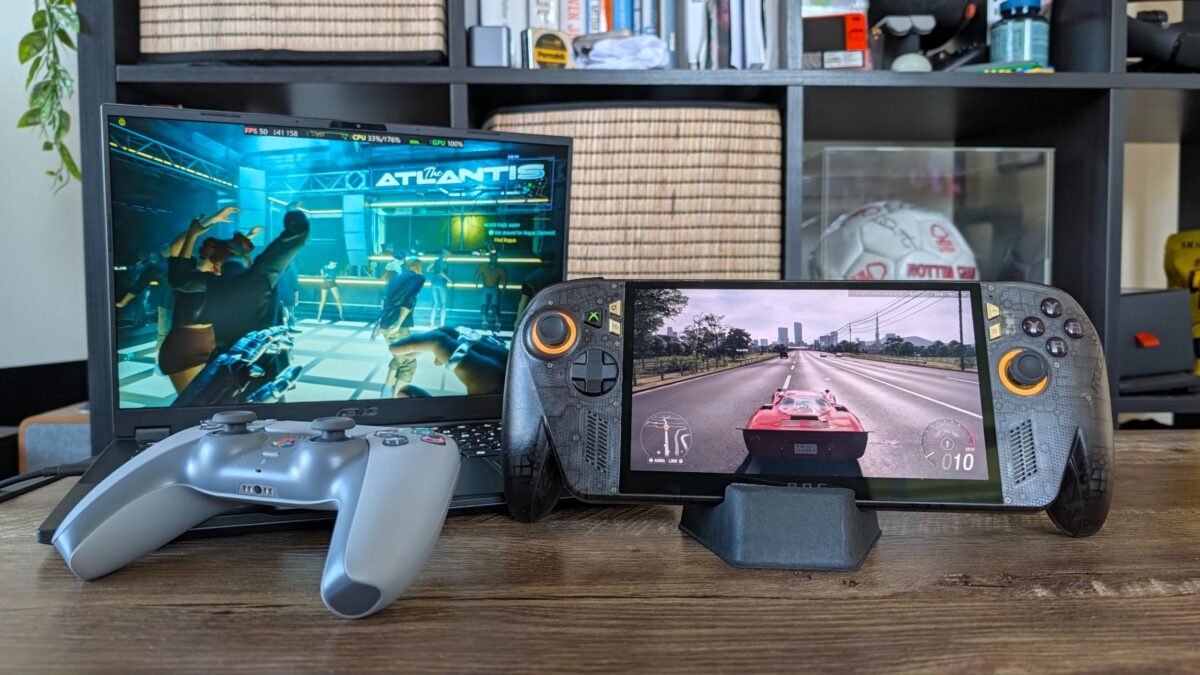
AMD has quietly expanded its next-generation upscaling to integrated GPUs, shipping FSR 4 to selected handhelds and laptops this week — a free driver update that changes how AMD machines can trade resolution for quality. The important detail for gamers: FSR 4 is not simply a faster replacement for earlier versions; it behaves differently depending on which preset you choose.
Nintendo Switch deals start now: huge discounts on consoles, games and accessories
Modern Warfare 4 revives CoD’s modern shooter fun: ideal for fans who skipped recent games
The update arrived as a preview driver (build dated late October) and is already available on devices such as the Asus ROG Xbox Ally X20, the TUF Gaming A14, and Asus’s Strix Halo laptops. I installed the driver on both an Ally and a TUF A14, ran repeatable benchmarks across modern titles and compared the older FSR 3 balanced presets with FSR 4 in both Balanced and Performance modes.
Why this matters right now
PS5 games 2026: top picks you need to play
Ocarina of Time remake on Switch 2 wows players: why upgrading is worth it
With Intel’s recent Panther Lake push and continued advances from Nvidia’s DLSS and Intel’s XeSS, hardware and software upscaling are becoming the most important levers for higher frame rates and better visual fidelity on thin handhelds and mid-tier laptops. For owners of supported AMD systems, the driver is a free upgrade — but getting the most out of it requires changing how you pick your in‑game preset.
What I found in testing
My headline takeaway: running FSR 4 on the same *Balanced* preset you used with FSR 3 often gave marginally lower frame rates. That surprised me at first; the new model is heavier and does more image reconstruction work, so it can add CPU/GPU overhead on integrated silicon.
However, switching to **Performance** with FSR 4 usually reversed that story — you get a noticeable increase in sharpness compared with FSR 3 at Balanced, and in many titles the frame rate also improved. In short, FSR 4 rewards a more aggressive base resolution drop combined with its improved reconstruction.
| Device / Game | FSR 3 (Balanced) | FSR 4 (Balanced) | FSR 4 (Performance) |
|---|---|---|---|
| Asus TUF A14 — Cyberpunk 2077 | ~76 | ~68 | ~80 |
| Asus ROG Ally X20 — Spider‑Man: Miles Morales | ~58 | ~56 | ~63 |
| Asus TUF A14 — Dying Light: The Beast | ~82 | ~76 | ~83 |
Numbers vary by title and settings, but the pattern was consistent: FSR 4’s more advanced machine‑learning reconstruction can produce a cleaner image at lower internal resolutions, yet it costs more cycles when used with conservative presets.
How to enable FSR 4 on supported Asus handhelds and laptops
If you own a compatible Asus handheld or an AMD‑equipped Strix Halo laptop, the new driver is delivered through Asus’ software — and you’ll need to take a couple of steps before launching a game.
- Install the latest AMD Radeon driver from Armory Crate (look for the update released in late October or later).
- Restart, open Armory Crate and add the new “AMD FSR Upscaling” tile to the Command Center.
- Turn the tile on before launching a game, then choose the FSR level inside the game’s display or graphics menu.
Note: the upscaling toggle must be activated prior to starting the title — you can’t flip it in the middle of an active session.
Visual quality versus raw frames
FSR 4’s reconstruction is markedly better at preserving fine detail compared with FSR 3, especially at lower internal resolutions. In my comparisons, foliage, hair, and small surface reflections looked sharper with FSR 4 in Performance mode. That’s the important practical point: the new algorithm makes an actual perceptual gain possible while still improving performance, if you adopt the right settings.
But there’s no universal win. On integrated silicon the model’s extra processing sometimes reduces FPS when you keep the Balanced preset; you only get both clearer images and higher frame rates if you pair FSR 4 with a lower internal render resolution (i.e., Performance).
How this stacks up against Intel and Nvidia
Intel’s Panther Lake devices have pushed the market, particularly with stronger GPU hardware on some handheld SKUs and multi‑frame approaches in XeSS that drive frame generation. AMD’s rollout of FSR 4 is a meaningful catch‑up on the software side: it narrows the gap in perceived image quality while giving AMD systems a clearer path to higher frame rates when used appropriately.
That said, Intel still has some advantages in raw silicon performance for certain handheld models, and Nvidia remains competitive with its own AI solutions on discrete GPUs. For AMD users, the question is tactical: adopt FSR 4 and adjust presets, or wait for further driver optimizations and game patches.
Bottom line: FSR 4 is the most significant free upscaling upgrade AMD has shipped to its integrated platforms in months — but it’s not a drop‑in replacement. To benefit, gamers should be willing to change presets and accept a lower internal resolution in exchange for the new model’s stronger reconstruction.
If you’ve tried the update yourself on an Ally, TUF, Strix Halo, or another supported device, share what you see: differences can depend heavily on the specific game, resolution, and power profile you’re running. The competitive landscape is shifting fast, and small settings choices now deliver outsized returns on handheld and ultraportable gaming machines.

Annabelle Ink is a gaming journalist and lifelong gamer who lives and breathes video game culture. From console releases to esports tournaments, this dedicated journalist brings insider knowledge and genuine enthusiasm to every review and feature. Her expertise spans multiple gaming platforms, helping readers discover their next favorite game while staying connected to the pulse of the gaming industry.