
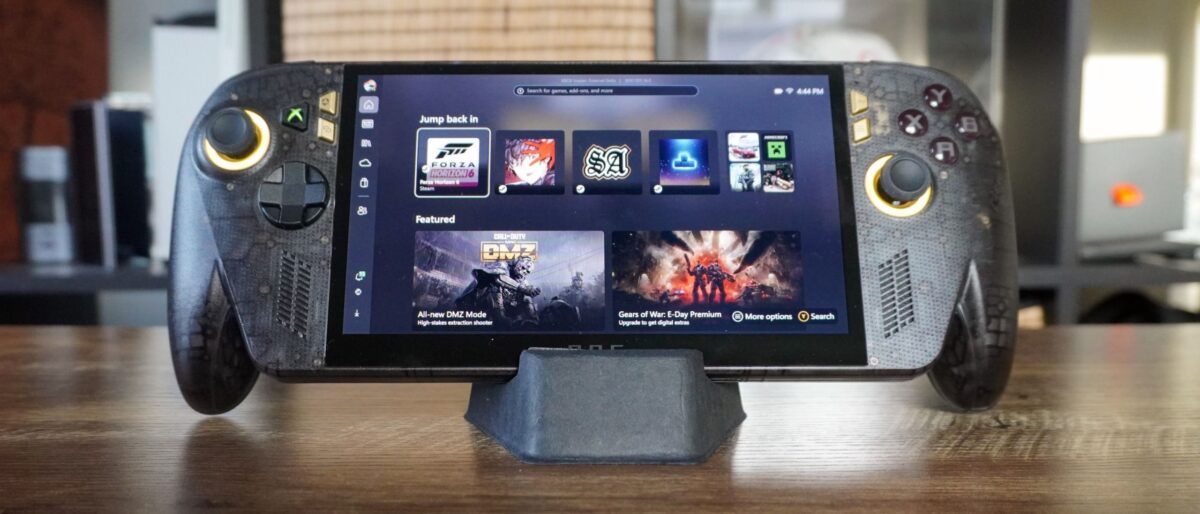
The Asus ROG Xbox Ally X20 arrives as a study in trade-offs: it upgrades the feel and the screen, but leaves raw performance largely unchanged — and it does so at a noticeably higher price. That matters now because competing handhelds with Intel Arc G3 silicon are rolling out, forcing buyers to weigh OLED and ergonomics against actual in-game speed and battery life.
Logitech G Pro X3 headset wows with audio: prolonged use leaves ears sore
Razer Barracuda V2 Pro leads with premium sound and comfort: is $199 justified?
I first played the X20 at Computex and then carried a review unit on press trips over several weeks. Out of the box, the hardware feels familiar: the platform still runs on an AMD Ryzen Z2 AI Extreme chipset and ships with 24GB of LPDDR5x RAM and a 1TB SSD. Where Asus has focused its effort is on the physical experience — and on a much higher retail tag: $1,299.
What Asus changed — and what it didn’t
The headline updates are clear. A 7.4-inch FHD OLED panel replaces the previous LCD, the shell is now translucent, and the grips and controls have been refined. These are genuine improvements if your priorities are display quality and comfort.
Evercade Nexus handheld revives cartridge gaming: a timely retro antidote in 2026
New indie adventure game is a must-play: laughter and heartbreak collide
What hasn’t moved forward is the performance envelope. Asus mentions tweaks to its ROG cooling system, but in day-to-day use the device’s frame rates in demanding titles are effectively the same as last year’s Ally X. That matters because Intel-equipped rivals launched recently are showing stronger results at similar or lower power levels.
An eye-catching display — and why it matters
The X20’s OLED is the machine’s standout feature. Colours are richer, contrast is deeper and peak brightness measures noticeably higher than the LCD panel in the original Ally.
| Model | Average brightness (nits) | DCI-P3 coverage |
|---|---|---|
| ROG Xbox Ally X20 (OLED) | ~580 | ~82.6% |
| ROG Xbox Ally X (LCD) | ~516 | ~77.9% |
If display fidelity is a deciding factor for you — for handheld PC gaming, emulation or simply enjoying vivid worlds — the X20 delivers a major step up. But sharper visuals can also expose the limits of native performance and upscaling more clearly.
Comfort and controls — a refined package
Asus has smoothed many small frustrations from the previous model. Weight distribution feels balanced, the grips are rubberized and less slippery, and analog sticks use TMR sensors that promise smoother operation over time.
One mechanical change stands out: a rotatable D-pad that switches between 4‑way and 8‑way inputs. It isn’t just a novelty — it genuinely improves control for platformers, fighters and other genres that demand precise directional input.
Performance in context: where the X20 struggles
When the X20 is pushed by modern AAA titles, results are mixed. Native performance without aggressive upscaling often lands in the low to mid‑teens of frames per second on very demanding settings. By contrast, recent handhelds using Intel Arc G3 silicon are posting higher frame rates at the same or lower power budgets.
| Game (render target) | Ally X20 (AMD, 35W) | MSI Claw 8 EX AI+ (Intel Arc G3, 35W) |
|---|---|---|
| Cyberpunk 2077 (720p High) | ~12 FPS | ~27 FPS |
| Red Dead Redemption 2 (1080p Medium) | ~23 FPS | ~64 FPS |
| Shadow of the Tomb Raider (1080p High) | ~31 FPS | ~66 FPS |
Upscaling technologies and driver-side improvements (for example, AMD’s roadmap for FSR 4) could narrow the gap over time. But today, the X20 often needs those tools engaged to make demanding games comfortably playable — and the OLED’s clarity means artifacts from older upscalers can be more visible.
Battery life and efficiency
Improved displays and extra RAM haven’t resulted in longer endurance. Under a gaming workload the X20’s runtime is short compared with some competitors, reinforcing the efficiency advantage shown by Intel-based devices.
| Device | Gaming battery life (hh:mm) |
|---|---|
| Asus ROG Xbox Ally X20 (AMD) | ~02:47 |
| MSI Claw 8 EX AI+ (Intel Arc G3) | ~04:10 |
At a glance
- Who should consider it: gamers who prioritise screen quality and ergonomics over raw grunt.
- What’s new: 7.4″ OLED, translucent chassis, rubber grips, refined buttons and D‑pad.
- What’s unchanged: same Ryzen Z2 AI Extreme platform and similar thermal/performance profile.
- Price point: $1,299 — roughly $300 more than the original Ally at launch.
Pros and cons
- Pros: excellent OLED display, stronger ergonomics, durable-feeling controls, flexible D‑pad.
- Cons: no meaningful boost in native gaming performance, shorter battery life versus some rivals, steeper price.
Verdict — who should buy it?
The ROG Xbox Ally X20 is best understood as a premium iteration that focuses on the tactile and visual experience rather than on raw performance gains. If an OLED panel and improved comfort are top priorities for you and you can accept spending an extra few hundred dollars, the X20 is a compelling handheld.
However, if your priority is getting the most playable frame rates in modern AAA titles or the longest battery life per charge, recent Intel Arc G3 handhelds present a stronger value proposition. For many buyers, the X20’s higher price will force a straightforward question: are the display and feel worth the premium over a last‑generation Ally or a competing Intel machine?

Annabelle Ink is a gaming journalist and lifelong gamer who lives and breathes video game culture. From console releases to esports tournaments, this dedicated journalist brings insider knowledge and genuine enthusiasm to every review and feature. Her expertise spans multiple gaming platforms, helping readers discover their next favorite game while staying connected to the pulse of the gaming industry.