
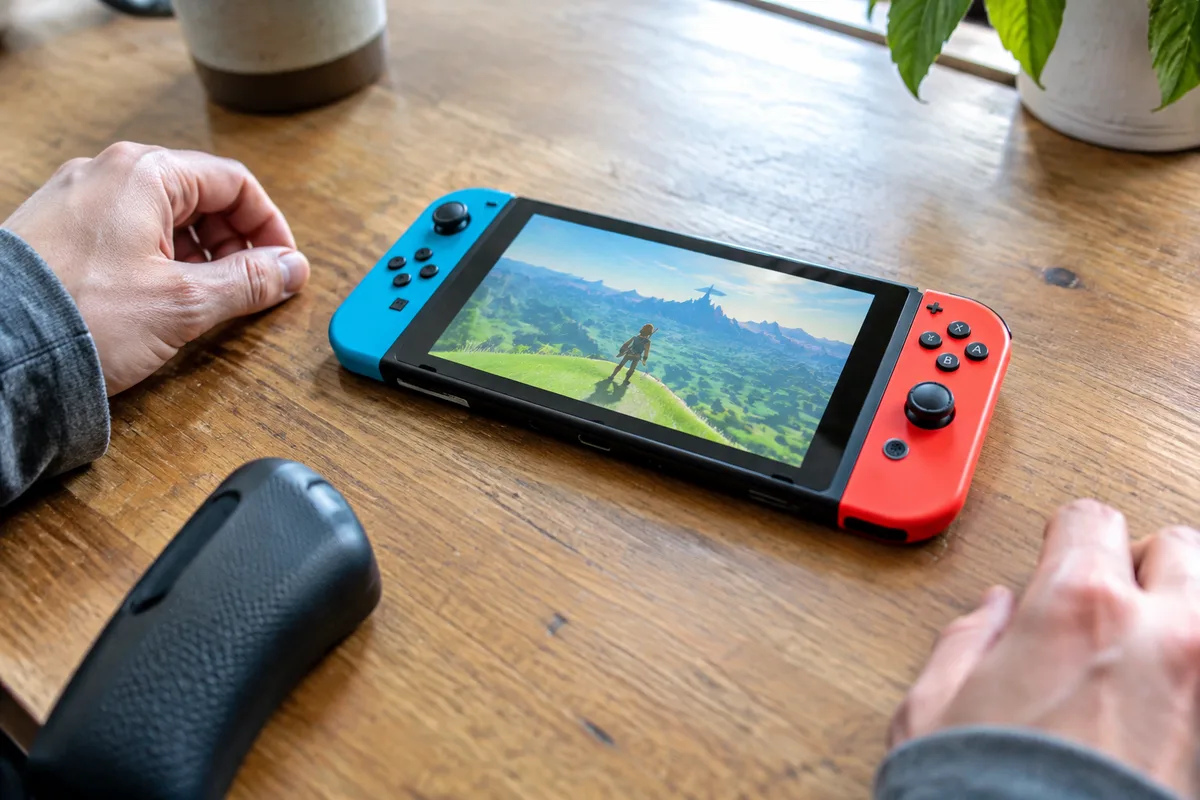
Nintendo Switch Sports Resort brings smoother motion and 4K, ending the series’ biggest complaint
Nintendo Switch deals hit Halloween: 13 top games now heavily discounted
Asus’s ROG Xbox Ally X20 arrives as a cosmetic overhaul rather than a full redesign: a gorgeous new display and refined grips sit on top of the same internal hardware as the previous Ally. For buyers deciding today, the key question is simple — do the display and comfort upgrades justify a $1,299 price tag when faster rivals exist?
What changed — and what stayed the same
AMD FSR 4.1 lands on Xbox consoles and handhelds: can it topple XeSS 3 or DLSS?
Asus ROG Xbox Ally X20 impresses with OLED and comfort: is $1,299 justified?
The X20 keeps the same core components as its predecessor, including the AMD processor and a generous memory configuration, but Asus focused its engineering work on the parts you touch and see. That means a far better screen, improved handholds and revised controls, while the underlying performance profile remains familiar.
The display that defines the package
The headline upgrade is the panel. Asus fitted the X20 with a bright, color-rich **OLED** panel in a large 7.4-inch, 1080p package with a high refresh rate. Games look markedly more vivid and contrasty than on standard LCD handhelds, and the smoother frame pacing from the higher refresh rate helps fast-action titles feel more responsive.

For players who prioritize image quality — especially in open-world and visually ambitious games — the screen is the single most persuasive reason to consider the X20.
Softer grips, crisper buttons
Ergonomics received attention too. The X20 adds rubberized grips and small but meaningful tweaks to analog sticks, shoulder triggers and face buttons that reduce hand fatigue and improve control feel during long sessions. The D-pad’s configurable orientation — switchable between tighter 4-way and more permissive 8-way behavior — is a useful touch for different genres.

Software and system experience
Rather than exposing users to a full Windows desktop by default, the X20 runs the **Xbox interface** for its primary launcher. That choice keeps background processes quieter and the handheld more focused on gaming, which can help both performance and battery life compared with a standard Windows-on-handheld setup.
Performance: the familiar reality
Under the hood the X20 still uses the **AMD Ryzen AI Z2 Extreme** platform and ships with 24GB of RAM. That combination delivers solid gameplay in many titles, but it doesn’t change the device’s standing relative to newer machines that pair different silicon with more GPU headroom.
In short: you get the same baseline power as before. In GPU-heavy games, rivals built around newer Intel Arc G3 hardware can produce higher frame rates out of the box, meaning the X20 often needs more manual tuning to hit smooth play targets.
| Feature | Asus ROG Xbox Ally X20 | Representative competitor (MSI Claw 8 EX AI+) |
|---|---|---|
| Processor | AMD Ryzen AI Z2 Extreme | Intel-based Arc G3 family |
| Memory | 24GB RAM | Up to 32GB RAM (select models) |
| Display | 7.4-inch 1080p OLED, 120Hz | Various — up to 8-inch LCD/OLED options |
| Price (MSRP) | $1,299 | Varies; some premium models exceed $1,700 |
| Real-world GPU performance | Good, but generally behind top Arc G3 configurations | Stronger in GPU-bound titles at comparable TDPs |
Reasons to consider the X20
- Outstanding visuals from the upgraded OLED panel—deep blacks and vivid color make many games pop.
- Improved ergonomics and tactile controls that reduce fatigue during extended play.
- The Xbox-centric UI simplifies handheld gaming and minimizes background Windows activity.
Reasons you might skip it
- The core silicon and memory pool are unchanged, so raw performance gains over the previous Ally are limited.
- At **$1,299**, the X20 sits in premium territory where competitors offer stronger GPU performance or larger displays.
- Battery life and thermal behavior remain similar to the older model, meaning the price is largely paying for aesthetics and comfort rather than a performance leap.
Where this matters right now is market context. Handheld gaming PCs have matured rapidly: what once felt like a mainstream price band has shifted upward, and manufacturers are differentiating by display quality and ergonomics as much as by raw specs. For buyers, that means the X20 will appeal most to those who prize screen fidelity and hand feel over absolute frame-rate headroom.
Bottom line: the ROG Xbox Ally X20 is the best-looking and most comfortable Ally to date, but it’s a cautious evolution rather than a technical overhaul. If a spectacular OLED and refined controls are your priority and you can accept similar performance to the previous model, the X20 is an appealing — if pricey — choice. If you want the highest out-of-the-box GPU performance for the money, some rival handhelds offer stronger results and may be a better fit.

Annabelle Ink is a gaming journalist and lifelong gamer who lives and breathes video game culture. From console releases to esports tournaments, this dedicated journalist brings insider knowledge and genuine enthusiasm to every review and feature. Her expertise spans multiple gaming platforms, helping readers discover their next favorite game while staying connected to the pulse of the gaming industry.