
Keegan and Booth recommend what to watch after The Blame: it mirrors police misogyny
Marvel endgame encore credits leak online ahead of release: sets up Avengers Doomsday
The second season of Outlander: Blood of My Blood arrived this week on Starz (U.S.) and MGM+ internationally, and it takes the story in a darker, more disorienting direction from the first episode. Fans should know up front: the premiere rearranges timelines and leaves key characters trapped in vastly different eras — a shift that changes the show’s rhythm and raises the stakes for every return trip through time.
Spoiler alert: this story discusses plot events from season 2, episode 1.
Guy Ritchie quiz: most MobLand and The Gentlemen fans can’t hit 70%
Clayface final trailer teases Batman nod: not the cameo fans hoped for
Season 2 opens by following Claire and Jamie’s parents — Brian, Ellen, Julia and Henry — as their plan to slip back to the 1920s fractures in the chaotic wake of the 1715 Jacobite Rising. The result: Julia is stranded in the early 18th century while Henry is inexplicably deposited in 1924, profoundly altered by whatever he claims to have experienced.
From Highland drama to psychological horror
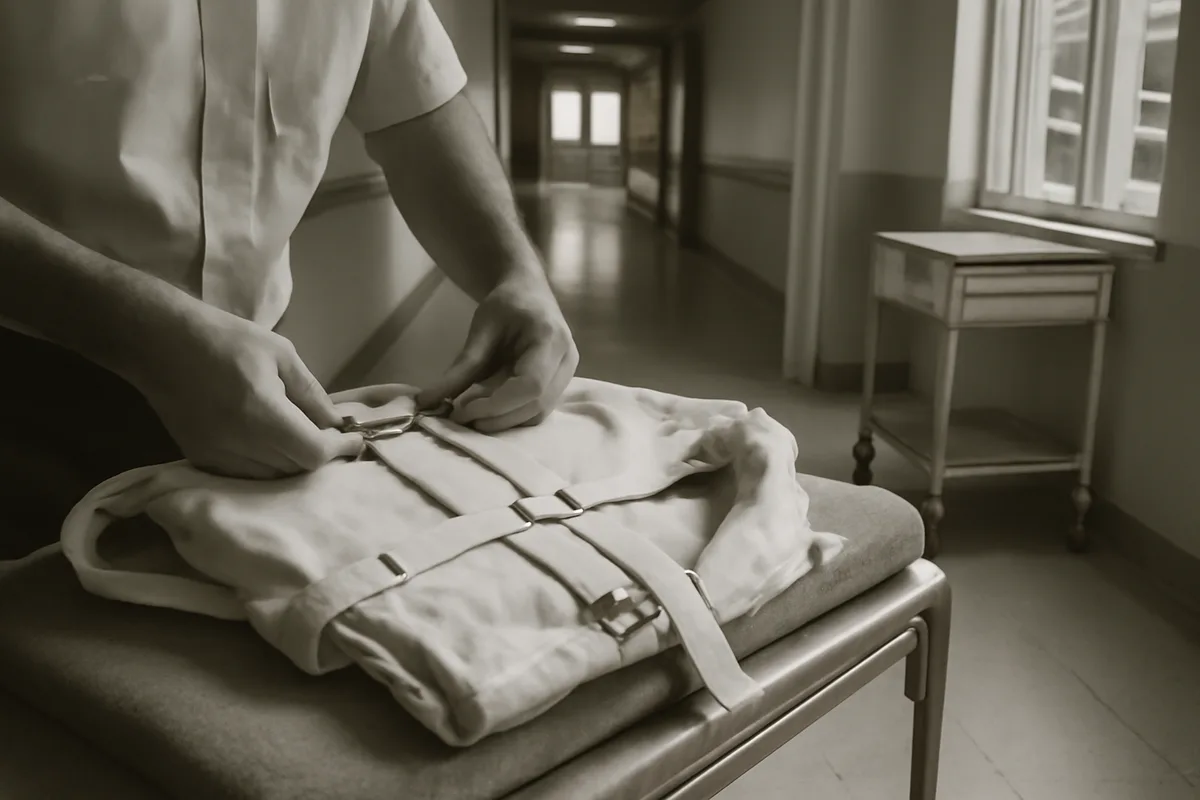
The premiere quickly abandons the familiar Outlander rhythms for scenes that lean into psychological disquiet. One sequence places Henry in a psychiatric institution where he is treated for delusions of time travel. The episode stages this with stark, unsettling images — including an on-screen course of electroconvulsive therapy — that push the series toward a tone some viewers may find closer to modern psychological thrillers than to historical romance.
Jeremy Irvine, who plays Henry, described the shoot as physically and mentally demanding. He told our reporter that the production encouraged a full immersion into the character’s breakdown, and that filming the asylum material left him exhausted. Irvine also revealed an early costume fitting — a vicar’s habit and a straitjacket — hinted at how far the show would travel from its usual register.
For viewers, the change matters because it reframes whose perspective drives the drama. Where earlier arcs often centered on Claire and Jamie’s bond, this season places a heavier narrative weight on the trauma and confusion of those separated by time.
- Who’s split: Julia remains in 1715; Henry winds up in 1924.
- Key setting: the 1715 Jacobite Rising directly influences the timeline fracture.
- Immediate consequence: Henry is institutionalized and subjected to shock therapy after being found incoherent on the street.
- Tonal shift: Season 2 leans into psychological horror elements and fragmented reality.
- Where to watch: new episodes on Starz (U.S.) and MGM+ internationally.
What this means for the series
The premiere’s gamble — trading some of Outlander’s sweeping historical intimacy for claustrophobic, mind-bending sequences — could broaden the show’s emotional range. It also raises practical questions for the season ahead: how will characters separated by a century reconnect, and what are the consequences of altering or failing to repair those time jumps?
For long-time viewers, the episode offers rewards beyond the shock value. Small callbacks and visual details will likely pay off later, while the risky tonal choices keep the series unpredictable. For newcomers, the first episode serves as a clear signal that this outing will demand attention to both timeline mechanics and character psychology.
Actors on set responded to the shock-and-awe approach with intensity rather than restraint. Irvine said he enjoyed the opportunity to explore the character’s unstable mental state, calling it “unsettling” to watch the finished work back — an effect he hoped would land with audiences.
Whether the season sustains this darker register remains to be seen, but the premiere makes one thing clear: the consequences of a failed time jump are no longer just narrative texture; they are the engine of the drama.

Jessica Morrison is a seasoned entertainment writer with over a decade of experience covering television, film, and pop culture. After earning a degree in journalism from New York University, she worked as a freelance writer for various entertainment magazines before joining red94.net. Her expertise lies in analyzing television series, from groundbreaking dramas to light-hearted comedies, and she often provides in-depth reviews and industry insights. Outside of writing, Jessica is an avid film buff and enjoys discovering new indie movies at local festivals.