
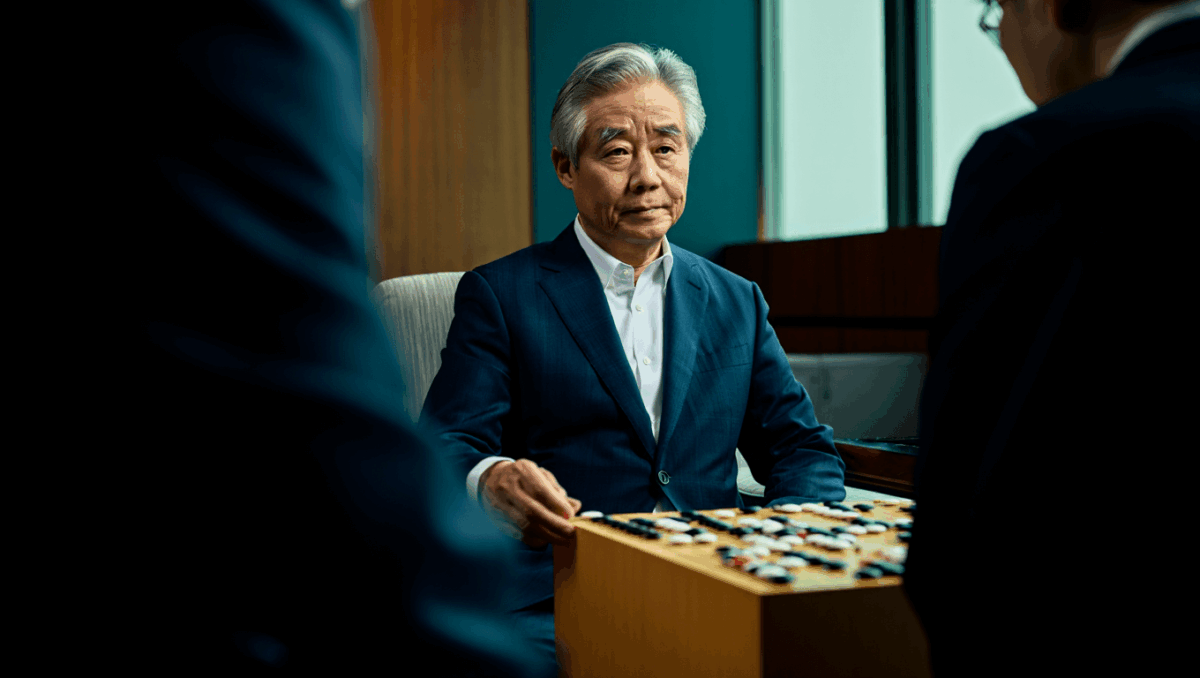
Nie Weiping, the legendary Chinese Go master who transformed the ancient board game’s competitive landscape, died on January 16, 2026 at age 73. Born in Shenzhou, Hebei in 1952, he revolutionized Go by challenging Japanese dominance that had lasted centuries.
🔥 Quick Facts
- Death Date: January 16, 2026, at age 73 after an extraordinary life of Go mastery
- Peak Era: Dominated Go during 1980s, earning the nickname ‘Steel Goalkeeper’ for consecutive victories
- NEC Dominance: Secured 11 consecutive wins in NEC Japan-China Super Matches between 1985 and 1988
- World Amateur Champion: Won the inaugural World Amateur Go Championship in 1979 at just 26 years old
The ‘Go Sage’ Who Broke the Japanese Monopoly
Prime Day gaming deals drop early: save as much as 50% on Switch, PS5 and gaming PCs
Gears of War: E-Day delivers explosive over-the-top action for Xbox owners
Nie Weiping’s meteoric rise in the 1970s and 1980s challenged centuries of Japanese Go supremacy. He began learning Go at just nine years old and turned professional in 1982, achieving 9-dan rank immediately. According to China.org, he was one of the world’s top five or six weiqi masters and had won dozens of national tournaments. His competitive spirit and tactical brilliance made him the first Chinese player to seriously contest Japan’s dominance in the ancient board game.
In 1988, Nie earned the prestigious title of ‘Go Sage’, becoming the only Chinese Go professional to receive this honor from Japanese Go organizations. This recognition marked a turning point in how the world’s Go community viewed Chinese players.
The ‘Steel Goalkeeper’ Legend: NEC SuperMatches Triumph
Gears of War: E-Day on PC gets Nvidia RTX Mega Geometry and stunning visual upgrade
Wordle Oct. 3 answer could wipe out streaks: how one tough word is tripping players
Nie’s most celebrated achievements came during the NEC China-Japan Super Matches between 1985 and 1988. He earned his legendary nickname ‘Steel Goalkeeper’ for his ability to deliver consecutive victories when China’s team needed him most. During this crucial period, Nie defeated seven top Japanese players, including his own teacher Hideyuki Fujisawa, a mark of respect and transcendence in Go culture.
His achievements during these matches were nothing short of legendary, generating national pride in China. Nie secured 11 consecutive wins in these international competitions, helping to elevate China’s status in professional Go. According to Sensei’s Library, these victories fundamentally changed perspectives about which nations could compete at the highest levels of the game.
Historic Victories Against Global Elite
| Achievement | Details |
| World Amateur Championship | Won in 1979, inaugural edition of prestigious tournament |
| Tianyuan Championship | Victories in 1991 and 1992, China’s top domestic title |
| National Go Champion | Six titles won in 1975, 1977, 1978, 1979, 1981, and 1983 |
| Total Career Titles | 38 major championship victories across domestic and continental play |
“Nie was awarded the title of ‘Go Sage’ in 1988 – the only Chinese Go professional in the world to receive it.”
— China Daily, Documentary on Nie Weiping
Mentoring Giants and Building Go’s Future in China
Beyond competition, Nie shaped Chinese Go’s future as a teacher and mentor. He trained several world-class Go players including Chang Hao, Wang Lei, and notably Gu Li, who would become one of the world’s strongest players. His academy, Weiping Go Academy, became instrumental in developing the next generation of Go talent in China. According to recent reports, his Go Academy earned approximately 100 million yuan annually, demonstrating the commercial and cultural impact of Go training.
Nie authored ‘Nie Weiping on Go: The Art of Positional Judgment’ in 1995, sharing his strategic insights with Go students worldwide. This influential text remains a reference guide for players seeking to understand the complex positional judgment that defined Nie’s revolutionary playing style.
What Does Nie Weiping’s Legacy Mean for Global Go Today?
Nie Weiping’s passing marks the end of an era for traditional professional Go. He lived through the arrival of AlphaGo, witnessing how artificial intelligence transformed the game he had mastered. In January 2017, the AI program ‘Master’ defeated Nie in online matches, humbling even the greatest human masters. Yet his contributions remain undiminished. He transformed Go from a primarily Japanese domain into a genuinely global pursuit with China as a powerhouse.
Today, young Chinese Go players continue building on the foundation Nie established. His competitive victories in the 1980s proved that Chinese players could compete equally with Japanese masters. His teaching methods shaped how millions learned the game. The ‘Go Sage’ demonstrated that innovation, strategic thinking, and relentless dedication could overcome decades of established hierarchy in this ancient game of strategy and wisdom.
Sources
- Wikipedia – Comprehensive biography of Nie Weiping’s life and career achievements from 1952 to 2026
- China Daily – Documentary profile ‘Nie Weiping: Fight Like A Man’ detailing his competitive journey
- The World of Chinese – Historical analysis of Nie’s legendary performances in China-Japan matches

Annabelle Ink is a gaming journalist and lifelong gamer who lives and breathes video game culture. From console releases to esports tournaments, this dedicated journalist brings insider knowledge and genuine enthusiasm to every review and feature. Her expertise spans multiple gaming platforms, helping readers discover their next favorite game while staying connected to the pulse of the gaming industry.