
Gears of War: E-Day delivers explosive over-the-top action for Xbox owners
Gears of War: E-Day on PC gets Nvidia RTX Mega Geometry and stunning visual upgrade
ModRetro’s M64 arrives at a moment when retro hardware is more than nostalgia—it’s a small industry. The $230 FPGA console aims to play original Nintendo 64 cartridges on modern displays, but while its hardware and packaging score points, software shortcomings and image-quality choices leave important questions for buyers today.
Quick take
- What it is: A compact, FPGA-based N64 clone designed to run physical cartridges with an authentic timing approach.
- Price: $230 for the base system; ModRetro’s wireless Pro Controller is an optional $90.
- Best for: Collectors and purists who want cartridge-first play and a faithful feel of original hardware.
- Standouts: Distinctive transparent chassis, satisfying cartridge ejection, and a heavy, well-built trident controller.
- Drawbacks: Duller default image, limited display features (no horizontal upscaling or HDR), and a few firmware/compatibility bugs on launch.
Wordle Oct. 3 answer could wipe out streaks: how one tough word is tripping players
Nintendo 135th anniversary deals: big discounts on Switch 2 games and Lego sets
Design and controls
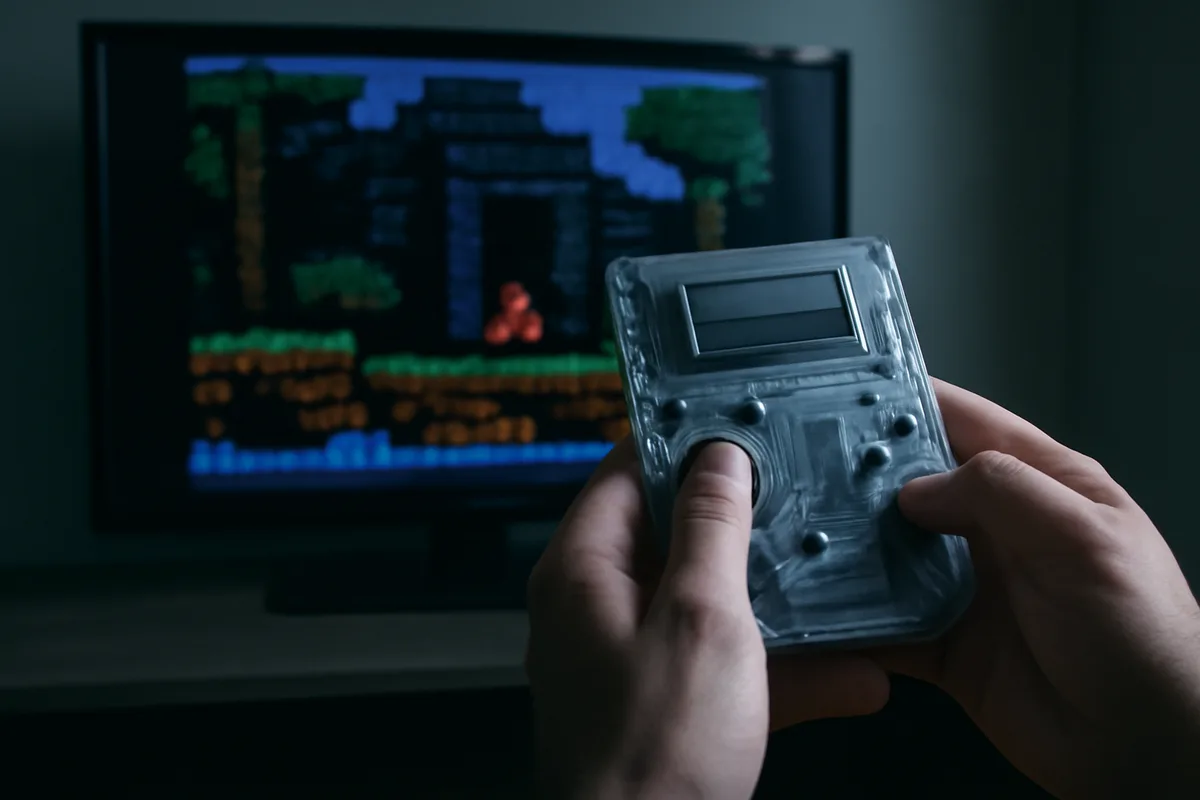
The M64 makes a strong first impression. Packaging and presentation feel deliberate: colorful box art, a clear-on-clear plastic shell that reveals internal components, and a small light bar that highlights the inserted cartridge. The physical design is unapologetically playful, and the cartridge mechanism is engineered to reduce pin stress when ejecting games.
The included Pro Controller keeps the original N64’s three-prong layout and is built from rigid plastics and metal for a premium heft. That trident form will be familiar to long-time players and polarizing to anyone used to modern dual-analog pads, but it’s executed with care.
How it handles games
Under the hood the M64 is an FPGA implementation focused on cartridge compatibility and accurate timing, which matters for players who prioritize authentic behavior over emulation conveniences. When it works, inputs are responsive and overclocking modes can smooth framerate dips in demanding titles.
- Overclocking: Helps stabilize performance in games like GoldenEye 007.
- Save issues: A handful of titles still show problems; some are known quirks of the original cartridges and not unique to the M64.
- Flash cartridge support: Mixed reports. Some Everdrives require updated bootloaders or firmware to run reliably on the M64.
Image quality: where expectations and reality diverge
On a modern 4K OLED, many N64 games look soft and muddy when displayed natively. That’s partly because those games were designed for CRTs—analog televisions that naturally blurred and blended pixels. Translating that experience to high-resolution panels is the central technical challenge for any retro console today.
The M64’s unfiltered output tends toward low contrast and subdued colors compared with offerings from competitors like the Analogue 3D or Nintendo’s software-emulated Switch ports, which can apply more aggressive upscaling and color processing. ModRetro includes several CRT and scanline presets and a deep custom menu for fine-tuning aperture, bloom, sharpness, and scanline width—tools that can improve the look but require time and experimentation.
Two practical points matter for buyers:
- Default filters: Ship too dark or overly grimy in places; casual players are unlikely to tweak settings extensively.
- Settings persistence: A current firmware bug prevents some custom filter presets from being saved across power cycles or cartridge swaps—ModRetro says a fix is coming.
Features where it lags
Analogue recently introduced a horizontal upscaling mode that doubles horizontal pixels internally, producing a clearer image in many N64 titles without breaking timing accuracy. The M64 lacks that capability, and it also does not offer HDR implementation out of the box—features that give the Analogue 3D a visible edge on modern TVs.
Some games benefit enormously from horizontal upscaling; others are less affected. In side-by-side testing, racers and fast-scrolling titles showed the biggest improvements with Analogue’s approach. On the M64, certain scenes can appear unstable or artefactual—motion that looks like shimmering or vibration around character models.
Compatibility and day-to-day use
ModRetro publishes a running compatibility list and says the majority of titles should play normally, but as of this review dozens of games still show issues ranging from crashes to specific gameplay bugs. The company plans ongoing firmware updates to close those gaps.
Practical notes for current owners and prospective buyers:
- Some older cartridges with nonstandard save chips or damaged boards may still behave incorrectly and sometimes require an original N64 to manage saves.
- Flash carts like Everdrives can work, but success often depends on the cartridge’s bootloader and whether the M64 firmware supports that revision.
- Audio output on the M64 is strong—sound design and music reproduce cleanly, which preserves a lot of the nostalgia.
Context: community and publishing
ModRetro is also releasing physical N64 titles at launch, with recently announced $50 reprints that include Extreme-G Turbo Fusion, Buck Bumble, Xibalba64, and Xeno Crisis. Reissuing rare games at new price points appeals to collectors and makes the platform more interesting from a content perspective.
It’s important to note broader community concerns: the company’s ownership has sparked debate among some fans and outlets. This review confines itself to technical performance and user experience so readers can weigh those factors alongside community and ethical considerations.
Verdict
The M64 is a thoughtful piece of hardware with clear strengths: distinctive presentation, an excellent trident-style controller, responsive inputs, and solid cartridge-first compatibility for many titles. However, compared with rivals it ships without a few modern conveniences that affect how N64 games look on big TVs—most notably internal horizontal upscaling and advanced HDR-based CRT emulation.
If you prioritize physical cartridges and want a colorful, well-made console that feels like original hardware, the M64 is worth considering and will likely improve with firmware updates. If your priority is the best-looking image on today’s displays and the broadest set of display features, the Analogue 3D currently delivers a more complete out-of-the-box experience despite a higher price.
- Buy the M64 if: you collect cartridges, value hardware authenticity, and enjoy tinkering with display filters.
- Consider the Analogue 3D if: you want more advanced image processing (horizontal upscaling, HDR tricks) and a feature-rich package immediately.
The M64’s story is still unfolding: promised updates, community presets, and ongoing compatibility work mean its strengths and weaknesses could shift in the months ahead. For now, the choice hinges on whether design and cartridge fidelity outweigh image-processing and convenience for your personal setup.

Annabelle Ink is a gaming journalist and lifelong gamer who lives and breathes video game culture. From console releases to esports tournaments, this dedicated journalist brings insider knowledge and genuine enthusiasm to every review and feature. Her expertise spans multiple gaming platforms, helping readers discover their next favorite game while staying connected to the pulse of the gaming industry.